Skincare advice used to follow a simple logic: identify your skin type, pick the corresponding products, and repeat. The reality for most people is far messier. The role of algorithms in skincare personalisation is changing that experience significantly, shifting the industry away from broad categorisations and towards recommendations built around your actual skin. Advanced systems now process millions of images, biological markers, and lifestyle variables in seconds, producing suggestions that no dermatologist quiz could replicate. This article explains precisely how those algorithms work, where they fall short, and how to use them wisely.
Table of Contents
- Key takeaways
- The role of algorithms in skincare personalisation
- AI personalisation vs. traditional approaches
- Practical benefits and limitations for consumers
- Where skincare algorithms are heading
- My perspective on algorithms and realistic expectations
- Bring algorithm-driven skincare home with Glowera
- FAQ
Key takeaways
| Point | Details |
|---|---|
| Algorithms analyse deep skin data | Modern systems evaluate 150+ facial biomarkers from a single photo to generate personalised product matches. |
| AI outperforms static skin typing | Multi-parameter AI analysis adapts in real time, unlike traditional skin-type archetypes that remain fixed. |
| Input quality determines accuracy | Poor lighting or wearing makeup during image capture can significantly skew algorithm results. |
| Expert oversight remains critical | Algorithm recommendations need manual tuning to prevent problematic ingredient combinations. |
| Consistency still matters most | The most effective use of personalised recommendations is building a stable, evidence-based routine over time. |
The role of algorithms in skincare personalisation
At their core, skincare algorithms are pattern-recognition engines. They take in data, identify correlations across large datasets, and produce recommendations that reflect those patterns. The sophistication lies in what data they can process and how much of it they can handle simultaneously.
What data feeds the algorithm
The inputs vary by platform, but the most advanced systems draw from several categories:
- Facial images: High-resolution photos analysed for texture, pore size, hyperpigmentation, fine lines, sebum distribution, and redness
- Biological markers: Sebum levels, hydration readings, and in emerging systems, RNA biomarkers tied to skin condition
- Lifestyle variables: Sun exposure, diet patterns, sleep quality, stress levels, and local climate data
- User preferences: Fragrance-free requirements, ingredient avoidances (such as retinol or acids), and product history
Haut.AI’s algorithm, for instance, is trained on over 3 million images and evaluates more than 150 facial skin biomarkers with 98% accuracy, processing each image in 5 to 10 seconds. That level of throughput is only possible through machine learning: the model continuously refines its predictions as it encounters more skin profiles.
From analysis to recommendation
Once the data is processed, the algorithm maps the findings against a product database. Haut.AI’s Deep C.A.R.E. engine matches products not just to a skin profile but to individual ingredient preferences, filtering out formulations that conflict with stated sensitivities or that duplicate active ingredients already present in the routine. This launched in April 2025 and represents a meaningful step forward: rather than recommending a product because it scores well for a particular concern, the engine considers how it interacts with everything else the user is already applying.
Visual trust is another layer. SkinGPT simulates photorealistic changes on a user’s own photo using clinical trial data, rendering predicted improvements in 5 to 10 seconds. Seeing a plausible outcome on your own face is considerably more convincing than a generic before-and-after image.
Pro Tip: Before submitting any photo to an algorithmic skincare tool, remove all makeup, use natural or neutral indoor lighting, and keep your expression neutral. Clinical-grade systems include image quality checks, but starting with the best possible input gives you the most reliable result.
Where limitations appear
Algorithmic accuracy depends entirely on the quality of what goes in. Poor lighting or makeup can mislead even well-built models. Shadows across the face alter how texture and pigmentation are read. A heavily moisturised face photographed under warm yellow light will return different readings from the same face under daylight. These are not edge cases; they are everyday conditions that affect real users.
AI personalisation vs. traditional approaches
Understanding the gap between conventional skincare advice and algorithmic systems requires looking at how each one constructs a recommendation.
Traditional skin typing
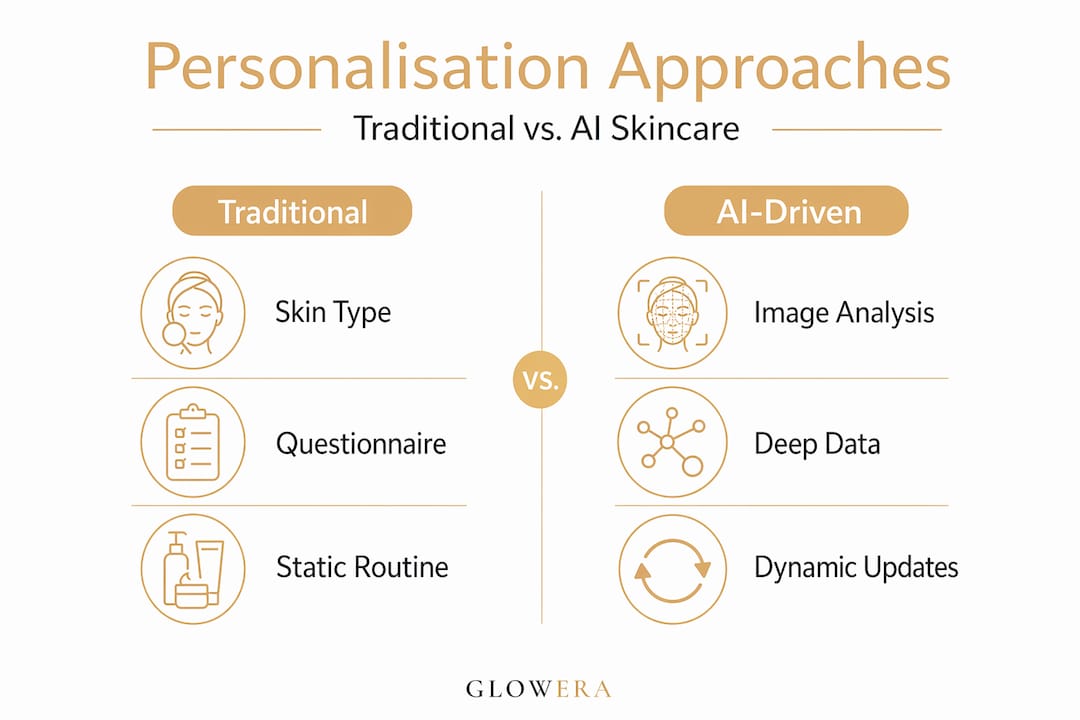
Classic skincare has always relied on broad archetypes: oily, dry, combination, sensitive, or normal. These categories are useful as a starting point, but they collapse under scrutiny. A person with combination skin, post-acne hyperpigmentation, and a damaged moisture barrier does not fit neatly into any single archetype. A product recommended for “combination skin” might address sebum but actively worsen the barrier issue.
Questionnaire-based tools are an improvement, but they are static. The routine generated on the day you fill one in does not account for seasonal changes, hormonal shifts, or the cumulative effects of adding new products.
How AI changes the calculus
| Feature | Traditional approach | AI-driven approach |
|---|---|---|
| Data points assessed | 3 to 5 skin type categories | 150+ measurable biomarkers |
| Update frequency | Static until reassessment | Real-time or regular recalibration |
| Ingredient conflict checking | Manual or none | Automated via engine logic |
| Environmental data | Not included | UV index, pollution, climate |
| Consumer feedback integration | Reviews only | Biological and sentiment data |
Amorepacific’s AI diagnostic system, relaunched in April 2026, demonstrates what this looks like in practice. By combining AI diagnostic zones with lifestyle patterns, the platform generates 45 customised hair serum combinations and 50 foundation shades in real time. That is not a minor refinement of traditional advice. It is a categorically different way of matching products to people.
Challenges remain, though. Datasets can reflect the demographic biases of the skin types used to train the model, meaning some skin tones or conditions are better represented than others. Human dermatologist oversight helps correct for this, particularly when an algorithm makes recommendations that look plausible on paper but would be problematic for a specific skin condition.
Pro Tip: Treat your first algorithm-generated routine as a draft, not a finished prescription. Run it past a dermatologist or skincare professional before committing to multiple new actives at once.
Practical benefits and limitations for consumers
Understanding how these tools work is one thing. Using them effectively is another. Here is a realistic view of what algorithmic personalisation can and cannot do for you.
-
Replacing guesswork with data. Instead of purchasing a product because it is trending, you receive a recommendation based on your measurable skin characteristics. This reduces wasted spend and the risk of introducing ingredients that conflict with your current concerns.
-
Building consistent routines. Evidence-based routines outperform the approach of chasing every new app suggestion. The strongest outcome from algorithmic tools is a stable, measured routine applied consistently over weeks and months.
-
Matching products through consumer sentiment. Kao’s Sebum RNA Monitoring system goes further by linking biological skin data to consumer reviews. By analysing 4,000 user reviews across 800 products, it surfaces a compatibility score showing how people with similar skin profiles actually responded to specific formulations.
-
Visualising results before purchase. SkinGPT-style tools that render predicted outcomes on your own photo reduce the uncertainty of buying an expensive product. That matters when you are choosing between a high-potency treatment and a gentler alternative.
-
Avoiding over-prescription. This is where many users stumble. Algorithms can surface multiple high-scoring products across categories, and the temptation is to use all of them. Misuse of algorithm recommendations, particularly stacking too many exfoliants or actives, is a recognised risk. Skin barrier damage from over-prescription is common enough that dermatologists now flag it as a direct consequence of app-driven routines.
-
Recognising that refinement is necessary. Algorithm recommendations often need manual expert tuning to catch ingredient conflicts the model did not flag, especially when a user is already on prescription treatments.
Where skincare algorithms are heading
The next generation of personalised skincare tools is moving well beyond photo analysis. Several developments are converging that will make current systems look relatively simple by comparison.
- Hyperspectral imaging reads beneath the skin’s surface, capturing hydration levels, melanin distribution, and haemoglobin patterns invisible to standard cameras, giving algorithms a far richer dataset to work with
- Multi-modal data integration is becoming standard: biological, environmental, and lifestyle data are being combined into single models that adjust recommendations as conditions change throughout the year
- Personalised formulation, not just product matching, is emerging as the logical endpoint. Rather than selecting from an existing catalogue, algorithms will specify concentrations, textures, and ingredient combinations suited to an individual’s profile
- Environmental inputs such as real-time UV index, air pollution levels, and humidity are already being tested as dynamic variables that shift recommendations daily or seasonally
- Dataset diversity remains an area requiring continued investment. Models trained predominantly on lighter skin tones produce less accurate results for darker complexions, and the industry is under growing pressure to correct this
“AI is transforming cosmetic dermatology by enhancing image analysis, product development, and personalised treatment planning, but must complement human expertise.” Science spotlight on AI in dermatology
The most significant near-term shift will be the move from recommending existing products to specifying custom formulations. When that capability scales commercially, the role of data in skincare will have advanced from assistance to co-creation.
My perspective on algorithms and realistic expectations
I’ve spent a considerable amount of time reviewing the evidence behind personalised skincare technology, and my honest view is this: the excitement is warranted, but the way most people use these tools is not.
The most common mistake I see is treating an algorithm’s output as a complete routine to implement immediately. You get a list of five recommended products, you buy them all, and within two weeks your skin is reacting to the combination. The algorithm did not fail. You skipped the refinement step, which is where a dermatologist or experienced skincare professional reviews the recommendations for ingredient conflicts.
What I find genuinely impressive is the direction. The integration of smart skincare device features with algorithmic analysis is beginning to close the gap between diagnosis and treatment in a meaningful way. A device that adjusts its output based on real-time skin readings is a different category of tool from one that simply delivers a fixed treatment.
The limitation I think is most underappreciated is data diversity. An algorithm is only as good as the dataset it learned from. If that dataset skews towards a particular skin tone, age range, or climate, the recommendations it produces for anyone outside those parameters are less reliable. This is not a reason to avoid these tools. It is a reason to approach them as one source of information rather than the final word.
My consistent recommendation is to use algorithm-generated routines as a starting point, test methodically (one new product at a time), and treat consistency as the variable that matters most. Technology can identify the right products. It cannot apply them for you.
— Adam
Bring algorithm-driven skincare home with Glowera
The science behind personalised skincare is impressive on screen. The real difference happens when you pair those insights with devices that deliver results at home. Glowera stocks a curated selection of K-beauty tech devices from Medicube and other leading Korean brands that are designed with precision skincare in mind, combining device-level technology with the kind of targeted treatment that algorithm-driven personalisation is built to support.
If you are building a personalised routine and want tools that work in alignment with it, the Medicube Booster Pro Heart Edition is a considered choice for targeted ingredient delivery, while Glowera’s LED light therapy range and microcurrent devices offer clinically grounded treatments that complement any algorithm-recommended regimen. All products are authentic, with full quality assurance and delivery across the UAE.
FAQ
What is the role of algorithms in skincare personalisation?
Algorithms analyse skin data including facial images, biological markers, and lifestyle variables to generate product recommendations tailored to an individual’s specific skin profile, moving beyond broad skin-type categories.
How accurate are skincare algorithms?
Accuracy depends on input quality and model sophistication. Haut.AI’s system achieves 98% accuracy across 150+ biomarkers, but results degrade significantly if images are taken in poor lighting or with makeup applied.
Can skincare algorithms recommend the wrong products?
Yes. Algorithm recommendations can suggest multiple actives that conflict with one another or with existing prescriptions. Expert review before implementing a full algorithm-generated routine reduces this risk considerably.
How do AI skincare tools differ from skin-type quizzes?
Skin-type quizzes produce static outputs based on a handful of variables. AI systems continuously process dozens to hundreds of data points and can be updated in real time as skin conditions or environmental factors change.
Will algorithms eventually create custom skincare formulations?
This is the direction the industry is heading. Several brands are already testing personalised formulation technologies that specify ingredient concentrations for an individual, rather than matching them to an existing product catalogue.