EMS (electrical muscle stimulation) and microcurrent are two distinct electrical facial technologies that target different layers of the skin and produce measurably different results. When you compare EMS vs microcurrent facial treatments, the core distinction is straightforward: EMS uses 1–100 mA currents causing visible muscle contractions, while microcurrent operates below 1 mA with little to no sensation. EMS functions like a gym workout for your facial muscles, producing visible toning and lifting. Microcurrent mimics the body’s own bioelectrical signals to stimulate cellular repair, ATP production, and collagen synthesis at a much subtler level. Understanding which technology suits your skin goals is the most direct route to choosing the right device.
How do EMS and microcurrent facials differ in mechanism and effects?
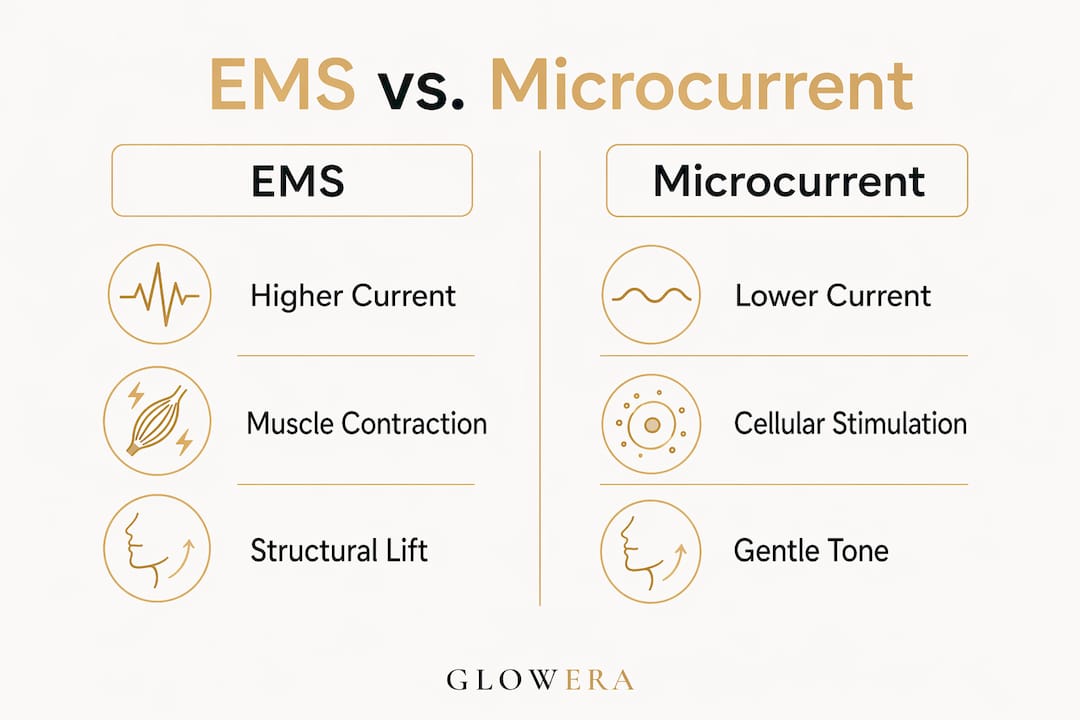
EMS delivers stronger electrical impulses that cause your facial muscles to contract visibly, much like resistance training for the body. EMS induces visible muscle contractions that strengthen and lift over time, making it particularly effective for structural contouring. If you have noticed softening along the jawline or cheekbones, EMS addresses the muscular foundation beneath the skin rather than the surface alone.
Microcurrent, by contrast, operates at a cellular level. The sub-1 mA current stimulates fibroblast activity, encouraging the production of collagen and elastin without triggering muscle movement. This is why microcurrent therapy is often described as a “facial toning” treatment rather than a muscle workout. The results are cumulative and subtle: improved skin tone, reduced fine lines, and a firmer overall texture that builds gradually with consistent use.

The table below summarises the key technical and experiential differences between the two technologies.
| Feature | EMS | Microcurrent |
|---|---|---|
| Current intensity | 1–100 mA | Sub-1 mA |
| Target tissue | Facial muscles | Skin cells and fibroblasts |
| Sensation | Visible muscle twitching | Barely perceptible tingling |
| Primary result | Lifting, contouring | Firming, fine line reduction |
| Typical session length | 5–20 minutes | 5–20 minutes |
| Best suited for | Sagging skin, defined contours | Early ageing, maintenance, glow |
Pro Tip: If you are new to electrical facial treatments, start with microcurrent. The gentler sensation allows you to build familiarity with the technology before progressing to the stronger stimulus of EMS.
EMS is recommended for structural lifting and contouring, particularly where sagging is visible, while microcurrent is better suited to maintenance and fine line reduction. This distinction matters because choosing the wrong modality for your concern will slow your progress considerably.
Which skin concerns suit EMS or microcurrent best?
Your skin goals are the most reliable guide when deciding between these two technologies. EMS is the stronger choice for structural concerns, while microcurrent excels at prevention and gradual refinement.
EMS is well suited for:
- Visible sagging along the jawline, jowls, or cheeks
- Loss of definition around the cheekbones
- Skin that has lost significant firmness due to age or weight change
- Users who want results that feel immediate and physically noticeable
Microcurrent is better suited for:
- Early signs of ageing such as fine lines and mild loss of firmness
- Maintaining skin quality as part of an established skincare routine
- Improving overall skin tone, texture, and radiance
- Users who prefer a gentle, relaxing treatment experience
The sensory experience is a genuine factor in long-term compliance. EMS produces visible muscle movement that some users find energising and others find uncomfortable. Microcurrent is so gentle that many users barely notice it during treatment. If you are sensitive to strong sensations or have a lower tolerance for muscle stimulation, microcurrent is the more sustainable daily option.
Devices that combine EMS and microcurrent modes are increasingly popular for users who want both structural lifting and cellular repair in a single tool. Alternating between modalities on different days, or using a dual-mode device, allows you to address both muscle tone and skin quality without purchasing two separate devices. This approach is particularly practical for users in their late thirties and forties who are managing both early sagging and fine line concerns simultaneously.
At-home devices: pricing, usability, and safety
The at-home device market for both technologies has matured considerably, with options ranging from entry-level to near-professional grade. Popular microcurrent brands include NuFace, FOREO, and ZIIP, each offering different levels of sophistication. The NuFace Mini prioritises simplicity and ease of use, ZIIP includes app-based tutorials and multiple treatment modalities, and the MyoLift Mini is designed to closely replicate professional clinic devices.
On the EMS side, premium devices such as FaceGym Pro cost approximately £500, while the NuFace Trinity+ sits at around $395 and the FOREO Bear 2 at approximately £379. These price points reflect the quality of the electrical output, build materials, and accompanying app or guidance features. Budget devices exist below these figures, but the consistency of current delivery is often less reliable.
At-home devices operate at lower intensities than professional clinic equipment. This is a deliberate safety measure, not a limitation. The reduced intensity means results accumulate more gradually, which is why usage frequency matters significantly. EMS used two to four times weekly is the standard recommendation, with overuse linked to mild skin irritation, muscle soreness, and occasional headaches. Microcurrent requires approximately five sessions per week to produce visible firming benefits, as the cellular effects accumulate gradually in a manner similar to muscle toning.
| Device | Technology | Approximate price | Recommended frequency |
|---|---|---|---|
| NuFace Trinity+ | Microcurrent | ~$395 | 5 times weekly |
| FOREO Bear 2 | EMS + microcurrent | ~£379 | 3–5 times weekly |
| FaceGym Pro | EMS | ~£500 | 2–4 times weekly |
| ZIIP | Microcurrent | Varies | 5 times weekly |
Pro Tip: Always apply a conductive gel before using any EMS or microcurrent device. Dry skin significantly reduces current delivery and increases the risk of surface irritation. Most devices include a proprietary gel, but water-based alternatives work well.
Safety contraindications apply to both technologies. Avoid EMS and microcurrent devices if you have a pacemaker, are pregnant, have active acne or broken skin in the treatment area, or have a history of epilepsy. Always follow manufacturer guidelines and consult a dermatologist if you are unsure whether either technology is appropriate for your skin condition. You can explore key device features to consider before purchasing to make a more informed choice.
How to choose between EMS and microcurrent for your routine
Selecting the right technology comes down to a clear assessment of your current skin condition, your goals, and your lifestyle. The following steps make that decision straightforward.
-
Assess your primary concern. If visible sagging or loss of facial definition is your main issue, EMS addresses the muscular structure directly. If you are focused on maintaining firmness, reducing fine lines, or improving skin tone, microcurrent is the more targeted option.
-
Consider your sensation tolerance. EMS produces visible muscle contractions that feel like a workout. Microcurrent is gentle enough to use while relaxing. Your preference here will directly affect how consistently you use the device.
-
Set a realistic budget. Quality devices from NuFace, FOREO, or ZIIP start at around £200 to £400. Investing in a reputable brand reduces the risk of inconsistent current delivery, which undermines results. You can browse microcurrent devices in Dubai to compare options suited to different budgets.
-
Decide whether a dual-mode device suits you. If you want to address both structural lifting and cellular repair, a device offering both EMS and microcurrent modes removes the need to purchase two separate tools.
-
Commit to a consistent schedule. Neither technology produces lasting results from occasional use. Microcurrent requires roughly five sessions per week; EMS works well at two to four. Build the treatment into an existing skincare routine to maintain compliance.
-
Know when to consult a professional. If your skin concerns are significant, a clinic assessment before purchasing a home device is worthwhile. A professional can confirm whether at-home treatment is appropriate and recommend a complementary in-clinic programme.
Your desired skin outcome should guide the choice: EMS for sharper contours, microcurrent for gentle maintenance and a fresher glow. Many users find that starting with microcurrent and introducing EMS once they are comfortable with electrical stimulation produces the most balanced long-term results.
Key takeaways
EMS and microcurrent facials target different facial layers and produce distinct results, making the right choice entirely dependent on your skin concern and tolerance for electrical stimulation.
| Point | Details |
|---|---|
| Current intensity differs significantly | EMS uses 1–100 mA for muscle contractions; microcurrent stays below 1 mA for cellular repair. |
| Target tissue determines the outcome | EMS lifts and contours by working on muscles; microcurrent firms and smooths by stimulating skin cells. |
| Usage frequency affects results | Microcurrent requires around five sessions weekly; EMS is effective at two to four sessions per week. |
| Dual-mode devices offer flexibility | Devices combining EMS and microcurrent allow users to address both structural and cellular concerns. |
| Safety guidelines are non-negotiable | Both technologies carry contraindications; always follow manufacturer guidance and consult a professional if uncertain. |
My view on EMS vs microcurrent after years of testing both
The most common mistake I see is people choosing EMS because they want fast, visible results, then abandoning it after two weeks because the sensation is too intense or the commitment feels too high. EMS is genuinely effective for lifting and contouring, but it rewards patience and regularity in the same way that gym training does. The users who see the most dramatic results are those who treat it as a long-term practice, not a quick fix.
Microcurrent, on the other hand, is consistently underestimated. Because you cannot feel it working, many users assume it is not doing anything. The reality is that the cellular effects, particularly the boost to ATP production and collagen synthesis, accumulate meaningfully over weeks of consistent use. The skin looks more even, firmer, and more rested without any single dramatic moment of change.
My honest recommendation for most people in their thirties and forties is to start with microcurrent. Learn what consistent electrical stimulation feels like, build the habit, and assess your results after six to eight weeks. If you still want more structural lifting after that, introduce an EMS device or switch to a dual-mode option. Many facial toning routines combine electrical stimulation with massage techniques, and the combination genuinely improves outcomes compared to either technology used in isolation.
The technology in this category is also evolving quickly. Devices available in 2026 are considerably more sophisticated than those from five years ago, with better current regulation, smarter app integration, and more targeted treatment zones. If you have tried an older device and found it underwhelming, the current generation is worth revisiting.
— Adam
Explore EMS and microcurrent devices at Glowera
If you are ready to take the next step, Glowera offers a carefully selected range of professional-grade facial devices suited to every skin concern and budget in the UAE.

From NuFace and FOREO to ZIIP and Medicube, Glowera stocks K-beauty tech devices and leading international brands with authenticity guaranteed. Whether you are looking for a gentle microcurrent starter device or a high-performance EMS tool for visible lifting, the Glowera catalogue covers both ends of the spectrum. Every product listing includes detailed guidance on usage, frequency, and expected results, so you can purchase with confidence. Visit Glowera to find the right device for your skin goals, with expert support available throughout your purchase.
FAQ
What is the main difference between EMS and microcurrent facials?
EMS uses higher-intensity currents (1–100 mA) to cause visible muscle contractions for lifting and contouring, while microcurrent uses sub-1 mA currents to stimulate cellular repair, collagen production, and skin firming without any perceptible muscle movement.
Which is better for anti-ageing: EMS or microcurrent?
Neither is universally better. EMS is more effective for structural lifting and visible sagging, while microcurrent is better suited to early anti-ageing, fine line reduction, and maintaining skin firmness over time.
Can you use EMS and microcurrent devices together?
Yes. Devices combining both modalities are available and allow users to alternate between muscle toning and cellular stimulation for more balanced results. Many skincare professionals recommend this approach for users managing both sagging and fine lines.
How often should you use a microcurrent facial device at home?
Microcurrent requires approximately five sessions per week to produce visible firming benefits, as the effects build gradually with consistent use rather than appearing after a single treatment.
Are at-home EMS and microcurrent devices safe?
Both technologies are safe when used as directed. EMS used two to four times weekly is the standard recommendation; overuse can cause mild irritation or muscle soreness. Both are contraindicated for users with pacemakers, during pregnancy, or over broken or inflamed skin.