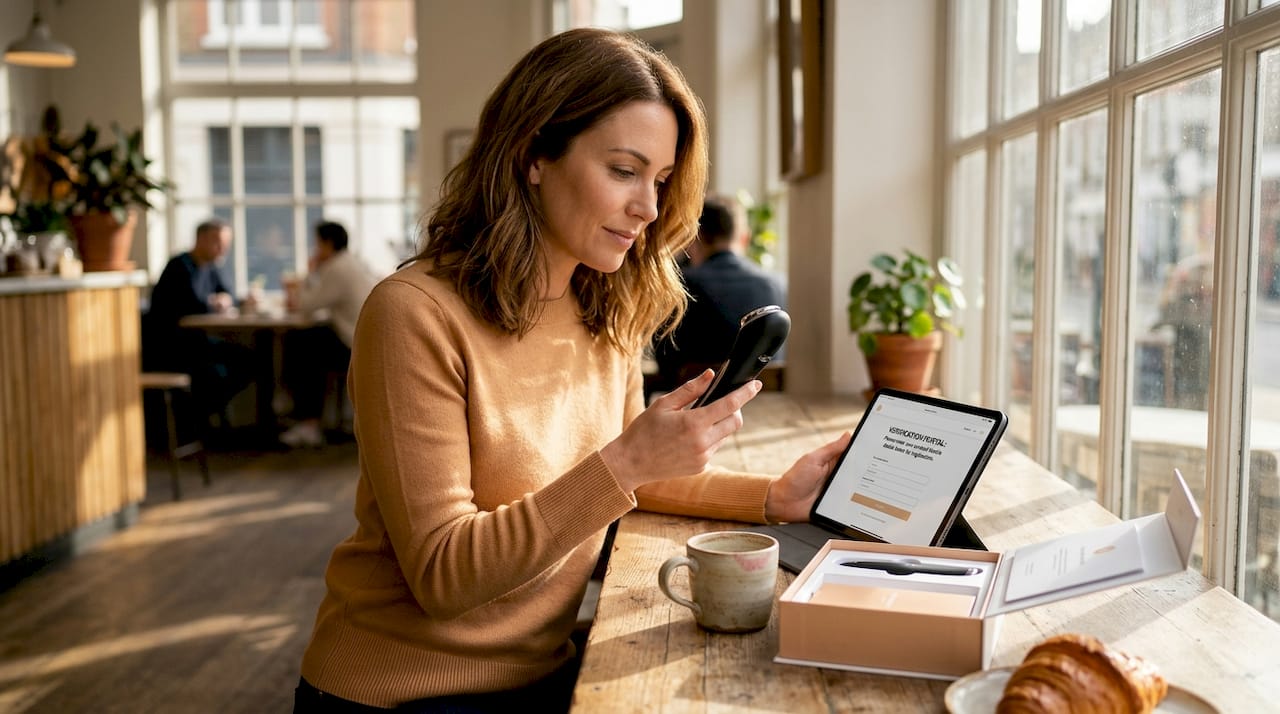
Counterfeit beauty technology has become sophisticated enough to fool even experienced shoppers. Devices that look indistinguishable from genuine NuFACE, FOREO, or Dr. Dennis Gross products are circulating across online marketplaces in the UAE, complete with convincing packaging, serial numbers, and even fake warranty cards. The difference between a genuine microcurrent device and a well-made replica is not always visible to the naked eye, yet the consequences range from ineffective results to genuine skin injury. Understanding how product authentication works, and how to use it, is now a fundamental part of buying premium beauty tech safely.
Table of Contents
- Why product authentication matters in beauty tech
- How beauty tech brands authenticate their products
- Types of product authentication: Which is most secure?
- How you can check for authentic beauty tech in the UAE
- What most beauty enthusiasts overlook about authentication
- Discover authentic beauty tech with confidence
- Frequently asked questions
Key Takeaways
| Point | Details |
|---|---|
| Multi-factor authentication is key | Rely on brands and retailers that use more than one verification step for beauty tech devices. |
| Backend checks prevent fakes | Verification against a manufacturer’s database is the best defence against counterfeits. |
| Visible codes aren’t enough | Only tamper-evident and system-verified features offer real buyer security. |
| Check before using | Always scan packaging and confirm with official systems before activating any beauty device. |
Why product authentication matters in beauty tech
Premium skincare devices represent a significant financial investment. A professional-grade LED mask or microcurrent tool can cost anywhere from AED 400 to well over AED 3,000. At those price points, counterfeiters are highly motivated to produce convincing replicas, and the beauty tech category is particularly vulnerable because devices are complex, branded, and carry strong aspirational appeal.
The risks of purchasing a counterfeit device extend well beyond wasted money. Fake devices often use unregulated electrical components that can deliver inconsistent or dangerously high current levels. Counterfeit LED devices may emit incorrect wavelengths that do nothing for collagen stimulation, or worse, emit UV radiation without adequate filtering. There are also data risks when devices connect to apps, as counterfeit smart devices may compromise personal data.
Key risks of counterfeit beauty tech:
- Unregulated electrical output causing skin burns or irritation
- Incorrect or absent therapeutic wavelengths in LED devices
- No CE, FDA, or relevant safety certification
- Battery failures or overheating hazards
- Zero after-sales support, warranty, or recourse
- Potential data security vulnerabilities in connected devices
“Beauty-specific authentication systems use NFC, QR, and tamper-evident packaging to authenticate products and detect interference.” RFID Solution Cosmetics Industry
Authentic devices from trusted brands are engineered to precise specifications, clinically tested, and manufactured under strict quality controls. That rigour is what delivers real anti-ageing results over time. Exploring K-beauty tech devices from verified sources illustrates exactly why authentication and brand trust go hand in hand.
Pro Tip: Before purchasing any premium beauty device, check whether the brand maintains a public verification portal or app. Brands that invest in authentication infrastructure are also the ones investing in product quality.
Authentication is not just a technical feature. It is a signal of brand integrity. When a company builds robust verification into its supply chain, it demonstrates a commitment to the consumer experience that extends far beyond the packaging.
How beauty tech brands authenticate their products
Leading beauty tech brands have moved well beyond simple holograms and serial numbers. Modern authentication is a layered, technology-driven process that connects physical packaging to a live cloud database. Understanding how this process works helps you use it confidently.
The standard authentication flow works like this:
- Unique identifier applied at manufacture. Each device or product receives a unique identifier, typically encoded in a QR code, NFC (Near Field Communication) tag, or both, during the manufacturing process.
- Identifier registered in a secure backend. That code or tag is linked to a specific product record in the brand’s cloud database, including production batch, authorised distribution channels, and expected geography.
- Consumer scans or enters the code. Using a smartphone camera, the brand’s app, or a web portal, the buyer scans the code or taps the NFC tag.
- Backend validates the request. The system checks whether the identifier exists, whether it has been activated before (flagging potential reuse), and whether the product’s distribution record matches the point of sale.
- Result returned to the consumer. A clear authentic or alert message is displayed, often with product details, batch information, and warranty activation.
The critical point here is that cloud authentication in beauty tech makes the backend check the true security layer, not the physical code itself.
| Authentication method | Security level | Consumer ease | Replication risk |
|---|---|---|---|
| Basic QR code | Low to medium | High | Moderate to high |
| NFC tag (no backend) | Medium | High | Moderate |
| NFC tag with cloud backend | High | High | Low |
| Tamper-evident seal only | Medium | Medium | Moderate |
| Hybrid (NFC + tamper-evident + cloud) | Very high | Medium to high | Very low |
“Most authentication flows use scan or enter code, then backend checks a stored identity record. Strongest systems combine unique identifiers, tamper-evident packaging, and backend cloud controls.”
A statistic worth noting: industry research consistently shows that products with multi-factor authentication, combining a physical tag with real-time cloud verification, reduce successful counterfeiting by a significant margin compared to single-layer systems. Brands that rely solely on printed codes without backend controls leave a meaningful gap that sophisticated counterfeiters can exploit within weeks of a product launch.
Types of product authentication: Which is most secure?
Not all authentication systems offer equal protection. Understanding the differences helps you make more informed purchasing decisions and spot when a product’s verification system may not be sufficient.
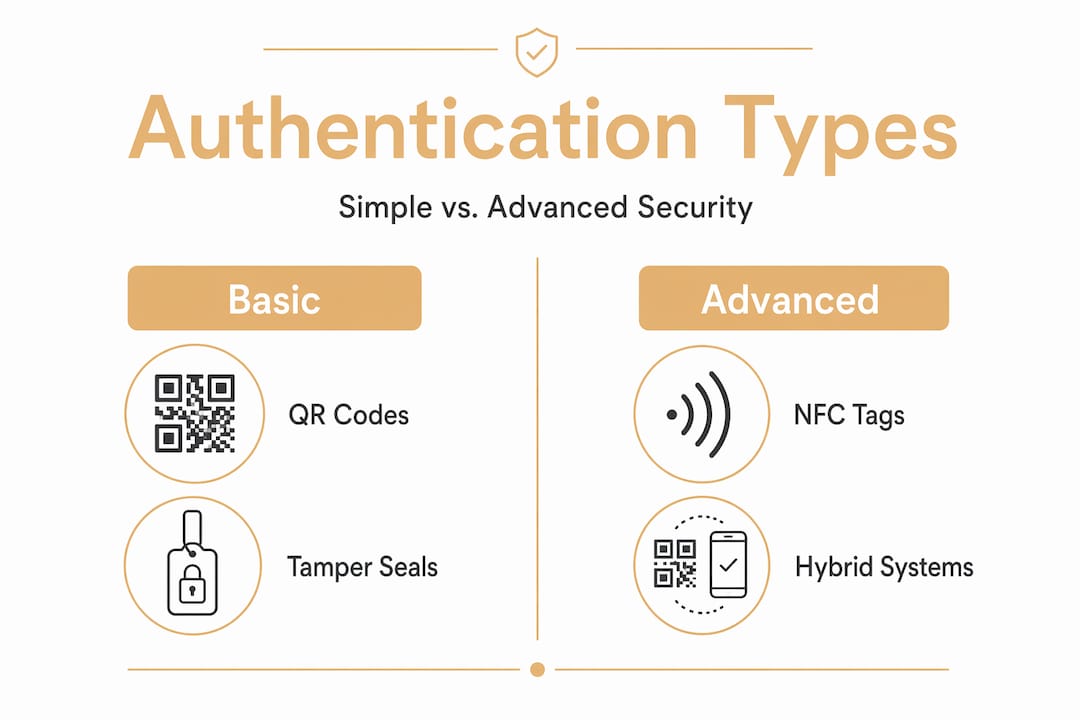
QR codes are the most widely used method because they are inexpensive to produce and easy for consumers to scan. However, a QR code printed on packaging can be photographed and reprinted on counterfeit products with relative ease. Without a backend database check that flags duplicate scans, a copied QR code is essentially useless as a security measure.
NFC tags are embedded chips that communicate wirelessly with a smartphone. They are harder to replicate than printed codes because the chip itself contains a unique cryptographic identifier. However, as noted in research on anti-counterfeiting technology, counterfeiters copy printed elements; secure systems use tamper-evident or covert features plus database controls to close this gap.
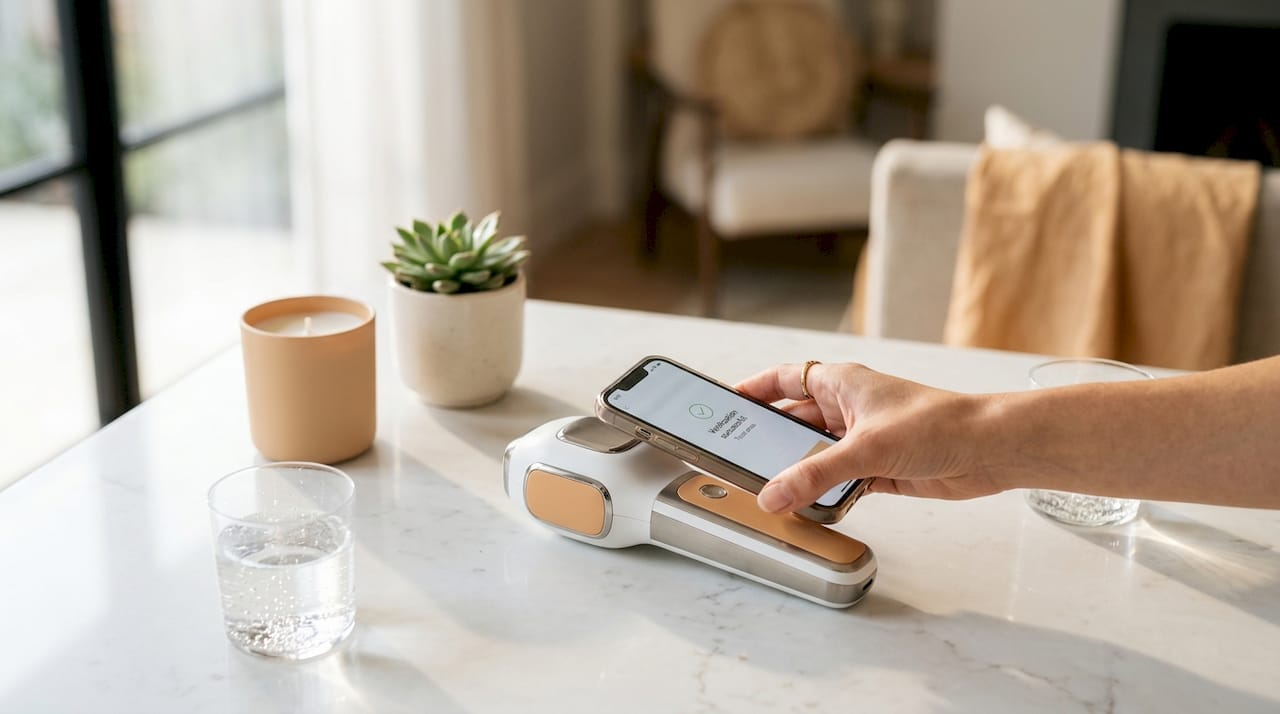
Tamper-evident seals provide a physical indicator that packaging has been opened or interfered with. These are valuable as a first line of defence but are not sufficient on their own, as high-quality seals can be replicated or carefully removed and reapplied.
Hybrid systems combine two or more of the above methods with real-time cloud verification. These are the most secure and are increasingly standard among premium beauty tech brands.
| Method | Pros | Cons | Best used for |
|---|---|---|---|
| QR code only | Low cost, easy to use | Easily copied without backend | Entry-level products |
| NFC tag only | Harder to clone | Can still be replicated | Mid-range devices |
| Tamper-evident seal | Visible interference detection | Can be faked with effort | Packaging integrity |
| Hybrid (multi-factor) | Highest security | Higher production cost | Premium devices |
Common pitfalls in less secure systems:
- QR codes that link to a static webpage rather than a live database
- NFC tags that return a generic “authentic” response without checking a unique record
- Tamper-evident seals applied loosely or inconsistently
- No record of how many times a code has been scanned
For UAE shoppers, devices such as the FOREO Peach 2 Go and the CurrentBody Hydrogel Face Mask are available through verified stockists whose supply chains include multi-layer authentication controls, reducing the risk of receiving a counterfeit product significantly.
The most important question to ask is not “does this product have a QR code?” but rather “does scanning this code trigger a live backend check that is unique to this specific unit?”
How you can check for authentic beauty tech in the UAE
Knowing the theory is useful. Knowing what to do at the point of purchase is what actually protects you. Here is a practical, step-by-step approach for verifying beauty tech authenticity as a UAE consumer.
- Inspect the physical packaging first. Authentic premium devices have consistent, high-quality print finishes, clean font rendering, and precisely applied labels. Look for tamper-evident seals on box openings. If the seal looks uneven, has adhesive residue, or appears to have been reapplied, treat this as a warning sign.
- Locate the authentication feature. Find the QR code or NFC tag, typically on the base of the box, inside the flap, or on a separate authentication card. Note whether the code or tag is printed directly onto the box or applied as a separate label. Separate labels are easier to replicate.
- Scan or tap using the official method. Use the brand’s official app where available, or the URL printed on the packaging. Do not use a generic QR scanner app alone if the brand offers a dedicated verification portal, as generic scanners cannot perform a backend database check.
- Evaluate the response carefully. A genuine verification response will typically include the product name, batch details, and confirmation that this specific unit has not been previously verified. If the response is vague, links to a generic page, or returns an error, contact the retailer immediately.
- Cross-check with the authorised retailer. Reputable stockists in the UAE maintain direct brand relationships and can confirm product provenance. Purchasing from a verified source significantly reduces your exposure to counterfeits.
As noted in anti-counterfeiting research, ID-Safe NFC tags with tamper-evident features register when a package is opened and deter reuse or refilling, meaning a genuine tag on a previously opened product will show as already activated.
Warning signs of an inauthentic product:
- Verification code returns an error or a generic response
- No tamper-evident seal present on a premium device
- Packaging fonts or colours appear slightly off
- Price is substantially below the standard market rate
- Seller cannot confirm authorised stockist status
Pro Tip: When purchasing the FOREO Bear 2 Go or any connected beauty device, register the product immediately through the brand’s official app after purchase. This creates a timestamp record of your ownership that can support any future warranty or authenticity query.
Buying from established, authorised UAE retailers is the single most effective step you can take. Authentication technology supports this, but the supply chain itself is your primary safeguard.
What most beauty enthusiasts overlook about authentication
There is a tendency among beauty tech buyers to treat the presence of a QR code or NFC tag as sufficient proof of authenticity. It is not. A visible authentication feature is only as strong as the backend system it connects to, and that system is entirely invisible to the consumer at the point of scanning.
The uncomfortable truth is that counterfeiters prioritise replicating exactly what consumers check. If the market expects a QR code, counterfeiters will print one. If NFC tags become standard, sophisticated operations will source generic NFC chips that return a plausible response. This is why the real security lies not in the physical feature you can see, but in the database record you cannot.
Exclusive distribution channels matter enormously here. When a brand restricts its authorised UAE retail network to a small number of verified partners, it dramatically limits the points at which counterfeit products can enter the supply chain. A retailer with a direct brand relationship, formal stocking agreements, and accountability to the brand’s regional distributor is structurally less likely to stock fakes, regardless of what authentication technology is on the packaging.
This is also why multi-factor authentication is the correct standard for premium devices. A counterfeit operation that successfully replicates a QR code still cannot replicate the backend record that confirms a unique, unactivated unit. Combining that with tamper-evident packaging means the counterfeiter must defeat two independent systems simultaneously, which raises the cost and complexity of counterfeiting to a point where most operations abandon the attempt.
For UAE consumers investing in premium device sets, the practical implication is straightforward. Prioritise authorised retailers over price. Treat authentication technology as a confirmation tool, not a guarantee. And recognise that a retailer’s relationship with the brand is often the strongest authentication signal of all.
Discover authentic beauty tech with confidence
Knowing how authentication works is only valuable when you can act on it. At Glowera, every device in our catalogue is sourced directly through authorised brand channels, ensuring that the authentication features on each product connect to live, verified backend systems.
Whether you are exploring K-beauty tech products for the first time or looking to add a clinically validated tool like the Medicube AGE-R Booster Pro to your routine, you can shop knowing that authenticity is built into every step of our supply chain. Our curated range spans microcurrent, LED therapy, and advanced K-beauty technology, all from globally trusted brands with robust verification systems. Browse the full collection and invest in your skincare with genuine confidence.
Frequently asked questions
How do I know if a beauty device is authentic in the UAE?
Check for tamper-evident packaging, QR or NFC codes, and always verify using the brand’s official website or app. NFC-based approaches with tamper-evident features validate product identity and confirm the packaging has not been previously opened.
Why is backend authentication better than just scanning a code?
Backend verification ensures each code or NFC tag matches a unique manufacturer record, stopping counterfeiters who duplicate visible codes. The strongest systems combine identifiers, tamper-evident packaging, and backend cloud controls to create a verification chain that cannot be defeated by replicating the surface feature alone.
Can counterfeiters copy authentication features?
Counterfeiters can sometimes replicate codes or packaging, but multi-factor authentication and real-time verification make counterfeiting significantly harder. Counterfeiters copy printed elements; secure systems use tamper-evident or covert features plus database controls to close the gap.
Are all QR code or NFC-tagged devices safe to buy?
No, codes alone can be copied and do not guarantee authenticity without a live backend check. ID-Safe NFC tags register when a package has been opened and discourage reuse or refilling, making them a more reliable indicator when combined with a verified retailer source.