
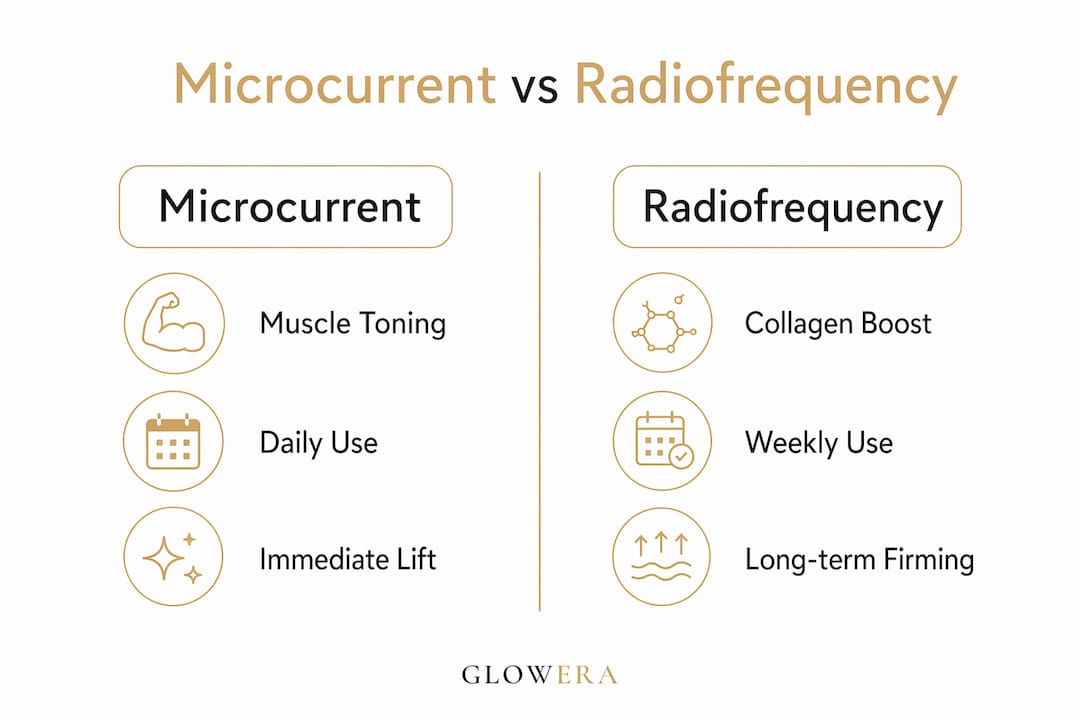
Choosing between a microcurrent and a radiofrequency (RF) device is a decision that hinges on one core question: do you want immediate muscle toning or long-term collagen rebuilding? Microcurrent delivers low-level electrical stimulation to facial muscles, producing visible lifting within a single session. Radiofrequency heats the deeper dermal layers to trigger collagen remodelling, with results building gradually over weeks. Devices like NuFACE and the Medicube Age-R Booster Pro represent each category well, and understanding how they differ will help you choose microcurrent vs radiofrequency device with confidence rather than guesswork.
How do microcurrent and radiofrequency devices work on the skin?
The two technologies act on entirely different layers of the skin, which is why their results feel so distinct.
Microcurrent uses sub-sensory electrical currents, typically below 1 milliampere, to stimulate the facial muscles and the adenosine triphosphate (ATP) pathways that support cellular repair. The lifting effects are modest, driven primarily by muscle toning and a temporary reduction in facial oedema rather than any structural repositioning of tissue. This is why the results look refreshed and defined immediately after treatment. Think of it as a workout for the muscles beneath your skin.

Radiofrequency works at a deeper level. It delivers controlled thermal energy into the dermis, raising tissue temperature to a point that triggers the body’s wound-healing response. This process stimulates collagen remodelling, improving firmness and elasticity over time. The heat disrupts existing collagen fibres, prompting the skin to produce new, tighter ones. Results from RF are assessed at 60 to 90 days post-treatment because that is how long collagen synthesis takes to become visible.
Key differences at a glance:
- Microcurrent targets the neuromuscular layer, stimulating muscle fibres and ATP production
- Radiofrequency targets the dermis, using heat to remodel collagen and elastin
- Microcurrent produces immediate but temporary toning effects
- Radiofrequency produces gradual, cumulative firming that lasts longer once achieved
- Microcurrent is non-thermal and generally well tolerated on sensitive skin
- Radiofrequency carries a mild thermal load and requires careful technique to avoid overheating
Understanding this distinction matters because many consumers purchase one device expecting the other’s results. Microcurrent will not rebuild collagen. RF will not give you the instant facial definition you see after a NuFACE session.
What are the typical treatment regimens and expected timelines?
Consistency separates results from disappointment with both technologies, but the protocols differ significantly.
Microcurrent treatment protocol:
- Initial phase (weeks 1 to 4): Use daily for five to ten minutes per session. NuFACE recommends daily use during this phase to build cumulative muscle memory.
- Maintenance phase (ongoing): Reduce to two to three sessions per week. Microcurrent benefits peak after consistent initial use and fade within two to four weeks of stopping, so maintenance is non-negotiable.
- Session length: Typically five to twenty minutes depending on the device and treatment area.
- Visible results: Many users notice a difference after the first session. Meaningful contour improvement from NuFACE clinical studies appears after 60 days of consistent use.
Radiofrequency treatment protocol:
- Initial phase (weeks 1 to 8): Sessions are typically spaced one to two weeks apart. RF protocols schedule treatments weeks apart to allow collagen synthesis to progress between sessions.
- Maintenance phase: Monthly or bi-monthly sessions once the initial course is complete.
- Session length: At-home RF sessions generally run fifteen to thirty minutes, longer than microcurrent.
- Visible results: Gradual improvement from week four onwards, with peak results at eight to twelve weeks.
Pro Tip: Set a phone reminder for your microcurrent sessions. The single biggest reason people fail to see results with devices like NuFACE is inconsistent use, not device quality.
The practical implication is clear. Microcurrent fits into a daily skincare routine with minimal time investment. RF requires a more deliberate, scheduled approach but rewards patience with firmer, longer-lasting skin texture.
Which skin ageing concerns does each device address best?
Matching your primary concern to the right technology is the most direct path to satisfaction.
| Skin concern | Microcurrent | Radiofrequency |
|---|---|---|
| Facial muscle tone and definition | Excellent. Directly stimulates underlying muscles | Limited. Does not target neuromuscular layer |
| Mild jowling and early contour loss | Good for early-stage concerns | Better for moderate laxity |
| Skin laxity and firmness | Modest benefit via reduced oedema | Strong. Collagen remodelling directly improves firmness |
| Fine lines and superficial wrinkles | Moderate improvement through muscle support | Good improvement through collagen production |
| Deep wrinkles and volume loss | Not effective. Requires filler or collagen-building treatment | Partial improvement, but clinical RF or injectables more appropriate |
| Overall skin texture and glow | Mild improvement | Moderate improvement through dermal renewal |
Microcurrent is the muscle toning maintenance tool of choice for those in their late twenties to early forties dealing with early signs of ageing. It excels at preserving definition and preventing the gradual softening of facial contours. RF is better suited to those in their forties and beyond, or anyone noticing genuine skin laxity, where collagen loss is the primary driver of visible ageing.
The two technologies are genuinely complementary. Using a microcurrent device for daily toning alongside a weekly RF session addresses both the muscular and structural layers of ageing simultaneously. Many advanced at-home devices now combine both modalities in a single handset, which removes the need to choose at all.
What safety considerations should you be aware of?
Both technologies are safe for most adults when used correctly, but each carries specific contraindications that must be respected.
Microcurrent contraindications:
- Pregnancy (electrical stimulation is contraindicated throughout)
- Implanted electrical devices such as pacemakers or cochlear implants
- Active epilepsy or seizure disorders
- Active cancer or undergoing chemotherapy
- Open wounds, active acne lesions, or compromised skin barrier in the treatment area
Skin sensitivity testing before full use is advised by NuFACE device manuals. Start on the lowest intensity setting and increase gradually over several sessions.
Radiofrequency safety considerations:
- Thermal injury is the primary risk with at-home RF devices. At-home RF devices carry safety warnings in device manuals specifically addressing burn risk from misuse.
- Never use RF over metal implants, fillers containing metal, or active skin infections.
- Avoid RF over the thyroid area and eye sockets.
- Individuals with rosacea or highly reactive skin should consult a dermatologist before use.
Safety note: Always apply the recommended conductive gel or serum before RF treatment. Dry skin contact with an RF handset concentrates heat at the surface and significantly increases burn risk. Follow the manufacturer’s protocol precisely, particularly regarding glide speed and session duration.
Both device types require a patch test before first use. If you experience prolonged redness, tingling, or discomfort beyond thirty minutes post-treatment, discontinue use and seek professional advice.
How to choose between microcurrent vs radiofrequency: a practical guide
Use this step-by-step framework to match the right technology to your specific situation.
-
Define your primary concern. If you want immediate facial definition and toning, microcurrent is your starting point. If skin laxity and long-term firmness are your goals, RF is the more appropriate choice.
-
Assess your timeline expectations. Microcurrent delivers visible results from the first session, making it ideal if you want results before an event. RF requires a committed eight to twelve week programme before peak results appear.
-
Evaluate your maintenance commitment. Microcurrent effects diminish within two to four weeks of stopping. RF results are more durable but still require periodic maintenance sessions.
-
Consider your budget and device features. Entry-level microcurrent devices like the NuFACE Mini start at a lower price point than most RF devices. Premium RF handsets from brands like CurrentBody often include additional modalities such as LED therapy or sonic vibration, which enhance overall skin benefits.
-
Check contraindications against your health profile. Review the safety section above carefully. If you have any of the listed contraindications, consult a dermatologist before purchasing either device.
| Factor | Choose microcurrent | Choose radiofrequency |
|---|---|---|
| Primary goal | Muscle toning, facial definition | Skin firming, collagen rebuilding |
| Timeline | Immediate visible results | Gradual improvement over 8 to 12 weeks |
| Maintenance | Daily to several times per week | Monthly to bi-monthly after initial course |
| Best age range | Late twenties to early forties | Forties and beyond, or visible laxity |
| Budget | Generally lower entry cost | Higher investment, more modalities |
Pro Tip: If you are genuinely undecided, consider a hybrid device that combines microcurrent and RF in one handset. The Medicube Age-R range offers this combination, addressing both muscle tone and collagen stimulation without requiring two separate devices.
Key takeaways
Microcurrent and radiofrequency devices serve fundamentally different anti-ageing purposes, and choosing correctly depends on matching the technology to your primary skin concern and lifestyle.
| Point | Details |
|---|---|
| Different mechanisms | Microcurrent tones facial muscles; RF rebuilds collagen through controlled heat. |
| Results timeline | Microcurrent works immediately; RF takes eight to twelve weeks for peak results. |
| Maintenance requirement | Microcurrent benefits fade within weeks of stopping; RF results are more durable. |
| Best use case | Microcurrent suits early ageing and toning; RF suits laxity and structural firming. |
| Combination approach | Hybrid devices combining both technologies address muscle and collagen concerns simultaneously. |
My honest assessment after years with these devices
I have spent considerable time evaluating both microcurrent and RF devices, and the most common mistake I see is people expecting microcurrent to do what only RF can achieve. Microcurrent is a genuinely useful tool. It keeps facial muscles engaged, reduces morning puffiness, and gives skin a fresher appearance with regular use. But it is a maintenance tool, not a collagen treatment. Treating it as the latter leads to disappointment.
RF devices, on the other hand, are often underused. People complete one or two sessions, see no dramatic change, and abandon the device. The collagen remodelling process takes weeks. Patience is not optional with RF. It is part of the mechanism.
The combination approach is where I see the best outcomes. Daily microcurrent for tone and definition, weekly RF for structural firming. Pair either with a well-formulated peptide or retinol serum and you are addressing ageing from multiple angles simultaneously. What I would caution against is chasing dramatic results from either technology alone. These are precision tools, not procedures. Used correctly and consistently, they deliver real, measurable improvement. Used sporadically or with unrealistic expectations, they collect dust.
— Adam
Explore microcurrent and RF devices at Glowera

Glowera stocks a carefully selected range of microcurrent devices and RF handsets from globally trusted brands, available for delivery across the UAE. The NuFACE range covers daily microcurrent toning from entry-level to professional grade. For radiofrequency, the CurrentBody RF device is a consistently well-reviewed at-home option. If you want the combined approach, Glowera’s K-beauty tech collection features the Medicube Age-R range, which pairs RF and microcurrent in a single device. Every product on the platform is authenticated and backed by detailed usage guidance, so you can invest with confidence.
FAQ
What is the main difference between microcurrent and radiofrequency?
Microcurrent stimulates facial muscles using low-level electrical currents, producing immediate toning effects. Radiofrequency heats the dermis to trigger collagen remodelling, delivering gradual firming over eight to twelve weeks.
How often should I use a microcurrent device?
Daily use is recommended during the initial four-week phase, followed by two to three sessions per week for maintenance. Benefits fade within two to four weeks of stopping regular treatment.
Is radiofrequency safe to use at home?
RF is safe for most adults when used correctly, but burn risk exists if the device is used without conductive gel or moved too slowly over the skin. Always follow the manufacturer’s protocol and avoid use over metal implants or active skin conditions.
Can I use microcurrent and radiofrequency devices together?
Yes. The two technologies target different layers of the skin and are genuinely complementary. Microcurrent addresses muscle tone while RF rebuilds collagen, making a combined approach more thorough than either device alone.
Which device is better for skin laxity?
Radiofrequency is the more appropriate choice for skin laxity. It directly stimulates collagen and elastin production in the dermis, which is the primary structural cause of sagging skin.