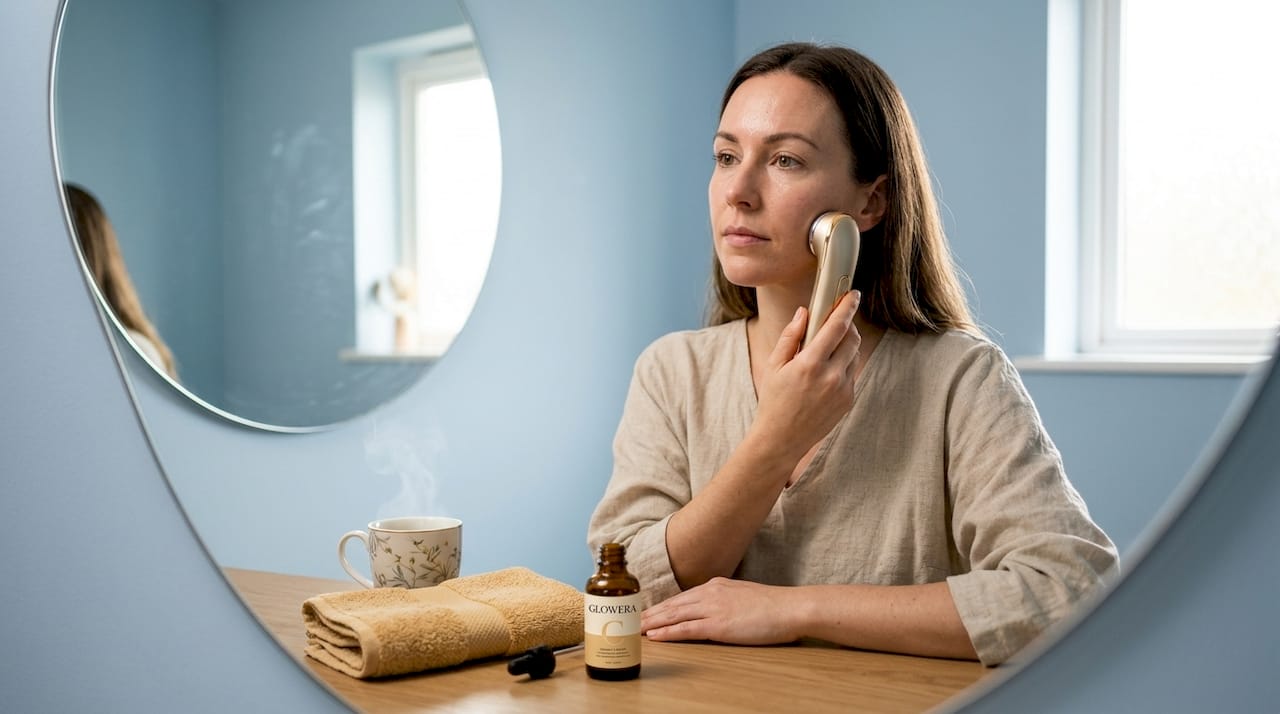
Correctly pairing skincare ingredients with devices is the single most effective way to amplify your at-home skincare results beyond what either product or tool can achieve alone. The principle, known in professional circles as device-assisted ingredient delivery, works by using a device’s physical or light-based action to prepare the skin for deeper, more targeted absorption. Brands like The Ordinary, INKEY, and VouPre have each published guidance confirming that the right combinations produce measurably better outcomes. This guide covers which ingredients work with which devices, how to sequence your routine, and the timing errors that quietly undermine results.
How to pair skincare ingredients with devices: the foundations
Before selecting any combination, you need two things in place: a clean face and a clear understanding of what your device actually does. These are not optional steps. Dermatologist guidance from CNET confirms that LED device sessions are most effective on skin that is completely free from makeup, creams, and sunscreen residue, because any surface layer physically blocks light penetration. This applies equally to microcurrent and radiofrequency tools, where residue interferes with conductivity and signal delivery.
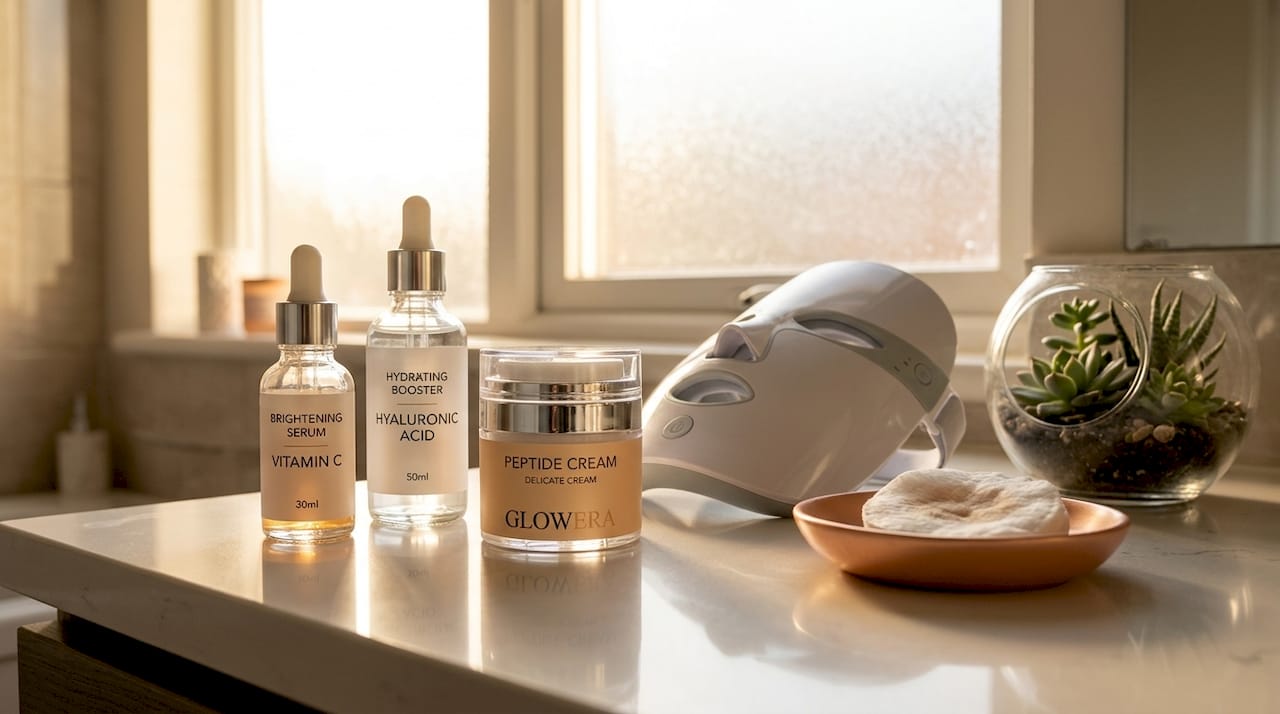
The three device categories most relevant to ingredient pairing are LED light therapy masks, microcurrent devices, and sonic cleansing brushes. Each interacts with the skin differently. LED masks use specific wavelengths (typically 630nm red or 415nm blue) to stimulate cellular activity. Microcurrent devices deliver low-level electrical currents that tone facial muscles and improve circulation. Cleansing brushes prepare the skin surface for everything that follows. Understanding this distinction shapes every ingredient decision you make.
| Device type | Compatible ingredients | Prep requirement |
|---|---|---|
| LED light therapy mask | Hyaluronic acid, niacinamide, peptides, vitamin C, vitamin E | Fully cleansed, residue-free skin |
| Microcurrent device | Hyaluronic acid, conductive gel, peptides | Damp skin; use a conductive medium |
| Sonic cleansing brush | Gentle cleanser only | No active serums during use |
| Radiofrequency device | Hydrating serums, collagen-supporting peptides | Clean, slightly damp skin |
- Use a gentle, non-stripping cleanser before every device session
- Remove all SPF and colour cosmetics thoroughly, not just with a quick rinse
- Pat skin dry before LED use; keep skin slightly damp for microcurrent
- Avoid applying any active serum before device use unless the device specifically requires a conductive gel
Which ingredients work best with each device type?
The most reliable LED-compatible ingredients are niacinamide, vitamin C derivatives, peptides, hyaluronic acid, vitamin E, hemp seed oil, and DMAE. These are all non-photosensitising, meaning they do not react adversely to light wavelengths. Applying them immediately after an LED session allows the skin, which is in a heightened state of cellular activity post-treatment, to absorb them more efficiently.
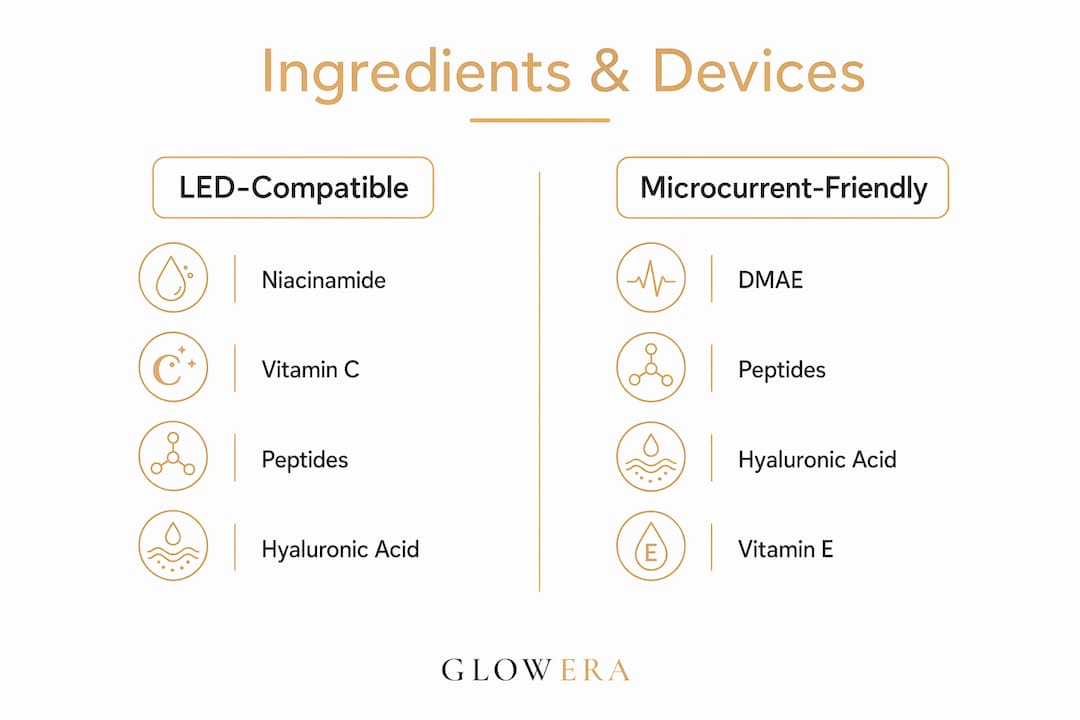
Peptides and DMAE deserve particular attention in post-LED routines. Studies show DMAE visibly firms and plumps skin, making it a fast-acting complement to red light therapy sessions that already target collagen stimulation. Peptides support firmness through a different mechanism, signalling fibroblasts to produce more structural proteins. Together, they extend the benefits of a single LED session well beyond the treatment window.
For microcurrent devices, hyaluronic acid is the standout pairing. It serves a dual purpose: it keeps the skin surface hydrated (which improves electrical conductivity) and delivers deep hydration as the current encourages better penetration. The Ordinary’s layering guide recommends combining HA 2% + B5 with Niacinamide 10% + Zinc 1% for a hydrated, barrier-supportive base. This combination translates directly to microcurrent use, where a well-hydrated skin surface produces more consistent results.
Ingredient pairings by device:
- LED mask (red light): Peptides, DMAE, niacinamide, vitamin E, hyaluronic acid applied post-session
- LED mask (blue light): Niacinamide, zinc-based formulas, gentle hydrators (avoid heavy oils that may clog pores post-treatment)
- Microcurrent (e.g. NuFACE): Hyaluronic acid gel as conductive medium, followed by peptide serum
- Radiofrequency device: Hydrating serums, collagen peptides, ceramide-rich moisturisers post-session
Timing matters as much as ingredient selection. Vitamin C should be used in the morning and retinol reserved for the evening. This AM/PM separation is not merely a preference. Vitamin C is pH-sensitive and works best in an acidic environment, while retinol requires a neutral pH and causes photosensitivity that makes daytime use counterproductive.
Pro Tip: If you use an LED mask in the morning, apply your vitamin C serum immediately afterwards. The cellular activity triggered by red light therapy creates a brief window of enhanced absorption, making this one of the most productive moments in your entire routine.
Step-by-step: how to use skincare devices with ingredients
A well-structured routine removes guesswork and protects your skin from the irritation that comes from poorly sequenced actives. The following steps apply to the most common at-home device sessions.
- Cleanse thoroughly. Use a gentle, sulphate-free cleanser and remove all traces of makeup, SPF, and prior skincare. Dr. Eleonora Fedonenko, cited in CNET’s LED guidance, stresses that starting on a clean face is non-negotiable for maximising light absorption.
- Apply any required conductive medium. For microcurrent devices like NuFACE, apply a hyaluronic acid gel or the brand’s own conductive gel before beginning. Do not use oil-based products at this stage.
- Run your device session. Follow the manufacturer’s recommended duration. For LED masks, 10 to 20 minute treatments three to five times weekly is the evidence-backed frequency. For microcurrent, five to ten minutes per session is standard.
- Wait two to three minutes post-session. Allow the skin to settle before applying actives. This brief pause lets surface temperature normalise and prevents any potential interaction between residual device effects and your first serum layer.
- Apply your first serum. Start with the thinnest, most water-based formula. Hyaluronic acid or a niacinamide serum works well here. Press gently into the skin rather than rubbing.
- Layer additional actives in order of texture. Move from thinnest to thickest: essence, serum, moisturiser. Avoid applying retinol or exfoliating acids in a post-device routine unless it is your dedicated PM session with no device use planned.
- Seal with moisturiser and, in the morning, SPF. This locks in everything applied and protects the skin barrier.
| Step | Action | Key ingredient or product |
|---|---|---|
| 1 | Cleanse | Gentle, non-stripping cleanser |
| 2 | Conductive medium (if needed) | Hyaluronic acid gel or brand gel |
| 3 | Device session | LED mask, microcurrent, or RF device |
| 4 | First serum layer | Hyaluronic acid, niacinamide |
| 5 | Second serum or treatment | Peptides, vitamin C (AM) or retinol (PM) |
| 6 | Moisturiser | Ceramide-rich or peptide moisturiser |
| 7 | SPF (AM only) | Broad-spectrum SPF 30 or higher |
Pro Tip: Never apply a physical exfoliant or AHA/BHA toner immediately before or after a device session. The combination of mechanical or chemical exfoliation with device-induced skin stimulation significantly increases the risk of redness and barrier disruption.
Common mistakes when pairing tools with serums
The most frequent error is applying vitamin C and retinol in the same session. INKEY’s guidance is direct: vitamin C belongs in the morning routine and retinol in the evening. Using both together creates a pH conflict that reduces the efficacy of both ingredients and increases the likelihood of irritation, particularly when the skin is already sensitised from device use.
The second most common mistake is combining exfoliating acids and retinol on the same night. INKEY recommends scheduling AHAs and BHAs two to three nights per week and retinol on alternate nights. This prevents over-exfoliation, which strips the skin barrier and makes it reactive to even gentle device treatments.
“Poor cleansing is the most common bottleneck in achieving full benefits from skincare devices paired with actives. If residue is present, neither the device nor the ingredient performs as intended.” — Insight from CNET dermatologist guidance
Additional mistakes to avoid:
- Skipping the conductive gel with microcurrent devices, which reduces current delivery and can cause uneven stimulation
- Applying heavy oils before LED use, which scatter light and reduce wavelength penetration
- Using retinol the night before a device session if your skin is sensitivity-prone; give it at least one clear night between retinol application and device use
- Layering too many actives post-device, which overwhelms the skin. Two serums maximum after a device session is a sensible limit
- Ignoring skin response. If redness or tightness persists for more than 30 minutes after a session, reduce device frequency or simplify your post-device ingredient stack
Adapting your routine to your skin’s actual response is more productive than following any fixed protocol rigidly. Consistency and correct timing matter more than complexity. A simple, well-sequenced routine used reliably will outperform an elaborate one applied inconsistently.
Key takeaways
Correct device preparation combined with well-timed ingredient application is the foundation of any effective skincare technology integration routine.
| Point | Details |
|---|---|
| Cleanse before every session | Residue blocks LED light and reduces microcurrent conductivity, directly lowering results. |
| Match ingredients to device type | Peptides and DMAE suit post-LED use; hyaluronic acid is the priority pairing for microcurrent. |
| Separate vitamin C and retinol | Use vitamin C in the morning and retinol in the evening to avoid pH conflict and irritation. |
| Avoid acids on device nights | Combining AHAs, BHAs, or retinol with device use on the same session increases barrier damage risk. |
| Sequence by texture | Apply serums thinnest to thickest after device use, finishing with moisturiser and SPF in the morning. |
Why device prep is the step most people underestimate
I have reviewed hundreds of skincare routines over the years, and the pattern is consistent: people invest in excellent devices and quality serums, then wonder why their results plateau. In almost every case, the issue is not the product. It is the preparation.
The cleansing step is treated as perfunctory when it is actually the most consequential part of the entire routine. A layer of SPF or residual foundation does not just slightly reduce LED penetration. It can block it almost entirely. I have seen readers switch from inconsistent results to visible improvement simply by adding a second cleanse before their LED session, with no other changes made.
The other insight I would offer is this: do not try to maximise every session by stacking as many actives as possible post-device. The skin has a finite capacity to process stimulation. One or two well-chosen serums applied after a device session will consistently outperform five products layered in rapid succession. The Dr. Dennis GROSS approach to LED therapy is instructive here. It is built around simplicity and precision, not volume.
Start with one device and two complementary ingredients. Practise the routine until it is second nature. Then, and only then, consider adding complexity. Patience in this context is not passive. It is the most productive thing you can do for your skin.
— Adam
Explore Glowera’s range of devices and serums
Glowera brings together the devices and ingredient knowledge you need to build an effective, results-driven routine in one place.
From LED light therapy masks by Dr. Dennis GROSS and CurrentBody to microcurrent devices from NuFACE, Glowera’s curated selection covers every major device category discussed in this guide. The platform also stocks K-beauty technology from Medicube, including the AGE-R Ultra Tune 40.68, an RF microcurrent device designed for anti-ageing routines paired with targeted actives. For the full range of professional-grade tools available in the UAE, visit Glowera’s K-beauty tech collection and find the combination that suits your skin goals.
FAQ
What ingredients should I apply after using an LED mask?
Post-LED therapy ingredients include peptides, niacinamide, hyaluronic acid, vitamin C, vitamin E, and DMAE. These are non-photosensitising and complement the cellular activity triggered by light therapy.
Can I use retinol with my skincare device?
Retinol is best reserved for evening routines on nights when you are not using a device, particularly if your skin is sensitivity-prone. INKEY recommends keeping retinol and exfoliating acids on separate nights to avoid barrier disruption.
How often should I use an LED mask?
Dermatologist guidance recommends LED mask sessions of 10 to 20 minutes, three to five times per week, always on thoroughly cleansed skin free from any residue.
Does hyaluronic acid work with microcurrent devices?
Hyaluronic acid is the ideal pairing for microcurrent devices like NuFACE. It maintains the skin hydration needed for consistent electrical conductivity and delivers deep hydration as the current works. The Ordinary’s layering guide supports combining it with niacinamide for a barrier-strengthening base.
Why should vitamin C and retinol be used at different times of day?
Vitamin C and retinol have conflicting pH requirements and combining them increases irritation risk. INKEY’s 2026 guidance positions vitamin C as a morning active and retinol as an evening active, creating a 24-hour brightening and renewal system without conflict.