Most people assume that if a skincare product or device carries the word “clinical” on its packaging, it has been through rigorous scientific testing. That assumption is not always correct. Understanding what is clinical study skincare technology means learning to separate genuine evidence from well-designed marketing. This article explains the core principles of clinical skincare technology basics, how trials are structured, what modern measurement tools reveal, and how this knowledge helps you make smarter decisions about the devices and formulations you invest in.
Table of Contents
- Key takeaways
- What is clinical study skincare technology
- How clinical skincare studies are designed and measured
- Clinically validated skincare technologies and their results
- Interpreting clinical skincare results critically
- How clinical research shapes your skincare routine
- Consumer vs clinical skin analysis technology
- My perspective: why I take clinical evidence seriously now
- Explore clinically backed devices at Glowera
- FAQ
Key takeaways
| Point | Details |
|---|---|
| Clinical validation matters | Studies test safety and efficacy under controlled conditions, giving consumers reliable evidence beyond marketing claims. |
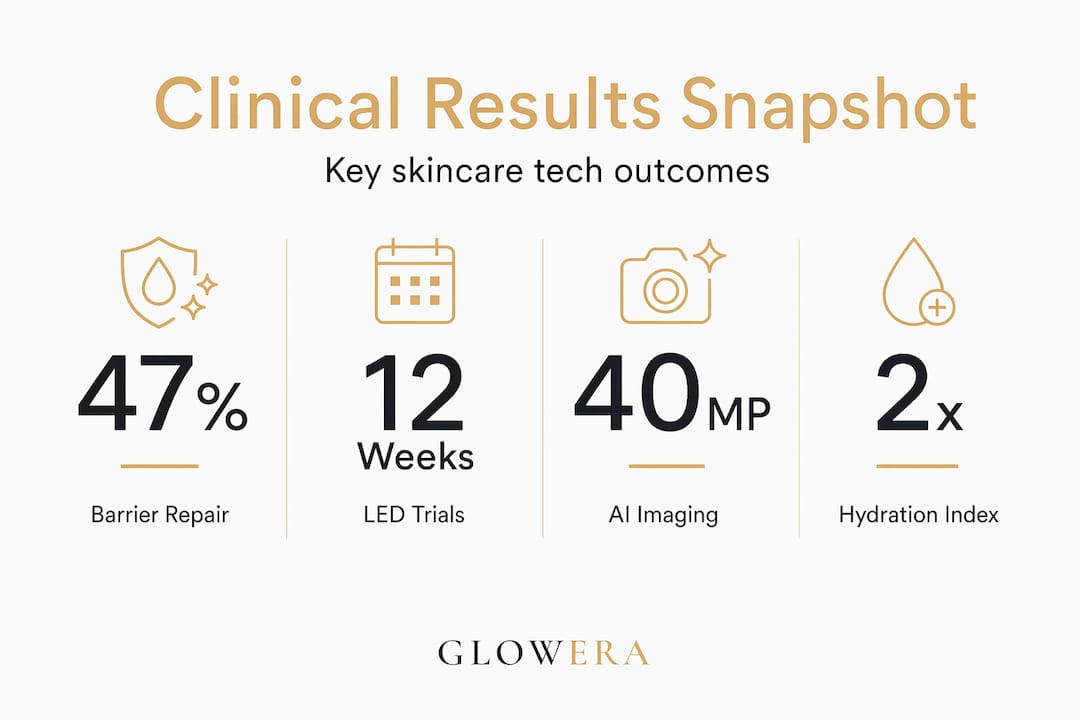
| Advanced imaging tools | Technologies such as 40MP cameras and 12-spectrum imaging quantify skin changes with clinical-grade precision. |
| Study design is critical | Randomised, double-blind, controlled trials are the most trustworthy designs for isolating ingredient or device effects. |
| Consumer vs clinical tools | Clinical AI outputs data for regulators; consumer tools translate findings into readable grades and product guidance. |
| Decentralised trials expand access | Home-based participation using AI imaging can reduce study costs significantly and broaden participant diversity. |
What is clinical study skincare technology
Clinical study skincare technology is the organised use of scientific methods, measurement tools, and statistical analysis to evaluate whether skincare products and devices actually perform as claimed. It sits at the intersection of dermatology, biomedical engineering, and materials science. A clinical study in this context is a structured investigation conducted with human participants, designed to measure specific outcomes such as hydration levels, wrinkle depth, pigmentation changes, or barrier function improvement.
The word “clinical” is key. Unlike a consumer review or a brand survey, a clinical study follows a defined protocol. Participants are recruited to meet specific inclusion criteria, and clinical trials validate safety and efficacy under controlled conditions before a product reaches the market. That process protects consumers and gives clinicians confidence when recommending treatments.
What makes this field particularly relevant today is the technology now available to measure skin changes objectively. Earlier studies relied heavily on dermatologist grading, which, while professional, introduced subjectivity. Modern clinical research increasingly incorporates imaging systems, AI diagnostics, and sensor-based measurement to produce data that is consistent, repeatable, and regulatorily accepted.
Understanding clinical skincare technology basics also means recognising that the term “clinically tested” on a label is not synonymous with “clinically proven.” A product can be tested in a single open-label study with 20 participants and still technically carry that phrase. The depth, design, and transparency of the study are what determine the quality of the evidence.
How clinical skincare studies are designed and measured
Modern clinical skincare trials are far more technically sophisticated than many consumers realise. The structure of a study directly affects how trustworthy its conclusions are, and the tools used to gather data determine how precisely skin changes can be measured.
Study structure fundamentals
A well-designed clinical skincare trial typically includes:
- A defined cohort: A group of participants selected according to specific criteria such as age, skin type, or condition severity.
- Control groups: Participants who receive either a placebo or a comparator treatment, allowing researchers to isolate the effect of the active ingredient or device.
- Safety assessments: Monitoring for adverse reactions throughout the study period, not just at the end.
- Efficacy endpoints: Pre-agreed measures of what constitutes a meaningful improvement, such as a statistically significant reduction in wrinkle depth or a measurable increase in transepidermal water loss resistance.
Blinding is another critical element. In a double-blind study, neither the participant nor the researcher administering the treatment knows who is receiving the active product. This prevents expectation bias from influencing reported outcomes.
Technology used to measure skin changes
The measurement tools available in clinical skincare research have advanced considerably. AI-powered skin diagnostics now use 40MP cameras and 12-spectrum imaging to assess parameters including wrinkle depth, pore size, UV damage, and hydration with clinical-grade consistency. These systems produce quantifiable data, not subjective impressions.
Key parameters measured in clinical skincare trials include:
- Hydration levels (measured via corneometry)
- Barrier function (assessed through transepidermal water loss, or TEWL)
- Wrinkle depth and density (captured via 3D surface mapping)
- Pigmentation and UV damage (revealed by fluorescence and polarised light imaging)
- Skin tone uniformity (assessed with spectrophotometry)
Pro Tip: When reading a clinical skincare claim, look for the specific measurement tool mentioned. Studies that name their instruments, such as corneometers or VISIA imaging systems, are far more credible than those citing “expert grading” alone.
Decentralised clinical trials using AI imaging allow participants to submit standardised photographs remotely, which reduces costs by up to 50% and improves both recruitment and retention compared to traditional site-based visits. This development is expanding who can participate in skincare research and accelerating the pace at which new evidence is generated.
Clinically validated skincare technologies and their results
Understanding the benefits of skincare clinical trials becomes much clearer when you look at specific outcomes from published research. The evidence across several categories is genuinely persuasive.
Biomimetic collagen and barrier repair
A four-week clinical study involving 47 women demonstrated that a serum formulated with Tripeptide-29 biomimetic collagen peptides produced objective hydration improvements of up to 93.7%, alongside measurable improvements in barrier function, texture, and wrinkle reduction. Those are not subjective impressions. They are quantified measurements taken with standardised instruments before and after treatment.
LED light therapy devices
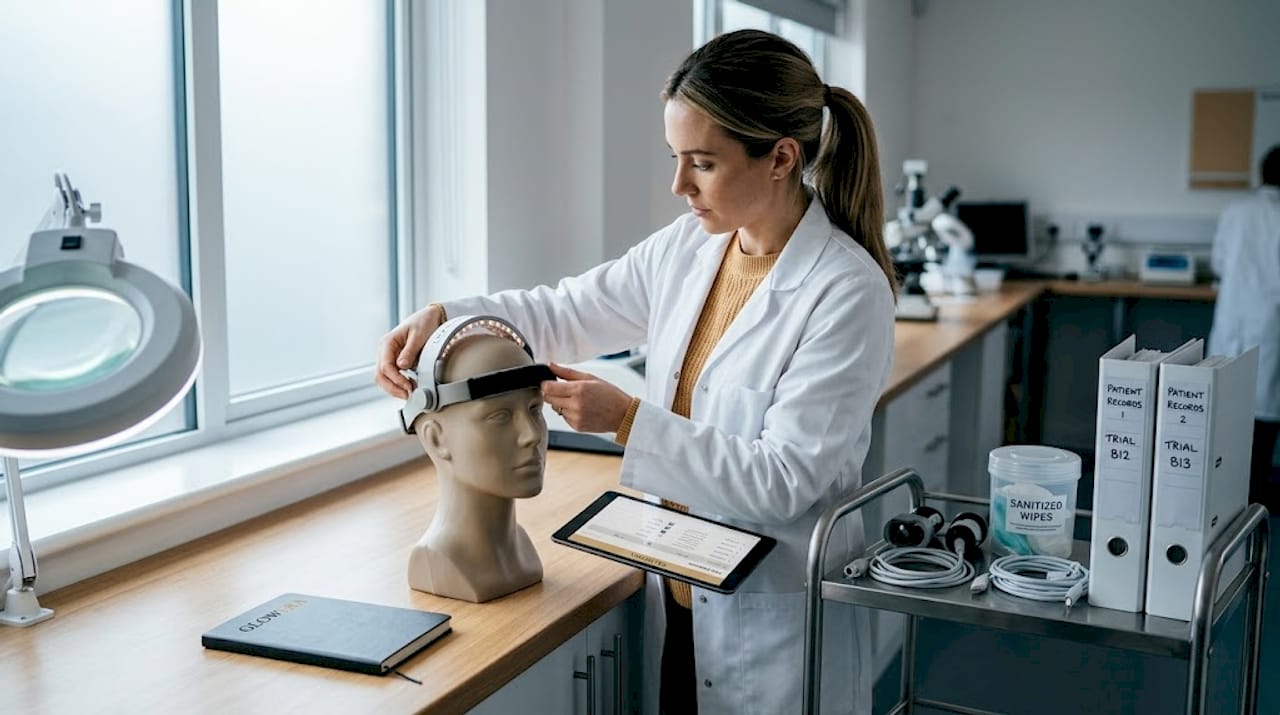
LED light therapy has accumulated a meaningful body of clinical evidence. Trials involving cohorts of 59 to 60 subjects over 12-week periods have demonstrated objective and subjective improvements in signs of ageing and in conditions such as acne. The key to these results lies in specific wavelengths targeting cellular processes: red light at 630 to 660 nanometres stimulates fibroblast activity and collagen synthesis, while blue light at 415 to 450 nanometres disrupts acne-causing bacteria.
Summary of clinical evidence by technology
| Technology | Study duration | Key measured outcome | Evidence strength |
|---|---|---|---|
| Biomimetic collagen serum | 4 weeks | 93.7% hydration improvement | Statistically significant |
| LED light therapy (red) | 12 weeks | Wrinkle depth reduction | Objective + subjective |
| LED light therapy (blue) | 12 weeks | Acne lesion reduction | Objective measurement |
| Multi-ingredient formulations | 4 to 8 weeks | Combined barrier and texture improvement | Moderate (isolation limited) |
What makes this evidence persuasive is not just the percentage figures but the combination of objective measurements and participant satisfaction data. When both converge in the same direction, the result is more trustworthy than either measure alone.
Interpreting clinical skincare results critically
Knowing what are skincare clinical trials is only half the work. The other half is reading their results critically. The skincare industry has a well-documented history of presenting study findings in selectively favourable ways, and consumers deserve better tools to evaluate what they are being shown.
Several pitfalls are worth understanding:
- Small sample sizes produce results that may not hold across broader populations. A study of 20 participants tells you far less than a study of 200.
- Open-label designs where both participants and researchers know what is being applied are highly susceptible to placebo effects and confirmation bias.
- Multi-ingredient formulations make it nearly impossible to attribute results to a specific active, because several compounds are working simultaneously.
- Sponsor conflicts of interest are common. Studies funded by the brand selling the product are more likely to report favourable outcomes than independently conducted research.
Randomised double-blind controlled trials are the accepted gold standard precisely because they address the majority of these concerns. When you see a study cited in a brand’s marketing materials, the first question to ask is: was this blinded, was it randomised, and was it independently conducted?
Consumers should seek studies with robust controls and sufficient participant sizes, as many skincare claims suffer from biased or insufficient evidence. This is not cynicism; it is informed evaluation.
Pro Tip: Search for the study behind any major skincare claim on PubMed or Google Scholar. If it does not appear in a peer-reviewed journal, treat the evidence with appropriate caution.
It is also worth noting that a single study, no matter how well designed, is rarely definitive. The most trustworthy conclusions in skincare science come from multiple independent replications of similar findings.
How clinical research shapes your skincare routine
Understanding how clinical studies improve skincare is not purely academic. This knowledge has direct practical implications for the products and devices you choose and how you use them.
Here are four ways clinical research translates into smarter personal skincare decisions:
-
Selecting evidence-backed products. Clinical data lets you move beyond ingredient trend cycles. When a peptide or device has published, peer-reviewed evidence behind it, you have a rational basis for choosing it over alternatives that rely solely on brand storytelling.
-
Calibrating expectations realistically. Clinical studies specify how long improvements take and what degree of change is realistic. A clinical study that shows meaningful improvement at four weeks tells you that patience is part of the protocol, not a sign the product is failing.
-
Personalising with AI skin analysis. Consumer-facing AI tools are becoming more sophisticated, drawing on the same imaging principles used in decentralised clinical trials to give individuals at home a clearer picture of their skin’s current condition and progress over time.
-
Complementing professional treatments. Clinically validated topical actives used around the time of aesthetic procedures, such as laser treatments or chemical peels, are increasingly recognised as supporting optimal healing. Clinical skincare and professional treatments work best as complementary strategies rather than competing alternatives.
The advancements in skincare technology that matter most to your routine are those grounded in this kind of evidence. Not the newest ingredient in a magazine, but the one with a credible study behind it.
Consumer vs clinical skin analysis technology
One of the most useful distinctions to understand is the difference between clinical-grade skin analysis and the consumer tools now available at home or in beauty retail settings.
| Feature | Clinical AI skin analysis | Consumer skin analysis tools |
|---|---|---|
| Image resolution | 40MP with multi-spectrum lighting | Standard smartphone camera |
| Output format | Statistical values, heatmaps, raw data | Readable grades and product recommendations |
| Measurement depth | Subsurface UV damage, barrier metrics | Surface texture, tone, visible pores |
| Regulatory context | Designed for research and regulatory submission | Designed for usability and purchasing guidance |
| Setting | Controlled clinical environment | Home or retail environment |
Clinical AI analysis produces data for regulatory and research purposes, while consumer tools adapt the same underlying principles for everyday usability. Neither is inherently superior. They serve different purposes. The consumer tool helps you understand your skin and track progress. The clinical tool generates the evidence that tells you which products and devices are worth using in the first place.
Knowing this distinction helps you use consumer technology as a complement to clinical evidence rather than a replacement for it.
My perspective: why I take clinical evidence seriously now
I will admit that I did not always scrutinise skincare claims the way I do now. Like many people, I made decisions based on packaging, peer recommendations, and how a product felt on my skin. What shifted my thinking was spending time reading actual peer-reviewed studies and realising how frequently the published results diverged from what brands were communicating publicly.
What struck me most was not the existence of fraud. It was the existence of genuine ambiguity. Many brands cite real studies conducted with real participants. The problem is that the study design is often too limited to support the broad conclusions drawn from it. Clinical trials move skincare beyond anecdote into measurable science, but only when the trials are designed to actually isolate what they claim to be testing.
I have also seen the difference that ingredient integrity makes, particularly in post-procedural recovery contexts. When clinically validated actives are used thoughtfully alongside professional treatments, the outcomes are noticeably better than either approach used in isolation. That realisation changed how I think about skincare as a category. It is not a lifestyle accessory. It is a practice that benefits enormously from scientific rigour.
The future of clinical study skincare technology lies in greater personalisation through AI and the expansion of decentralised trials that bring diverse participants into the research process. That is genuinely worth being excited about.
— Adam
Explore clinically backed devices at Glowera
If this article has prompted you to look more critically at the evidence behind your skincare tools, Glowera is a practical next step. The platform curates professional-grade facial devices that are selected specifically because they are supported by clinical research, not just compelling marketing copy.
Glowera’s range includes LED light therapy devices with 12-week trial evidence behind them, K-beauty technology from brands such as Medicube that have been evaluated in controlled studies, and microcurrent devices with documented outcomes for skin toning and lifting. Every product on the platform is authentic and sourced through verified brand partnerships, which matters when clinical backing is part of what you are paying for. If you want to explore the full range of devices available in the UAE, the Glowera beauty tech collection provides a well-organised starting point with detailed product information to support your decision.
FAQ
What does “clinically tested” mean in skincare?
“Clinically tested” means a product or device has been evaluated in a study involving human participants, but it does not specify the quality or rigour of that study. The design, sample size, and blinding of the trial determine how reliable the results are.
What are skincare clinical trials?
Skincare clinical trials are structured scientific investigations where participants use a product or device under controlled conditions so researchers can measure specific outcomes such as hydration, wrinkle reduction, or barrier function using standardised instruments.
How do clinical studies improve skincare products?
Clinical studies identify which ingredients and devices produce measurable, statistically significant improvements, allowing formulators and manufacturers to refine products based on real outcome data rather than theoretical efficacy alone.
Are home-use skincare devices clinically validated?
Some are. Devices such as LED light therapy tools and microcurrent devices from established brands have published clinical trial data supporting their claims. Checking for peer-reviewed studies specific to the device model is the most reliable way to verify this.
What is the difference between clinical and consumer skin analysis technology?
Clinical skin analysis tools use high-resolution multi-spectrum imaging and produce statistical data for research and regulatory purposes. Consumer tools use the same underlying concepts but translate outputs into readable grades and product recommendations suited to everyday decision-making.