Verifying the authenticity of a beauty device is the single most reliable way to protect your skin, your money, and your health. Counterfeit beauty gadgets flood online marketplaces every year, and many are indistinguishable from genuine products at first glance. The methods that actually work combine official certification checks, brand-backed warranty validation, physical packaging inspection, and digital tools such as LegitGrails or brand-specific QR portals. Brands like Medicube and NuFACE provide serial number registries and direct customer support precisely because they know how to verify beauty device authenticity is a question their buyers must answer before trusting a device on their skin.
How to verify beauty device authenticity through certifications
Official certifications are the strongest proof that a beauty device is genuine and safe. The three most relevant marks are CE (European conformity), FCC (US Federal Communications Commission), and FDA registration. Each of these requires a unique alphanumeric certificate number that you can cross-reference in public databases maintained by the issuing bodies.
Logos alone are not proof. Counterfeit devices routinely misuse certification logos without holding actual certification. A CE logo printed on packaging costs nothing to reproduce. The certificate number behind it is what matters.
For LED light therapy devices specifically, look for compliance with IEC 62471, the international photobiological safety standard. This standard classifies devices by risk group based on their light output. A genuine device from brands like Dr. Dennis GROSS or CurrentBody will state the specific wavelengths used (typically 630nm for red light, 415nm for blue light) alongside the risk classification. Vague descriptions such as “multi-wavelength LED” without precise figures are a warning sign.
- Check the product listing and packaging for a full certificate number, not just a logo
- Validate certificate numbers directly with the FDA’s 510(k) database, the EU NANDO database for CE, or the FCC’s Equipment Authorization System
- Confirm the tested model number on the certificate matches the device model you are purchasing
- Request a full, uncropped certificate from the seller if it is not already published on the brand’s official website
- Ask for irradiance values and photobiological safety data in the technical spec sheet, not just marketing claims
Pro Tip: If a seller provides a certificate image that is cropped, watermarked by a third party, or shows a different model number than the device being sold, treat it as a counterfeit indicator and do not proceed with the purchase.
Does warranty documentation confirm a device is genuine?
A brand-backed warranty is one of the clearest signals of a genuine product. Authentic devices carry a manufacturer warranty; a seller-only or marketplace-only warranty is a red flag that the product may be grey-market or counterfeit. The distinction matters because a brand warranty means the manufacturer stands behind that specific unit.
Here is a practical process for using documentation to confirm authenticity:
- Request a formal invoice before completing any purchase. The invoice must include the seller’s legal name, tax identification number, the device model number, serial number, purchase date, and price. Screenshots of order confirmations are not sufficient for warranty activation or dispute resolution.
- Cross-reference the serial number with the brand’s official support team. Brands such as FOREO, NuFACE, and Medicube all offer serial number verification through their customer service channels. A genuine serial number will return a confirmed registration record.
- Check the seller’s authorised status. Visit the brand’s official website and look for an authorised reseller list. Purchasing from a seller not on that list removes your warranty protection, regardless of what the listing claims.
- Register the device immediately after purchase through the brand’s official portal. This timestamps your ownership and activates the manufacturer warranty, which is critical if you later need to make a claim.
- Store both digital and physical copies of your invoice, warranty card, and packaging until the warranty period expires.
Pro Tip: Keep a dedicated folder on your phone or cloud storage for beauty device receipts and warranty documents. If a dispute arises, having a dated invoice with a serial number is the difference between a full refund and no recourse at all.
Which packaging features signal a genuine device versus a fake?
Physical packaging is one of the most informative places to perform an authenticity check on beauty tools. Genuine products from established brands invest heavily in packaging quality because it reflects their brand standards. Counterfeits cut costs here, and the signs are visible if you know what to look for.
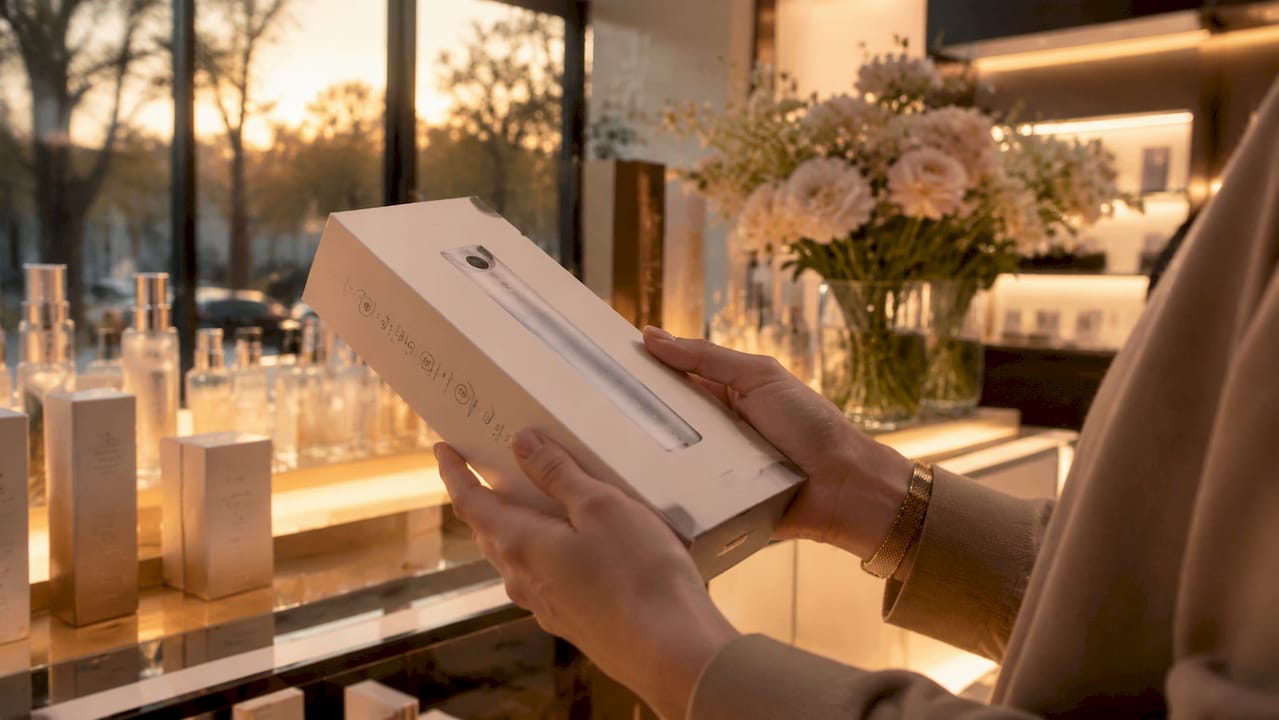
Batch codes on authentic Korean skincare devices are laser-engraved or inkjet-printed with sharp, clean edges. Codes that smudge, peel, or can be scratched off with a fingernail indicate counterfeit packaging. This applies equally to devices from brands like Medicube and ZIIP.
| Feature | Authentic device | Counterfeit device |
|---|---|---|
| Print quality | Sharp, consistent font and colour throughout | Blurry text, colour inconsistencies, or misaligned logos |
| Batch code | Laser-engraved or sharply inkjet-printed | Removable sticker or easily scratched off |
| QR or NFC tag | Links to brand-hosted portal with batch and scan history | Redirects to generic site or produces no result |
| Certification marks | Full certificate number printed or included in documentation | Logo only, no accompanying certificate number |
| Brand language | Precise model name, specifications, and country of manufacture | Vague terms such as “compatible”, “premium quality”, or no brand name |
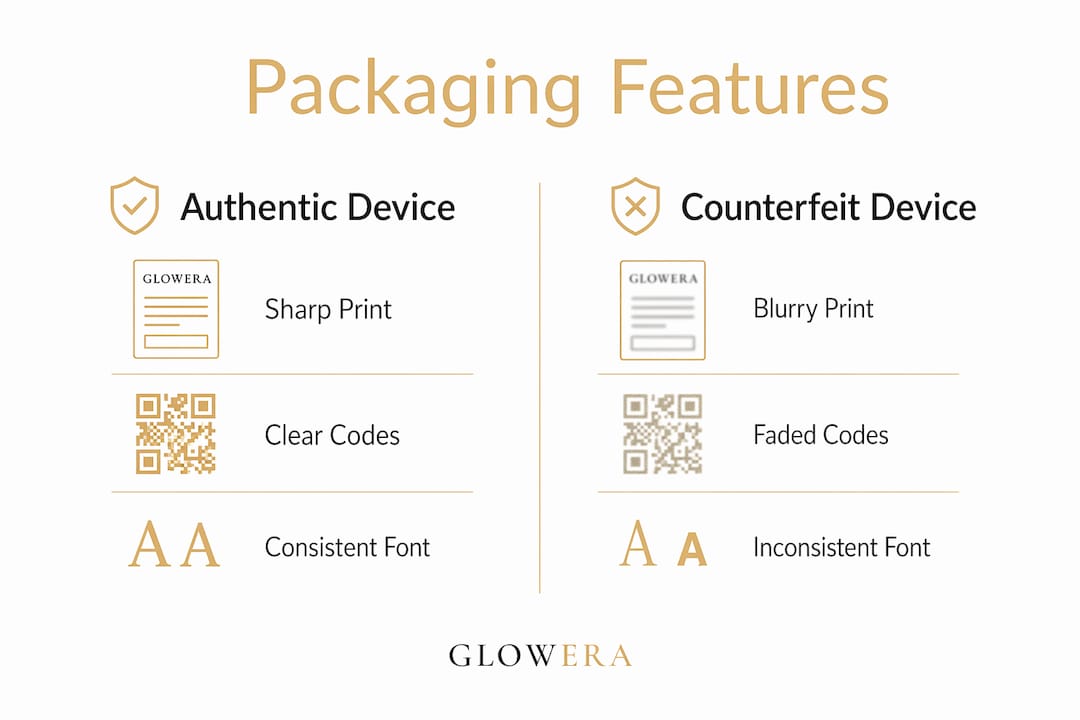
Beyond the table above, check that the device’s physical appearance matches the official product images on the brand’s website exactly. Colour variations, different button placements, or slightly altered logos are common signs of fake beauty devices. The packaging insert should also match the language and formatting of official brand materials.
How do digital verification tools and authentication services work?
Digital verification is now the most accurate method available for consumers who want certainty. AI-human hybrid authentication services such as LegitGrails combine machine learning analysis with expert human review to achieve greater than 99.3% accuracy, with results delivered within 12–24 hours. This level of precision is not achievable through visual inspection alone.
Brand-specific QR codes and NFC tags offer a faster but more limited check. A genuine QR scan should return batch details, a timestamp, geographic scan data, and a “first scan” indicator. A “re-scan” alert means the code has been scanned before, which may indicate a cloned or reused code. If the scan redirects to a generic landing page with no product-specific data, the code is unreliable.
- Use the brand’s official app where available (FOREO and NuFACE both offer device registration and verification through their apps)
- Check that QR scan results display the specific batch number and match the model on your packaging
- Treat any QR code that redirects to a third-party retail site rather than the brand’s own portal as inconclusive
- For high-value devices such as the CurrentBody LED Light Therapy Panel, consider submitting to a professional authentication service before use
- If verification results are inconsistent or suspicious, contact brand customer support directly before using the device on your skin
Pro Tip: Do not rely on a QR scan alone as your only verification step. A counterfeit manufacturer can print a working QR code that links to a convincing but fake brand page. Always cross-reference with at least one additional check, such as serial number verification with the brand.
What steps should you follow when purchasing to avoid counterfeit devices?
Buying from the right source removes most of the risk before it begins. The following steps cover the full purchase process from search to post-delivery verification.
- Buy exclusively from authorised retailers. Brands like Medicube publish their authorised reseller lists on their official websites. Glowera is an authorised retailer for multiple premium beauty tech brands in the UAE, which means every device sold carries a brand-backed warranty.
- Compare prices against the brand’s official retail price. Genuine professional LED masks rarely sell below £150 (approximately AED 700). A device listed at half the standard retail price is almost certainly not genuine.
- Scrutinise seller reviews carefully. Polished marketplace listings with suspiciously high ratings are a known counterfeit tactic. Look for verified purchase reviews that mention specific product details, not generic praise.
- Contact brand customer support directly with the serial number before or immediately after purchase. Brand support is the final authority on whether a serial number is registered, valid, and covered by warranty.
- Retain all packaging and documentation until you have completed serial number verification and confirmed the device functions as described. This protects your right to return or dispute the purchase.
- Report suspicious sellers promptly to the platform and, where relevant, to the brand’s anti-counterfeiting team. Most major brands including NuFACE and FOREO have dedicated channels for this.
You can also read Glowera’s guide on beauty tech authentication for a deeper look at how these verification principles apply specifically to devices sold in the UAE market.
Key takeaways
Verifying a beauty device’s authenticity requires checking official certification numbers, confirming brand-backed warranty status, inspecting packaging quality, and using digital tools or direct brand contact to validate serial numbers.
| Point | Details |
|---|---|
| Certifications require numbers | A logo alone proves nothing; verify the certificate number with the FDA, CE, or FCC database. |
| Brand warranty signals genuineness | A manufacturer warranty confirms the brand stands behind that specific unit; seller-only warranties do not. |
| Packaging reveals counterfeits | Laser-engraved batch codes, precise QR scans, and consistent branding are markers of authentic devices. |
| Digital tools add accuracy | AI-human services like LegitGrails exceed 99.3% accuracy and provide results within 12–24 hours. |
| Serial number verification is final | Contact brand support directly with the serial number; this is the most reliable single confirmation step. |
Why I think most buyers underestimate the counterfeit risk
The sophistication of counterfeit beauty devices has increased considerably over the past few years. I have seen fake LED masks with convincing CE logos, professional-looking packaging, and QR codes that redirect to plausible but fake brand pages. The visual quality of these fakes is now good enough to deceive even experienced buyers.
What concerns me most is that consumers tend to trust branding over technical evidence. A device that looks like a NuFACE or a Medicube is not necessarily one. The serial number, the certificate number, and the brand’s own confirmation are the only things that actually prove what you have in your hands.
My advice is to adopt a zero-trust approach with any online listing, regardless of how professional it appears. Treat every purchase as unverified until you have completed at least two independent checks: a QR or NFC scan that returns genuine batch data, and a serial number confirmation from the brand’s customer support team. This takes less than ten minutes and removes almost all residual risk.
I also think consumers underestimate the safety dimension here. A counterfeit LED mask may emit incorrect wavelengths or exceed safe irradiance levels. A fake microcurrent device may deliver unregulated electrical output. These are not cosmetic concerns. They are genuine health risks. Prioritise serial number verification and certification checks every time, not just when the price looks suspicious.
— Adam
Shop authentic beauty tech with confidence at Glowera
Glowera stocks a curated selection of premium beauty technology devices, each sold with full brand-backed warranties and official certification documentation. Every product on the platform is sourced directly from authorised brand channels, which means the verification work starts before the device reaches you.
Whether you are looking for authentic K-beauty devices such as the Medicube Booster Pro Heart Edition, or clinically validated LED light therapy devices from brands like CurrentBody and Dr. Dennis GROSS, Glowera provides the purchase documentation, serial number support, and customer service to back every order. If you ever have a question about a device’s authenticity after purchase, the Glowera support team can assist you in contacting the brand directly. Buy with confidence at Glowera.
FAQ
How do I check if a beauty device is genuine?
Check the official certification number on the packaging against the FDA, CE, or FCC database, then contact the brand’s customer support with the device’s serial number for direct confirmation. These two steps together provide reliable proof of authenticity.
What are the main signs of fake beauty devices?
The most common signs include removable or blurry batch codes, certification logos without accompanying certificate numbers, QR codes that redirect to generic websites, and prices significantly below the brand’s standard retail price.
Can QR codes confirm a beauty device is authentic?
A QR code is only reliable if it links to a brand-hosted portal showing batch details, a timestamp, and a “first scan” indicator. A re-scan alert or a redirect to a generic page means the code cannot confirm authenticity on its own.
Is a marketplace warranty enough to trust a device?
No. A seller-only or marketplace warranty is a known red flag for grey-market or counterfeit products. Genuine devices carry a manufacturer warranty that the brand itself will honour, which you can confirm by registering the serial number on the brand’s official website.
What should an authentic invoice include?
A valid invoice must contain the seller’s legal name, tax identification number, device model number, serial number, purchase date, and price. Order confirmation screenshots do not meet this standard and are insufficient for warranty activation or dispute resolution.