
The piezoelectric effect in beauty devices is defined as the conversion of electrical signals into precise mechanical vibrations using specialised ceramic materials, most commonly lead zirconate titanate (PZT). These vibrations drive ultrasonic exfoliation, mist atomisation, and enhanced product absorption at the skin surface. Understanding what is piezoelectric effect beauty devices means understanding this electromechanical process at its core. The technology sits at the intersection of materials science and skincare, and it underpins a growing category of professional-grade tools now available for home use through platforms like Glowera.
How do piezoelectric effect beauty devices work?
Piezoelectric devices work by applying an alternating electrical current to a PZT ceramic element, causing it to expand and contract at ultrasonic frequencies. This is the inverse piezoelectric effect: electrical energy in, mechanical motion out. The result is a transducer vibrating thousands of times per second, far beyond what the human ear can detect.
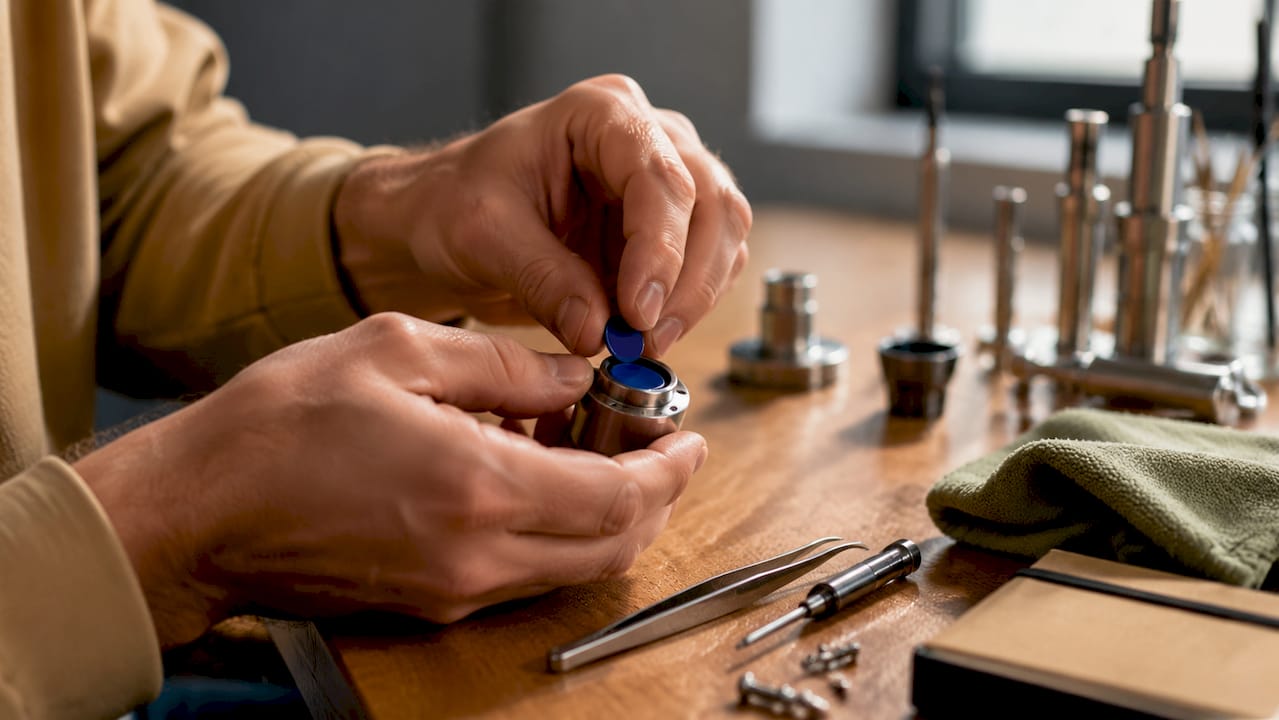
PZT ceramics deform by approximately 0.1% of their original dimension under an applied electric field. That fraction sounds small, but at ultrasonic frequencies it generates substantial mechanical energy at the skin surface.
The vibrating ceramic element alone is not enough. Acoustic waveguides, typically engineered metal spatulas or applicator heads, amplify and direct those vibrations to the treatment area. The waveguide must be tuned to the resonance frequency of the ceramic to work efficiently. A mismatch between the two reduces energy delivery and can cause the device to overheat.
- Inverse piezoelectric effect: electrical input produces mechanical deformation in the ceramic
- Transducer: the PZT element that converts the signal into vibration
- Acoustic waveguide: the metal applicator that amplifies and delivers vibrations to skin
- Resonance frequency: the specific frequency at which the system operates most efficiently and safely
Pro Tip: When evaluating any piezoelectric beauty tool, check whether the manufacturer specifies the operating frequency. Devices that publish this figure have typically invested in proper resonance engineering.
The reversible nature of piezoelectric materials means the same ceramic element can both generate vibrations and detect mechanical feedback. This dual function is useful in theory, but managing both states in a compact handheld device is a genuine engineering challenge that affects performance consistency.
What are the key components in piezoelectric beauty devices?
The performance of any piezoelectric beauty tool depends on three hardware layers working together: the ceramic element, the drive electronics, and the applicator head.
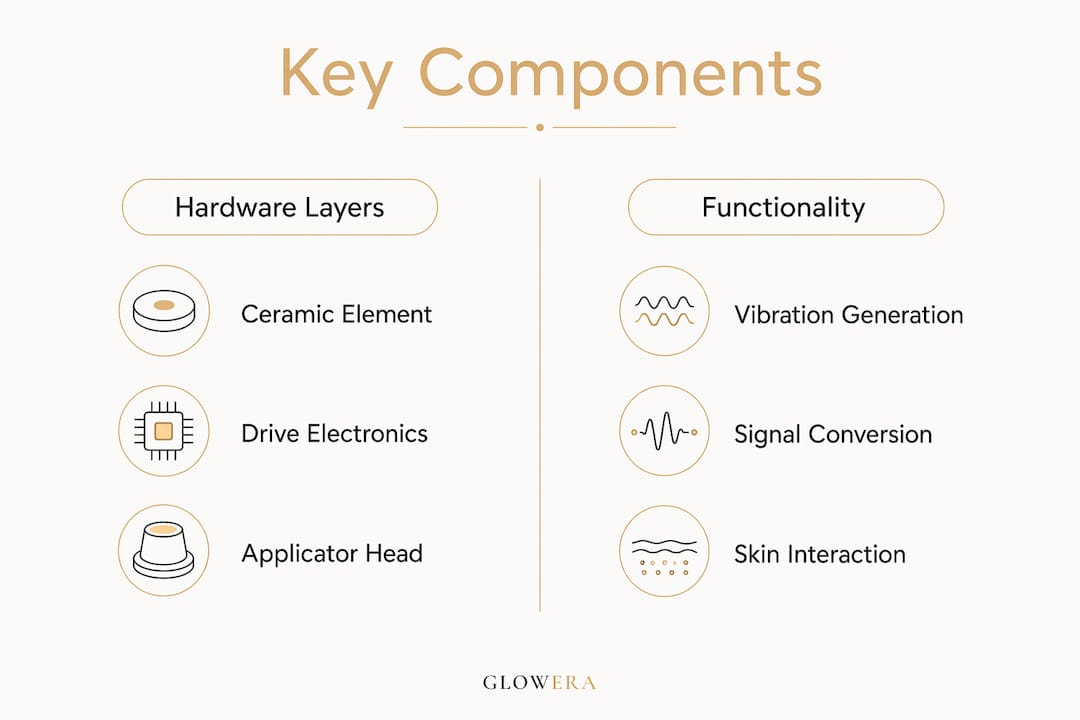
1. The ceramic element
Not all PZT ceramics are equal. Industrial-grade PZT used in welding equipment operates at power levels that would cause thermal injury on skin contact. Beauty devices require ceramics with low energy loss, high thermal stability, and a mechanical quality factor calibrated for safe, sustained skin contact. The material selection is the single most consequential decision in device design.
2. The drive electronics
Static capacitance effects during resonance can degrade transducer performance and cause overheating. Specialised electrical drive topologies, using inductors and matched circuit designs, counter these effects. This is why two devices with identical-looking ceramic elements can perform very differently in practice.
3. The applicator head
Cleaning transducers and atomising transducers serve distinct functions. Atomising transducers drive microporous meshes to break liquids into fine mist particles, and they require custom drive circuits for stable output. Cleaning transducers focus vibration energy onto a spatula surface for exfoliation. Using the wrong drive circuit for either type will reduce effectiveness and increase heat.
| Component | Consumer devices | Professional-grade devices |
|---|---|---|
| Ceramic quality | Standard PZT, limited thermal spec | Low-loss, thermally stable PZT |
| Drive electronics | Fixed frequency circuits | Resonance-tuned, adaptive circuits |
| Applicator head | Generic metal tip | Engineered acoustic waveguide |
| Safety calibration | Basic | Thermal and frequency calibrated |
Pro Tip: A professional-grade device will state its ceramic specification and operating frequency range. If a product listing omits both, treat the device as entry-level regardless of price.
How do piezoelectric beauty devices benefit the skin?
The skin benefits of piezoelectric technology come from two mechanical phenomena generated at the treatment surface: acoustic cavitation and acoustic streaming.
Acoustic cavitation is the rapid formation and collapse of microscopic bubbles in fluid at the skin surface. This micro-implosion effect dislodges dead cells, sebum, and debris from the stratum corneum, the outermost layer of skin, without the abrasion of physical scrubs. Acoustic streaming is the directional movement of fluid driven by the sound waves, which carries loosened debris away from the skin surface.
The combination of these two effects produces measurable changes in skin permeability. Ultrasonic vibration increases the permeability of the lipid bilayer, the fatty barrier between skin cells. This means that serums and active ingredients applied during or immediately after treatment penetrate more effectively than they would on unprepared skin.
- Exfoliation: acoustic cavitation removes dead cells from the stratum corneum without physical abrasion
- Deep cleansing: acoustic streaming flushes loosened debris and sebum from pores
- Enhanced absorption: increased lipid bilayer permeability improves uptake of serums and actives
- Tissue stimulation: sustained ultrasonic energy may support tissue regeneration over repeated treatments
The absorption benefit is particularly relevant for anyone using vitamin C serums, hyaluronic acid, or peptide formulations. Applying these actives immediately after an ultrasonic treatment session maximises their contact with deeper skin layers.
Piezoelectric devices do not rely on heat or chemical action to produce these effects. The mechanism is entirely mechanical, which is why they are considered suitable for most skin types, including sensitive skin, when used at the correct frequency and duration.
What types of piezoelectric beauty devices are available?
Piezoelectric technology appears across several distinct device categories, each targeting a different skincare outcome.
| Device type | Primary function | Typical application |
|---|---|---|
| Ultrasonic facial spatula | Exfoliation and deep cleansing | Removal of blackheads, dead skin, sebum |
| Ultrasonic mist atomiser | Fine mist delivery of serums or water | Hydration, toner application |
| Ultrasonic hair care device | Scalp treatment and product delivery | Scalp cleansing, serum absorption |
| Wearable piezoelectric patch | Continuous low-level stimulation | Emerging; anti-ageing and recovery |
Ultrasonic spatulas are the most established category. The flat metal blade vibrates at ultrasonic frequency and, when held at an angle against damp skin, creates the cavitation and streaming effects described above. They are widely used in professional facial treatments and are now available as home devices.
Atomising devices use a different transducer type entirely. The microporous mesh vibrates to break liquid into particles small enough to be inhaled or absorbed directly through the skin surface. These are used in facial mist sprayers and some nebuliser-style skincare tools.
Wearable piezoelectric patches represent the frontier of this technology. These thin, flexible devices deliver low-level mechanical stimulation continuously over a treatment area. You can read more about where this category is heading in Glowera’s wearable skincare tech guide.
What are the limitations of piezoelectric beauty devices?
Piezoelectric beauty tools are effective, but they carry specific limitations that every buyer should understand before purchasing.
Thermal safety is the primary concern. High-power operation without proper ceramic calibration generates heat at the skin surface. Thermal injury risk is avoided only when devices use carefully calibrated ceramics and matched drive electronics. Devices that feel noticeably warm during use are likely operating outside their optimal resonance window.
A common misconception is that higher vibration frequency always means better results. Device effectiveness depends not only on vibration frequency but also on mechanical quality factor, thermal stability, and low power loss. A device running at a higher frequency with poor ceramic quality will underperform a lower-frequency device with properly engineered components.
Longevity is one area where piezoelectric technology genuinely excels. Piezo devices have no sliding contacts causing wear, which gives them a significantly longer operational life than motor-driven alternatives. This durability is one reason professional-grade piezoelectric tools justify their higher price point. For a detailed comparison of professional versus consumer device specifications, Glowera’s guide to professional facial devices covers the key differences clearly.
Pro Tip: Always use your ultrasonic spatula on damp skin. The water layer is essential for acoustic cavitation to occur. Dry use reduces effectiveness and increases surface friction.
“The most reliable indicator of a well-engineered piezoelectric device is not its frequency claim but its thermal behaviour during extended use. A device that stays cool is one that has been properly calibrated.”
Key takeaways
Piezoelectric beauty devices work because properly calibrated PZT ceramics, matched drive electronics, and engineered acoustic waveguides combine to deliver safe, effective mechanical energy to the skin surface.
| Point | Details |
|---|---|
| Core mechanism | PZT ceramics convert electrical signals into ultrasonic vibrations via the inverse piezoelectric effect. |
| Skin benefits | Acoustic cavitation and streaming exfoliate skin and increase absorption of active ingredients. |
| Component quality matters | Low-loss, thermally stable ceramics are required for safe skin contact; industrial-grade PZT is unsuitable. |
| Device types vary | Ultrasonic spatulas, mist atomisers, and wearable patches each use piezoelectric principles differently. |
| Durability advantage | No sliding parts means piezoelectric devices last significantly longer than motor-driven alternatives. |
Why material selection is the detail most buyers overlook
I have reviewed a considerable number of piezoelectric beauty tools over the years, and the pattern is consistent: the devices that disappoint are almost never the ones with the lowest frequency or the smallest form factor. They are the ones that cut corners on ceramic quality.
The ceramic specification is rarely listed in consumer-facing marketing. Brands focus on frequency numbers because they are easy to communicate. But a device running at 28,000 Hz with a poorly matched drive circuit will heat up, lose efficiency, and deliver inconsistent results. A device at 24,000 Hz with a thermally stable, low-loss ceramic and a properly tuned resonance circuit will outperform it every time.
What I find genuinely interesting about this technology is that its durability advantage is structural, not a marketing claim. The absence of sliding contacts is a physical fact. That is why professional clinics have used ultrasonic spatulas daily for years without mechanical failure. When you buy a piezoelectric device from a brand that publishes its engineering specifications, you are buying something built to last.
The wearable category is the space I am watching most closely. Flexible piezoelectric patches that deliver continuous low-level stimulation represent a meaningful shift from treatment sessions to sustained skin support. The science is sound. The engineering challenges around power delivery and skin adhesion are real but solvable. Within a few years, this will be a mainstream category.
— Adam
Piezoelectric skincare devices at Glowera
Glowera curates professional-grade beauty technology for skincare enthusiasts across the UAE, with a focus on devices that are backed by real engineering rather than marketing claims.
The Glowera range includes K-beauty tech devices that apply piezoelectric and complementary technologies for exfoliation, product absorption, and skin renewal. Each product listing includes technical specifications so you can assess ceramic quality, operating frequency, and safety credentials before purchasing. For those exploring electrical stimulation alongside ultrasonic treatment, Glowera’s microcurrent device range offers a curated selection of clinically informed tools. Every device on the platform is authenticated and supported by Glowera’s customer care team.
FAQ
What is the piezoelectric effect in skincare devices?
The piezoelectric effect in skincare devices is the conversion of electrical signals into mechanical vibrations using PZT ceramic elements. These vibrations drive ultrasonic exfoliation, mist atomisation, and enhanced serum absorption at the skin surface.
Are piezoelectric beauty devices safe for sensitive skin?
Piezoelectric devices are generally suitable for sensitive skin when used at the correct frequency and duration. The mechanical action is non-abrasive, and properly calibrated devices avoid heat generation that could irritate delicate skin.
How do piezoelectric devices improve product absorption?
Ultrasonic vibrations increase the permeability of the skin’s lipid bilayer, allowing serums and active ingredients to penetrate more deeply than on unprepared skin. Applying actives immediately after treatment maximises this effect.
What is the difference between cleaning and atomising piezoelectric transducers?
Cleaning transducers focus vibration onto a spatula surface for exfoliation and deep cleansing. Atomising transducers drive a microporous mesh to break liquids into fine mist particles, and each type requires its own dedicated drive circuit.
Do piezoelectric beauty devices wear out quickly?
Piezoelectric devices have no sliding contacts or friction-based components, which gives them a longer operational life than motor-driven alternatives. This structural durability is one reason professional-grade piezoelectric tools are considered a long-term investment.