
A contraindication in the context of beauty devices is a medical or physical condition that makes a treatment unsafe or inadvisable. The term comes directly from clinical medicine, where it signals that a procedure must be stopped, modified, or approved by a doctor before proceeding. In beauty and aesthetics, contraindications work the same way: they protect you from burns, nerve damage, cardiac interference, and other serious outcomes that can follow when a device is used on the wrong person.
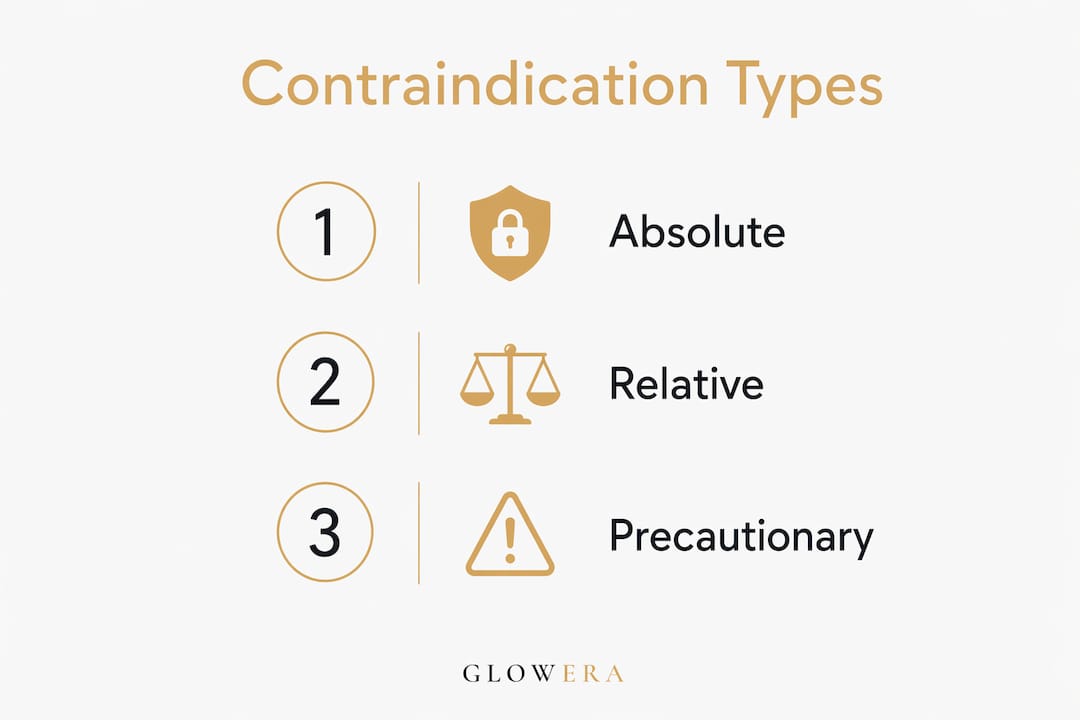
Three categories cover the full range:
- Absolute contraindications: the treatment must not be performed under any circumstances (for example, using a microcurrent device on someone with a pacemaker).
- Physician clearance required: treatment may proceed only after written approval from a doctor (for example, active cancer or autoimmune conditions such as lupus).
- Relative contraindications: treatment can continue with modifications to intensity, products, or technique (for example, gentle facials during pregnancy, avoiding electrical currents and strong chemical exfoliants).
Recognising which category applies to your situation is the first step toward safe, effective device use.
What are the three types of contraindications in beauty treatments?
Understanding the distinctions between contraindication types prevents both over-caution and dangerous under-caution.
- Absolute contraindications demand immediate refusal. Active skin infections, open wounds, contagious conditions, and implanted electrical devices such as pacemakers all fall here. Electrical currents from beauty devices can interfere dangerously with pacemaker function, making any electrical modality an absolute no.
- Physician clearance contraindications cover conditions where the risk is real but manageable with medical oversight. Cancer patients undergoing chemotherapy, people with epilepsy, those with metal implants in the face or neck, and individuals with autoimmune conditions such as psoriasis all require a doctor’s written approval before treatment proceeds.
- Relative contraindications allow treatment with adjustments. Pregnancy requires avoiding electrical currents, strong chemical exfoliants, and certain essential oils, while gentle facials remain generally safe. Rosacea calls for cool steam, enzyme peels, and lower device intensities rather than heat-based or high-frequency treatments. Blood thinners warrant avoiding aggressive massage or techniques that risk broken capillaries.
The practical rule: when in doubt about which category applies, treat it as the more restrictive one until a healthcare professional confirms otherwise.
Common contraindications for beauty devices: what you need to know
Certain conditions appear repeatedly across device types, and knowing them by name prevents avoidable harm.
- Pacemakers and implanted electrical devices: an absolute contraindication for microcurrent, galvanic, and radiofrequency devices. No exceptions.
- Pregnancy: contraindicated across virtually all device categories due to the absence of long-term safety data. Microcurrent, RF, LED, and IPL devices are all listed as precautionary avoidances.
- Active skin infections, open wounds, or severe eczema: using any energy device over broken or infected skin increases irritation, risks spreading infection, and can cause burns.
- Epilepsy and seizure disorders: flashing or pulsing LED devices and electrical equipment carry a risk of triggering photosensitive seizures.
- Photosensitising medications: tetracyclines (including doxycycline and minocycline), isotretinoin, certain antidepressants, diuretics, and NSAIDs all increase burn risk when combined with LED or IPL devices.
- Metal implants in the treatment area: pins, plates, and metallic thread lifts can heat to damaging temperatures under RF energy exposure, making RF devices a serious contraindication for this group.
- Autoimmune conditions (lupus, scleroderma, dermatomyositis): light exposure can trigger flares, and thermal treatments affect how compromised skin heals.
- Thyroid conditions: RF and microcurrent devices should not be used over the neck area.
- Undiagnosed skin lesions: any new, changing, or unusual skin mark must be evaluated by a dermatologist before a device passes over it.
- Active cancer or cancer treatment: chemotherapy and radiation compromise skin integrity; any device that stimulates cell activity is contraindicated.
- Dermal fillers in the treatment area: RF heat can migrate, dissolve, or distort hyaluronic acid fillers. A minimum wait of two weeks after injection is standard, with some practitioners recommending longer.
Safety note: Adverse events from home-use energy devices include burns, nerve damage, rashes, headaches, and dyspigmentation. In one analysis of FDA medical device reports, ocular injury, rash, headache or migraine, and dyspigmentation were the most common outcomes, with the majority of affected individuals requiring medical attention.
How to check for contraindications before using a beauty device
Preparation before a session matters as much as the treatment itself.
- Complete a thorough medical history check. Whether you are a professional conducting a client consultation or an individual using a device at home, a written intake form covering current medications, implants, skin conditions, and recent procedures is the baseline. Many contraindications are not visible on the skin.
- Read the device manual carefully. Every reputable device lists its contraindications in the instructions. Cross-reference your own health history against that list before the first use.
- Consult a healthcare professional if any risk factor applies. A GP or dermatologist can confirm whether a condition is an absolute bar or manageable with modifications. For professional safety guidance on at-home device use, a pre-treatment appointment is a practical option.
- Never combine devices with topical numbing creams. Numbing agents mask pain signals, removing the body’s natural warning that a device is causing tissue damage or burns.
- Avoid using strong actives immediately before energy-based devices. Retinoids, AHAs, and BHAs thin and sensitise the skin barrier, increasing the risk of irritation when combined with heat or electrical current.
- Maintain hygiene. Sanitise device heads after every session to prevent bacterial transfer, particularly when treating acne-prone or sensitive skin.
Pro Tip: If you have rosacea or known photosensitivity, always start at the lowest device intensity and patch-test on a small area for at least 48 hours before a full treatment. LED devices with a narrow wavelength range (red light at 630–660nm) tend to be better tolerated than broad-spectrum or pulsing devices for reactive skin types.

What the latest research reveals about beauty device safety
The regulatory and safety picture around at-home beauty devices is more complex than most marketing suggests.
The at-home beauty device market is largely unregulated, with most safety studies running for 12 weeks or less. Long-term data on cumulative effects simply does not exist for the majority of consumer devices. Dermatologists have raised consistent concerns about this gap, particularly as devices delivering radiofrequency and microcurrent energy become mainstream purchases.
A point that catches many people off guard: FDA clearance does not guarantee safety or efficacy. It signals that a device is substantially equivalent to an existing product and poses a low risk to the general public. Adverse events can and do occur with cleared devices, and reporting them to the FDA remains the primary mechanism for tracking real-world harm.
Key expert recommendations from current dermatology guidance:
- Review all current medications for photosensitising properties before using any light-based device.
- Disclose metal implants to any practitioner and check device manuals explicitly for implant warnings before home use.
- Report any adverse reaction to the relevant regulatory authority (in the UK, the Medicines and Healthcare products Regulatory Agency, or MHRA).
- Treat FDA clearance as a starting point for safety assessment, not a guarantee.
- Seek a board-certified dermatologist’s opinion before using any energy-based device if you have a pre-existing skin or systemic condition.
When and how to consult a healthcare professional about contraindications
Some situations make professional consultation non-negotiable rather than optional.
Speak to your GP or a dermatologist before using any beauty device if you have a pacemaker, implanted electrical device, or metal implant in the treatment area. These are absolute bars for specific device categories and cannot be self-assessed. Similarly, if you are pregnant, undergoing cancer treatment, or taking any medication that affects light sensitivity or blood clotting, a clinical conversation must happen before you switch on a device.
For relative contraindications, such as rosacea, controlled diabetes, or a history of cold sores, a dermatologist can advise on which device types are appropriate and at what intensity. Glowera’s LED therapy devices and microcurrent tools each carry detailed usage guidance, and the team can direct you to the right clinical resources if your situation requires further review.
When consulting a professional, bring a list of your current medications, any implants or devices in your body, your skin condition history, and the specific device you intend to use. This gives the clinician everything needed to make a clear, informed recommendation. If you are working with a beauty therapist rather than a medical professional, and your condition falls into the physician clearance category, written GP approval is required before any treatment proceeds.
Key takeaways
Contraindications for beauty devices are medical or physical conditions that make treatments unsafe, and ignoring them can result in burns, nerve damage, cardiac interference, or triggered seizures.
| Point | Details |
|---|---|
| Three contraindication types | Absolute, physician clearance required, and relative: each demands a different response before treatment. |
| Pacemakers are an absolute bar | Electrical currents from microcurrent and RF devices can interfere with pacemaker function and cause life-threatening cardiac events. |
| Photosensitising medications raise LED risk | Tetracyclines, isotretinoin, and certain NSAIDs significantly increase burn risk when combined with LED or IPL devices. |
| Numbing creams mask warning signals | Applying topical numbing agents before energy-based devices removes the pain feedback that prevents tissue damage. |
| FDA clearance is not a safety guarantee | Clearance signals low risk equivalence only; adverse events including burns and nerve damage are still reported with cleared devices. |