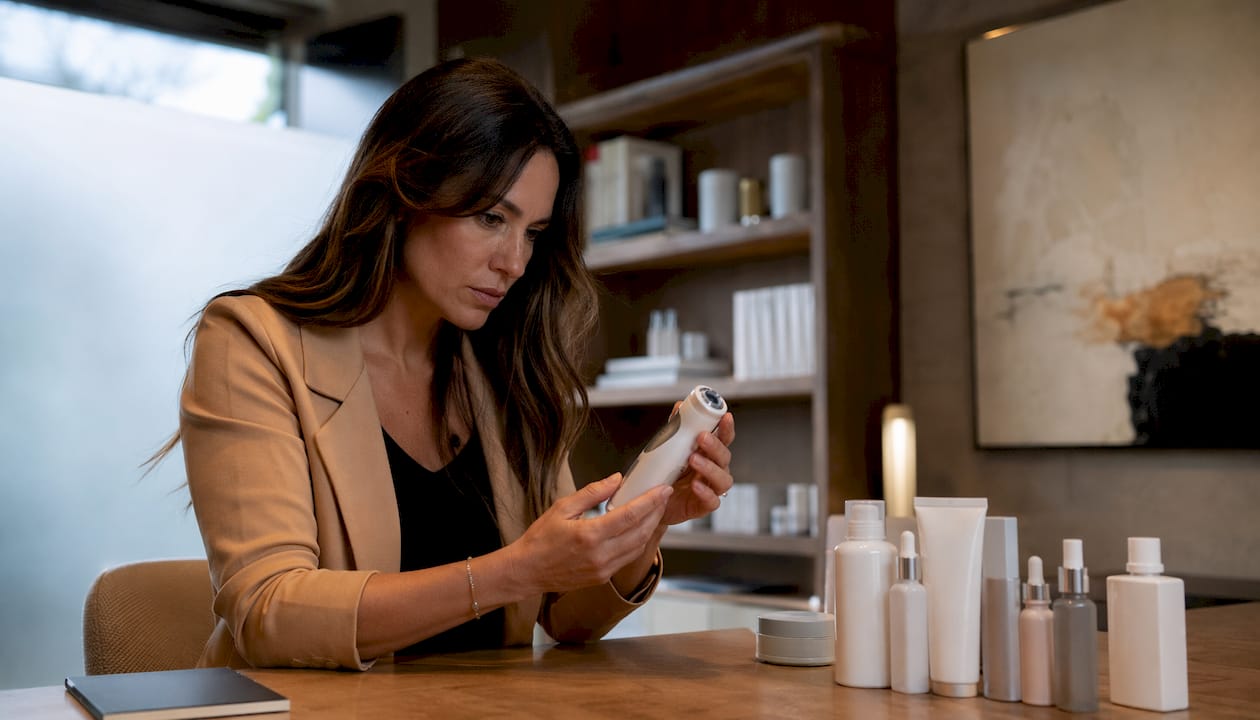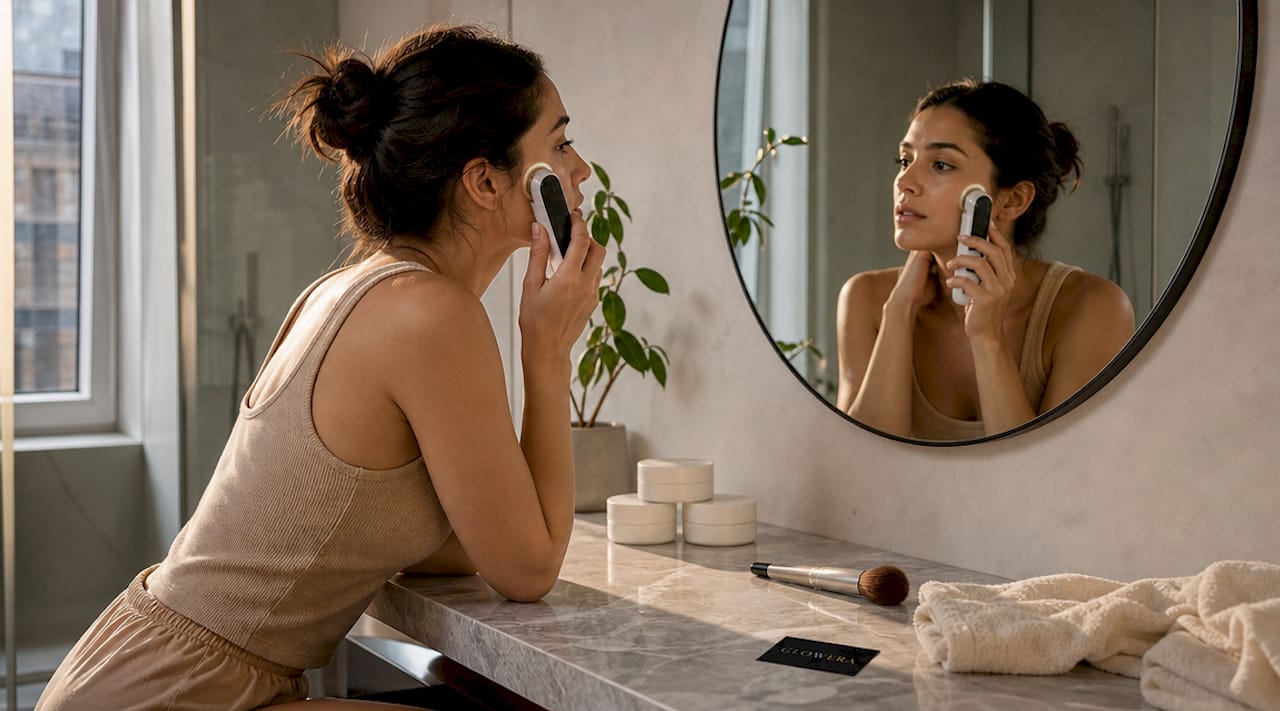
Skin impedance beauty devices are defined as tools that measure the skin’s opposition to alternating electrical current, using that data to assess hydration levels, barrier function, and overall skin health. This measurement, known formally as bioelectrical impedance, forms the scientific backbone of a growing category of at-home and professional skincare technology. Devices from brands such as ZIIP, NuFACE, and FOREO now incorporate impedance-based sensing to deliver personalised treatment feedback. Understanding how this technology works helps you get more from every device you use and make better decisions about your skincare routine.
What is skin impedance in beauty devices?
Skin impedance is defined as the measure of how skin opposes the flow of alternating electrical current, expressed in Ohms and representing a combination of resistance and capacitance. Resistance describes how strongly skin tissue blocks current, while capacitance relates to the skin’s ability to store electrical charge temporarily. Together, these two properties form a complete picture of the skin’s electrical character at any given moment.
Beauty devices use this measurement to quantify what you cannot see with the naked eye. A well-hydrated skin barrier conducts electrical current more readily, producing lower impedance readings. Dry, compromised, or thickened skin resists current more strongly, producing higher readings. This makes impedance a reliable, objective indicator of skin condition, replacing guesswork with measurable data.
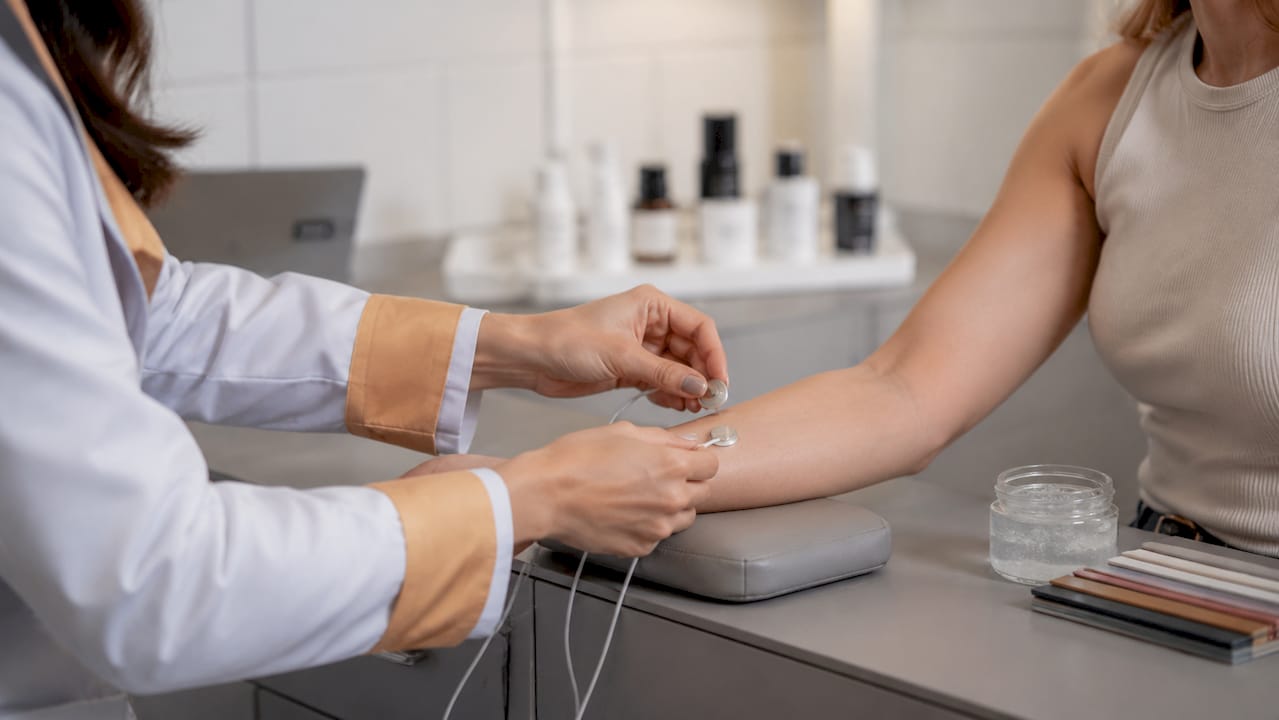
The practical value for skincare enthusiasts is significant. Rather than relying on how your skin feels after applying a moisturiser, an impedance-enabled device can confirm whether hydration levels have genuinely changed. Brands like ZIIP Beauty have built programmable treatment protocols around this principle, adjusting electrical output based on real-time skin feedback to improve results.
How does skin impedance technology work in beauty devices?
The science behind skin impedance technology rests on the fact that different layers of the skin conduct electricity differently. The stratum corneum, the outermost layer, has relatively high impedance because it contains fewer water molecules and acts as a protective barrier. The dermis beneath it, rich in water and collagen, has lower impedance and conducts current more freely. The hypodermis, composed largely of fatty tissue, shows higher impedance again, which directly affects how energy travels through the skin during treatments.
Devices measure impedance by passing a small alternating current through the skin via electrodes placed on the surface. The frequency of that current matters considerably. At lower frequencies, current travels primarily through the outer skin layers. At higher frequencies, it penetrates deeper into the dermis and beyond. This frequency dependence allows advanced devices to gather layered data about skin structure, not just surface hydration.
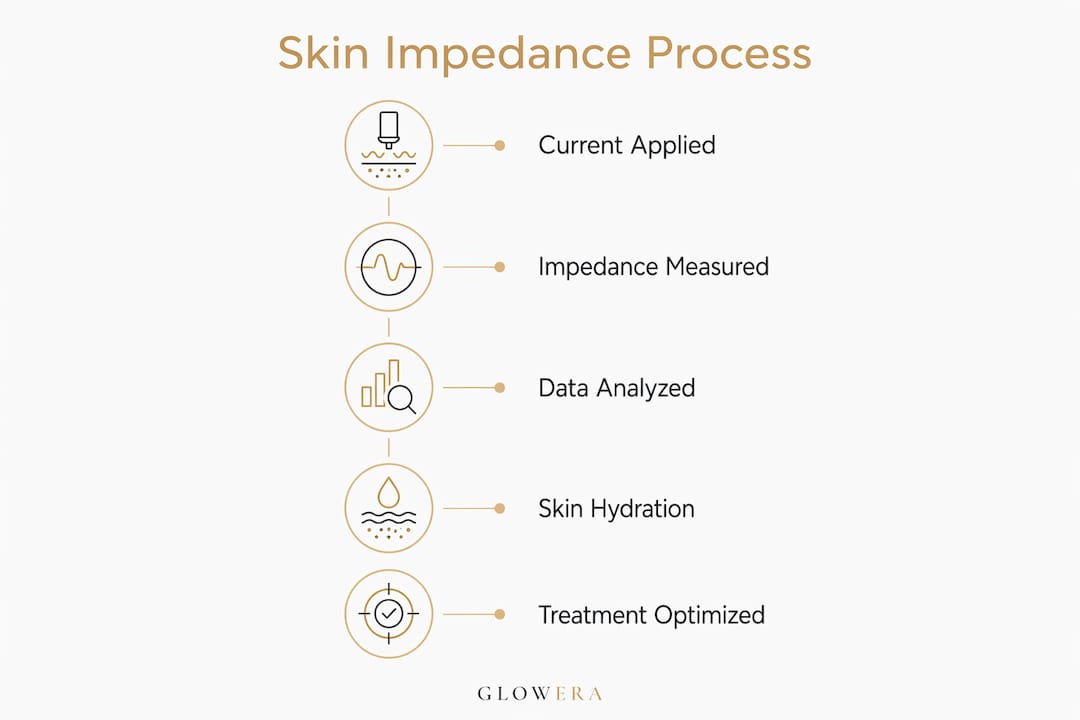
Here is how the measurement process works in practice:
- Electrode placement: Two or more electrodes make contact with the skin, one delivering the current and one measuring the response.
- Alternating current application: A small, safe alternating current is applied at one or more frequencies.
- Impedance calculation: The device calculates the ratio of voltage to current, producing an impedance value in Ohms.
- Data interpretation: Onboard software compares the reading against reference values to assess hydration, barrier integrity, or treatment readiness.
- Feedback delivery: The device adjusts its output or displays a recommendation based on the result.
Pro Tip: If you are using an impedance-enabled device at home, apply your serum or conductive gel before the session. This lowers surface impedance and allows the device to gather more accurate readings from deeper skin layers.
Wearable skin impedance sensors take this further by tracking electrodermal activity continuously, enabling stress and hydration monitoring throughout the day. This positions impedance technology not just as a treatment tool but as a genuine skin health monitoring system.
What are the benefits of skin impedance devices over traditional methods?
Traditional skin evaluation methods such as Transepidermal Water Loss (TEWL) testing and visual inspection have served dermatology well, but they carry real limitations for everyday skincare use. TEWL testing requires specialist equipment, a controlled environment, and considerable time. Visual inspection is inherently subjective and misses subsurface changes entirely. Skin impedance technology addresses both shortcomings directly.
The advantages are clear when you compare them side by side:
- Speed: Impedance measurement completes within 5 seconds, compared to TEWL tests that require several minutes of preparation and measurement in controlled conditions.
- Non-invasiveness: No skin penetration is required. Electrodes rest on the surface, making the method safe for daily use.
- Objective data: Impedance readings are numerical and repeatable, removing the subjectivity of “my skin feels dry today.”
- Real-time feedback: Devices can adjust treatment parameters mid-session based on live impedance data, something no visual inspection can achieve.
- Continuous monitoring: Wearable devices now enable ongoing skin health tracking across different environments and times of day.
“Electrical impedance offers a rapid, robust alternative to traditional Transepidermal Water Loss tests, accurately estimating stratum corneum thickness and surface water content to evaluate skin barrier function.” — Springer Nature
The ability to differentiate between superficial hydration and deeper structural skin integrity is particularly valuable. A moisturiser might temporarily improve surface readings without addressing a compromised barrier. Impedance technology can distinguish between these two outcomes, making it a more precise tool for evaluating beauty device benefits and product efficacy over time.
How does impedance data optimise RF and microneedling treatments?
Radiofrequency (RF) beauty devices depend on managing skin impedance to deliver heat consistently to the collagen-rich dermis. When impedance is too high, such as in dry or fatty tissue areas, energy flow becomes restricted and results become uneven. When impedance is appropriately low, energy penetrates efficiently and stimulates collagen production at the correct depth.
The table below illustrates how impedance varies by skin condition and what that means for treatment outcomes:
| Skin condition | Impedance level | Effect on RF treatment |
|---|---|---|
| Well-hydrated dermis | Low | Efficient energy delivery, consistent collagen stimulation |
| Dry stratum corneum | High | Restricted penetration, risk of superficial heat concentration |
| Fatty hypodermis | High | Energy scatter, reduced treatment precision |
| Post-gel application | Reduced | Improved contact, safer and more effective energy transfer |
Real-time impedance monitoring during RF and microneedling radiofrequency (MNRF) sessions allows devices to adjust energy output automatically. If the device detects rising impedance, it can reduce power to prevent superficial burns or increase it where tissue is more conductive to maintain consistent depth of effect. This is the difference between a device that delivers a fixed output and one that genuinely responds to your skin.
Hydration significantly modulates treatment efficacy. Without adequate hydration and conductive gel, energy delivery can be uneven and cause superficial burns. This is not a minor consideration. It is the primary reason professional RF practitioners assess skin condition before every session.
Pro Tip: Drink adequate water in the hours before using an RF or microcurrent device. Internal hydration lowers dermal impedance, helping energy reach the collagen layer more effectively and improving your treatment outcome.
Modern beauty devices are also becoming programmable, with impedance-based modulation enabling precise control over skin penetration and actuation. This means devices can be calibrated not just for treatment type but for your specific skin profile on a given day, a development that brings professional-grade precision to at-home skincare routines. You can explore smart device features that incorporate this kind of adaptive technology in Glowera’s 2026 guide.
What should consumers know about limitations and practical use?
Skin impedance readings are sensitive to external conditions, and understanding this protects you from misinterpreting results or expecting more than the technology can deliver. Sweat, ambient temperature, and movement all introduce variability into readings. A measurement taken after exercise will differ from one taken after rest, even if your skin’s underlying condition has not changed.
Key practical considerations include:
- Electrode contact quality: Poor contact between the electrode and skin produces inaccurate readings. Clean, dry skin with appropriate conductive gel gives the most reliable results.
- Consumer vs professional devices: Professional diagnostic devices such as those used for melanoma screening operate with clinical precision and require skilled operation. Consumer beauty devices focus on surface hydration and wellness metrics, which is a meaningful but narrower scope.
- Skin preparation matters: Residual skincare products, oils, or makeup can alter surface impedance and skew readings. Cleanse before using any impedance-based device.
- Wearable limitations: Advanced wearable sensors now use stretchable nanomesh electrodes to stabilise contact during movement, but budget consumer wearables may not incorporate this technology, leading to less consistent data.
- Realistic expectations: Impedance data reflects a snapshot of skin condition. It does not diagnose skin diseases, and a single reading should be interpreted as part of a pattern rather than a definitive assessment.
The distinction between consumer and professional devices is worth emphasising. Consumer-grade tools are designed for accessibility and general wellness tracking. They are not substitutes for clinical skin analysis, but they do provide genuinely useful data for guiding your daily skincare decisions and evaluating whether your current routine is working.
Key takeaways
Skin impedance beauty devices deliver objective, real-time skin health data by measuring electrical resistance and capacitance across skin layers, making them significantly more precise than visual or manual skincare assessment.
| Point | Details |
|---|---|
| Core definition | Skin impedance measures opposition to alternating current, reflecting hydration and barrier health in Ohms. |
| Speed advantage | Impedance measurement completes within 5 seconds, far faster than traditional TEWL testing methods. |
| Treatment optimisation | RF and microneedling devices use impedance data to adjust energy delivery and prevent uneven results. |
| Hydration is critical | Well-hydrated skin lowers impedance, improving energy penetration and treatment efficacy in RF devices. |
| Consumer device limits | Home-use devices measure surface wellness metrics and are not equivalent to clinical diagnostic tools. |
Why impedance technology deserves more attention than it gets
I have spent considerable time reviewing beauty technology, and skin impedance is consistently the most underexplained feature in the category. Most brands mention it in passing, if at all, yet it underpins the effectiveness of nearly every electrical skincare device on the market.
What strikes me most is the gap between what the technology can do and what consumers actually understand about it. People invest in RF devices, microcurrent tools, and K-beauty tech without realising that their skin’s hydration level on any given day directly affects how well those devices perform. That is not a minor footnote. It is the difference between a session that stimulates collagen at the right depth and one that barely penetrates the stratum corneum.
The other observation I would offer is that consumer awareness is improving, but slowly. The brands doing this well, such as ZIIP Beauty with its programmable current protocols, are building impedance responsiveness into the device itself rather than asking users to understand the science. That is the right approach for mainstream adoption. The technology should work intelligently in the background while the user simply follows a preparation routine.
Where I see the most exciting potential is in wearable integration. Continuous impedance monitoring across a full day, combined with environmental data like humidity and temperature, could eventually produce genuinely personalised skincare recommendations. We are not far from that reality, and the devices available today are a meaningful step in that direction.
— Adam
Explore impedance-enabled beauty tech at Glowera
Glowera brings together the most technically advanced beauty devices available in the UAE, including tools that incorporate skin impedance technology for smarter, safer treatments. Whether you are interested in K-beauty tech devices that use adaptive electrical protocols, microcurrent facial devices that respond to your skin’s conductivity, or LED therapy tools that complement impedance-based treatments, Glowera’s curated range covers the full spectrum of evidence-backed skin care technology. Every device on the platform is sourced from globally trusted brands, with detailed guidance to help you choose the right tool for your skin type and goals.
FAQ
What is skin impedance in simple terms?
Skin impedance is the measure of how strongly your skin resists the flow of a small electrical current. Lower impedance generally indicates well-hydrated, healthy skin, while higher impedance suggests dryness or a compromised barrier.
How do beauty devices use skin impedance data?
Beauty devices pass a small alternating current through the skin via electrodes and measure the resulting impedance value. This data guides the device to adjust energy output, assess hydration, or confirm that the skin is prepared for treatment.
Are home skin impedance devices as accurate as professional ones?
Consumer beauty devices focus on surface hydration and wellness metrics and are not equivalent to clinical diagnostic tools. Professional impedance devices used in dermatology require skilled operation and achieve clinical-grade accuracy for disease detection.
Does skin hydration really affect device performance?
Yes. Hydration lowers skin impedance, which allows RF and microcurrent energy to penetrate more effectively to the collagen-rich dermis. Dry skin raises impedance, restricting energy flow and reducing treatment consistency.
What can affect the accuracy of impedance readings at home?
Sweat, ambient temperature, movement, and residual skincare products all alter surface impedance readings. Cleansing the skin and applying a conductive gel before use produces the most reliable results from any impedance-based device.