Counterfeit beauty devices carry serious, documented health risks
Fake beauty devices are not simply ineffective. They are genuinely dangerous, capable of causing burns, permanent scarring, nerve damage, and infections that require costly medical correction. A survey published in Dermatologic Surgery found that 37.4% of aesthetic practitioners had encountered counterfeit medical devices, and 20.1% had witnessed adverse patient events directly linked to them. Those are not edge cases.
The core dangers fall into four categories:
- Uncontrolled energy delivery: Counterfeit laser, radiofrequency, and HIFU devices deliver inconsistent output, meaning a setting that should be safe can spike to tissue-damaging levels without warning.
- Missing safety features: Authentic devices include temperature sensors and emergency shut-offs. Counterfeit heated tools routinely omit these entirely.
- Non-sterile consumables: Counterfeit serums and applicator tips used alongside fake devices have not undergone safety testing, raising infection risk considerably.
- Financial and legal exposure: For practitioners, a single claim involving a counterfeit device can void professional indemnity cover and trigger personal liability.
What medical experts and the JCCP say about the complications
The Joint Council for Cosmetic Practitioners has reported a significant rise in patient complaints linked to treatments carried out with substandard or unidentified machinery. The most common issues are thermal injuries from uncalibrated laser and radiofrequency devices, complete treatment failure, and electrical hazards caused by devices that bypass UK safety standards.
Complications extend well beyond poor results. Non-sterile consumables used alongside fake devices introduce pathogens that can cause scarring and hyperpigmentation. Dr. Ernest Ng of the Hong Kong Society of Dermatology has highlighted a particularly concerning pattern: subcutaneous necrosis and nerve damage are frequently misdiagnosed as temporary redness, delaying treatment and worsening outcomes.
| Complication | Cause linked to counterfeit device |
|---|---|
| Thermal burns | Uncalibrated laser or RF energy output |
| Hyperpigmentation | Energy delivered at wrong depth or intensity |
| Scarring | Uncontrolled heat causing dermal injury |
| Infection | Non-sterile applicators and counterfeit serums |
| Nerve damage | Erratic energy spiking beyond safe parameters |
| Electrical hazard | Bypassed UK electrical safety standards |
Practitioners face a further legal dimension. Counterfeit devices fail every standard insurer condition: no valid CE or UKCA mark, no manufacturer training pathway, no certifiable service history. When a claim is made, cover is declined, and the practitioner is personally exposed. Knowingly using a non-compliant device also carries potential criminal investigation under the UK Medical Devices Regulations 2002.

Real incidents that show what goes wrong
In June 2026, a clinic in Kuala Lumpur was found using a counterfeit Ultherapy Prime device, exposing patients to focused ultrasound delivered at unverified depths and intensities. In Hong Kong, a customs operation in the same month seized three counterfeit slimming devices from active clinics; the Department of Health had already linked 27 severe burns and infections since 2023 to non-compliant equipment. These are not hypothetical scenarios. They are documented outcomes from devices that looked legitimate on the surface.
UK practitioners are encountering the same problem through second-hand listings, social media direct messages, and “ex-demo” sales. The paperwork accompanying a counterfeit can appear entirely convincing. The supply chain behind it cannot be verified, and the gap only becomes visible when a complication lands.
What to do if you have purchased a counterfeit device
Stop using it immediately. Do not attempt further treatments until the device has been assessed by a qualified engineer. If you are a consumer who received treatment with a suspected fake device and experienced an adverse reaction, seek medical attention promptly and document your symptoms.
Report the device to the MHRA via the Yellow Card scheme. This reporting feeds directly into the regulatory intelligence that drives enforcement action and border seizures. If you purchased the device yourself, contact the seller in writing and retain all correspondence. Depending on the circumstances, you may have grounds for a claim under the Consumer Protection Act 1987.
Pro Tip: Check whether the device’s CE or UKCA mark can be verified through an official notified body database. A four-digit number printed on the casing means nothing unless it corresponds to a real certification for that specific model.
How authentic and counterfeit devices differ in regulatory terms
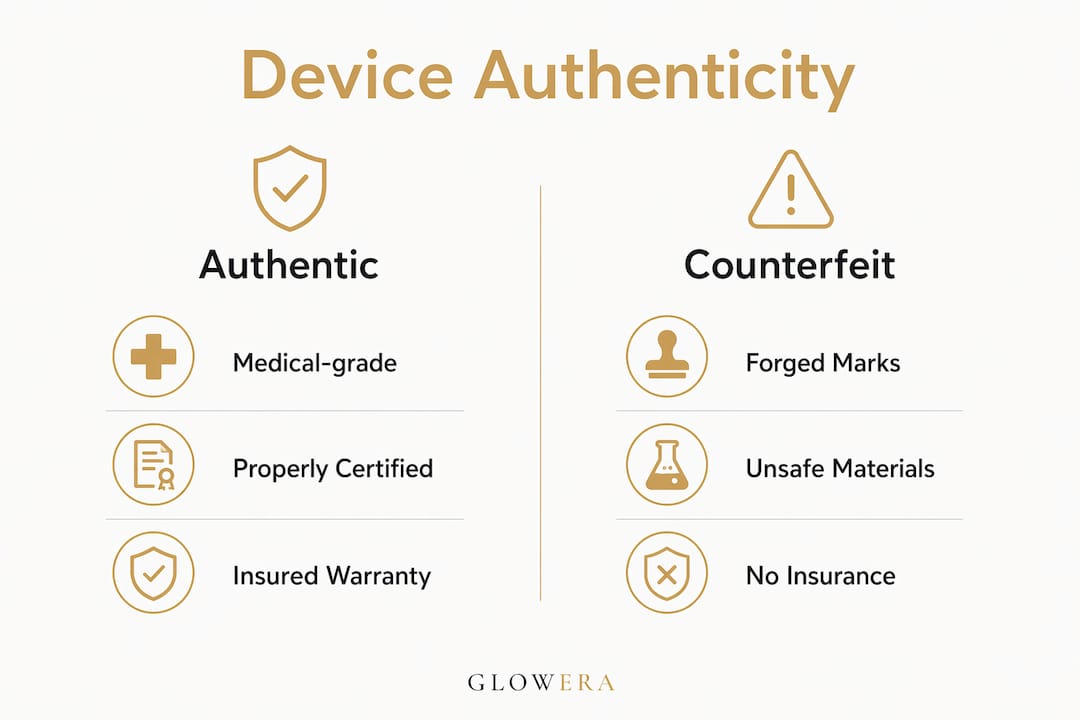
Genuine medical-grade beauty devices sold in the UK must carry a CE or UKCA mark issued by an accredited notified body, not simply printed on the casing. They require a Declaration of Conformity that names the notified body and applies specifically to that device model. Manufacturers must maintain post-market surveillance, respond to adverse event reports, and support MHRA registration for higher-risk categories.
Counterfeit devices carry forged CE marks that were never issued by any notified body. There is no authorised UK representative, no service certification, and no manufacturer training pathway. The MHRA has reported a steady increase in seizures of illicit aesthetic devices at UK borders. The Department of Health and Social Care has confirmed further consultation in spring 2026 on licensing non-surgical cosmetic procedures, with the highest-risk categories moving under Care Quality Commission oversight. Learning to verify device authenticity before purchase is the most direct protection available to you.
Authentic devices also differ physically. Genuine units use medical-grade materials, weigh more, and feature proprietary software with manufacturer update support. Counterfeit versions tend to feel hollow, use cheaper plastics, and display clunky interfaces with spelling errors in menu systems. These physical tells, combined with prices significantly below the manufacturer’s retail price, are reliable warning signs.
Glowera stocks only authenticated, professional-grade devices from brands including NuFACE, FOREO, and Dr. Dennis GROSS, each sourced through verified distribution channels. Browse the full range of authentic beauty tech at Glowera, or explore K-beauty devices backed by genuine safety credentials.
Key takeaways
Counterfeit beauty devices cause documented physical harm, void professional insurance cover, and carry regulatory consequences that affect the entire UK aesthetics sector.
| Point | Details |
|---|---|
| Prevalence is high | 37.4% of practitioners have encountered counterfeit devices; 20.1% have seen adverse patient events. |
| Safety features are absent | Fake devices omit temperature sensors and emergency shut-offs, making burns and electrical hazards likely. |
| Regulatory marks can be forged | A CE mark on the casing requires verification through an official notified body database to confirm it is genuine. |
| Insurance cover is void | Counterfeit devices fail every insurer condition, leaving practitioners personally liable for patient harm. |
| Stop and report immediately | Cease use, seek medical advice for any adverse reaction, and report to the MHRA Yellow Card scheme. |