Peptide signaling skincare uses short chains of amino acids, called peptides, as biological messengers that instruct skin cells to produce more collagen, elastin, and other structural proteins. Rather than simply moisturising the surface, these bioactive molecules communicate directly with skin fibroblasts, prompting genuine regenerative activity at a cellular level. The result, when formulations are well-made, is firmer, more resilient skin over time.
Table of Contents
- What is peptide signaling skincare and how does it work?
- How peptide signaling works at the cellular level
- What are the real benefits, and what do experts say?
- Practical guidance for using peptide skincare effectively
- What does the current science say about peptide signaling?
- Key takeaways
What is peptide signaling skincare and how does it work?
Signal peptides are short fragments of 3–30 amino acids that act as active messengers within the skin. They mimic the natural fragments released when structural proteins like collagen break down, essentially telling fibroblasts that repair is needed. The skin responds by synthesising fresh collagen types I, III, and IV, along with elastin, fibronectin, and glycosaminoglycans, without any actual tissue injury occurring.
This mimicry is the core principle behind peptide signaling skincare. When collagen degrades naturally with age, the resulting fragments signal fibroblasts to produce more. Cosmetic peptides replicate those fragments, triggering the same response through a topical product rather than through damage.
Key structural proteins targeted by signal peptides include:
- Collagen types I, III, and IV: the primary scaffolding proteins that give skin its firmness and structure
- Elastin: responsible for skin’s ability to spring back after movement
- Fibronectin: supports cell adhesion and wound healing within the extracellular matrix
- Glycosaminoglycans: hydrating molecules, including hyaluronic acid, that maintain skin volume and suppleness
How peptide signaling works at the cellular level
Once a signal peptide reaches a fibroblast, it activates intracellular pathways, including TGF-β and MAPK signalling, that increase production of extracellular matrix proteins. The process does not require injury; the peptide itself carries the message.

Getting there, however, is the challenge. Peptides must survive the formulation, penetrate the stratum corneum (the skin’s outermost barrier), and reach responsive cells beneath it. Peptide stability and delivery depend heavily on formulation quality, and many products fall short at precisely this stage. Advanced cosmetic chemistry, including lipid conjugation and nanoparticle delivery systems, helps protect peptides from degradation and improves skin penetration.
Beyond signal peptides, several other functional classes contribute to skin health:
- Carrier peptides (such as copper peptides, GHK-Cu): deliver trace minerals that support enzymatic collagen crosslinking
- Enzyme-inhibitory peptides: block collagenase and elastase, the enzymes that break down existing structural proteins
- Neurotransmitter-inhibitory peptides: reduce muscle contraction to soften dynamic wrinkles
- Antimicrobial peptides (AMPs): help clear bacteria and reinforce the skin barrier against pollution and environmental stressors
Pro Tip: Look for products that combine signal peptides with enzyme-inhibitory peptides. Signal peptides build new collagen; inhibitor peptides protect what is already there. Together, they tend to outperform single-peptide formulations.
What are the real benefits, and what do experts say?
The most well-researched peptide in cosmetic skincare is Matrixyl (palmitoyl pentapeptide-4), a synthetic version of KTTKS, a five-amino-acid fragment naturally released when type I procollagen matures. Fibroblasts treat KTTKS as a feedback signal and respond by producing more collagen. Copper peptide (GHK-Cu) is another well-studied option, acting as both a collagen stimulator and an antioxidant.
Dermatologist Dr Wilma Bergfeld at the Cleveland Clinic offers a grounded perspective:
Visible improvements from consistent peptide use generally require 8–12 weeks of application, with results that tend to hold up well over longer periods. Harvard Health notes that some peptides in eye creams show potential for collagen stimulation, while cautioning that larger human trials are still needed to confirm benefits fully.
Key scientifically supported benefits include:
- Anti-inflammatory action: reducing chronic oxidative stress that accelerates visible ageing
- Collagen and elastin support: firmer, more elastic skin with consistent use over time
- Antimicrobial protection: certain peptides help clear acne-causing bacteria and strengthen barrier function
- Gentle tolerability: peptides do not typically cause the stinging or peeling associated with retinoids, making them suitable for sensitive and mature skin
Practical guidance for using peptide skincare effectively
Realistic expectations matter. Peptides are not an overnight fix; the 8–12 week timeframe for visible improvement is well-established in clinical work. Consistency of application is as important as the product itself.
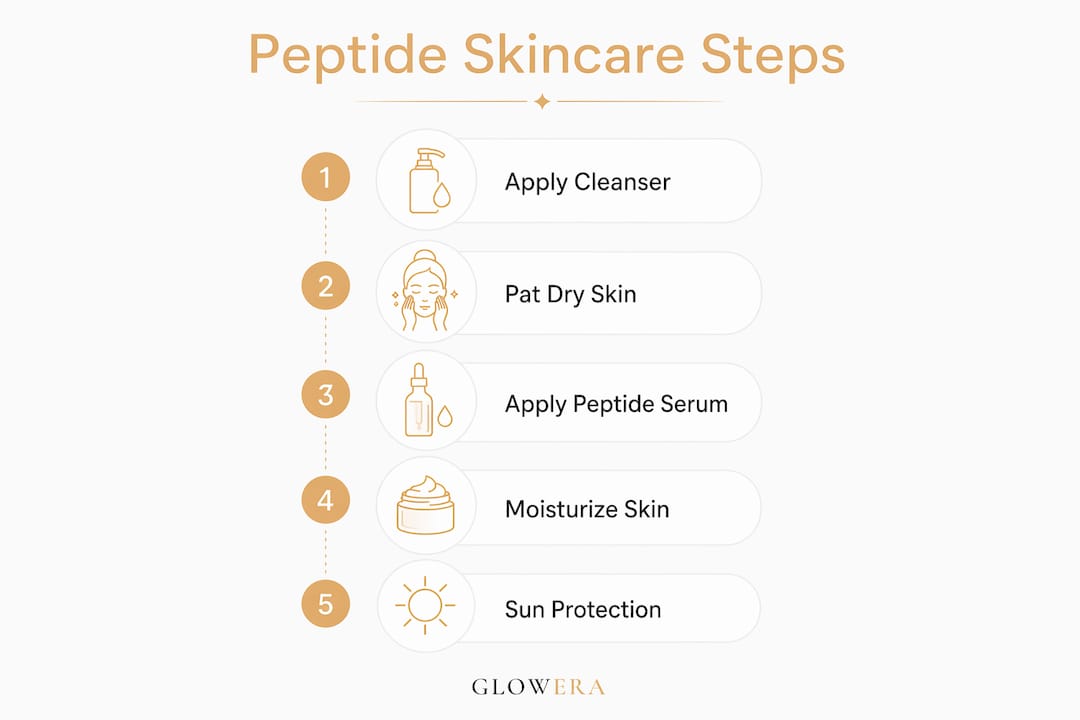
Formulation quality is the single biggest variable in whether a peptide product actually delivers. As Dr Bergfeld notes, less expensive or newer brands can lack the cosmetic chemistry needed to protect peptides from breakdown and deliver them to target cells. This does not mean the most expensive product always wins, but it does mean that the peptide concentration on the label tells only part of the story.
The Medicube PDRN Pink Peptide Cream is a well-regarded example of a peptide-enriched formulation designed to support skin repair and rejuvenation. It combines peptide technology with PDRN (polydeoxyribonucleotide), a salmon-derived ingredient associated with tissue regeneration, reflecting the K-beauty approach of layering complementary bioactive ingredients.
Practical considerations for your routine:
- Pair thoughtfully: peptides are compatible with ceramides, niacinamide, and hyaluronic acid. Use caution when combining with strong acids, which can degrade peptide bonds.
- Sensitive skin: peptides are one of the more reliable options for those who cannot tolerate retinoids, offering a gentler path to improving skin texture and fine lines.
- Versus retinoids: retinoids remain highly effective for anti-ageing and are generally less expensive. Peptides and retinoids can complement each other when used at different times of day.
- Potential limitations: allergic reactions are rare but possible; results vary depending on formulation quality, skin type, and age.
- Avoid marketing exaggeration: a product labelled “formulated with peptides” is not automatically effective. The type of peptide, its concentration, and the delivery system all determine real-world performance.
For those exploring how peptide-based treatments fit within broader skincare technology, Glowera’s guide to emerging skincare technology provides useful context on where peptide formulations sit alongside devices and other actives.
What does the current science say about peptide signaling?
Laboratory and clinical studies confirm that signal peptides activate fibroblast proliferation and extracellular matrix synthesis through established pathways. A 2026 systematic review and meta-analysis published in Frontiers in Medicine evaluated oral and topical peptides across multiple outcomes, including hydration, elasticity, wrinkle reduction, and brightness, finding that peptide-based therapies represent a safe, non-invasive adjunct to conventional anti-ageing strategies.
Research gaps remain, particularly around large-scale human trials for specific peptide types and concentrations. The science of how peptides work in skincare continues to develop, with ongoing investigation into delivery systems such as nanoparticle encapsulation and lipid conjugation that improve bioavailability without compromising stability.
Peptides offer a way to support skin structure without the irritation profile of stronger actives, which makes them especially valuable for sensitive skin, mature skin, post-procedure recovery, and barrier-focused products.
The scientific community’s consensus is cautiously optimistic. Peptides are not a replacement for well-established actives, but they occupy a distinct and useful position in evidence-based skincare, particularly for those who need a gentler approach or want to complement existing routines. Glowera’s commitment to stocking scientifically validated formulations reflects this understanding, prioritising products where the chemistry behind the claim is sound.
Key takeaways
Peptide signaling skincare works by delivering bioactive amino acid chains that mimic natural protein fragments, prompting fibroblasts to produce collagen, elastin, and other structural proteins that decline with age.
| Point | Details |
|---|---|
| Signal peptides mimic collagen fragments | They instruct fibroblasts to synthesise key structural proteins such as collagen, elastin, fibronectin, and glycosaminoglycans. |
| Results require consistent use | Clinical evidence points to visible improvement after regular application over a sustained period. |
| Formulation quality determines efficacy | Peptide stability and skin penetration depend on the cosmetic chemistry behind the product, not just the ingredient list. |
| Gentle enough for sensitive skin | Peptides suit those who cannot tolerate retinoids, offering a lower-irritation route to improving skin texture and firmness. |
| Expert caution on claims | Harvard Health and dermatologists advise seeking scientifically validated formulations and maintaining realistic expectations. |