What is nanocurrent therapy, and why does it matter for your skin?
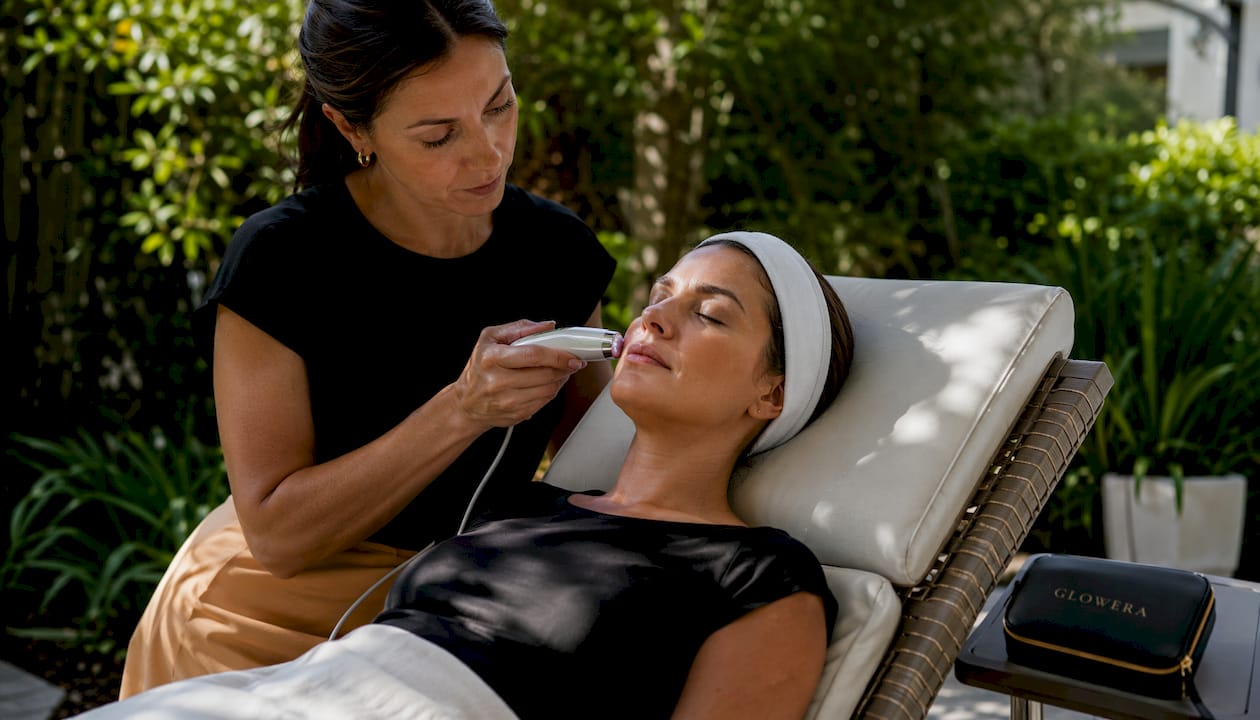
Nanocurrent therapy is the use of ultra-low electrical currents, typically operating in the picoampere to nanoampere range, to mimic the body’s natural bioelectrical signals at a cellular level. Unlike treatments you can feel, nanocurrent works silently beneath the skin’s surface, prompting cells to repair, regenerate, and produce the structural proteins that keep skin firm and youthful.
The primary benefits are well-established in the technology’s framework:
- Collagen and elastin stimulation: Nanocurrent prompts skin cells to produce more collagen and elastin, the proteins responsible for firmness, strength, and suppleness.
- ATP production: It stimulates adenosine triphosphate (ATP), the cellular energy molecule that converts nutrients into usable skin proteins including hyaluronic acid.
- Skin tightening and repair: By generating kinetic heat at the cellular level, nanocurrent encourages tissue repair and natural skin tightening.
- Improved skin tone: Regular treatment supports more even, radiant skin tone and accelerated wound healing through enhanced circulation.
- Fine line reduction: Sustained collagen and elastin production gradually softens fine lines and deeper wrinkles over time.
- Blemish and scarring support: Nanocurrent can reduce the appearance of spots and scarring by speeding up the skin’s natural regeneration process.
The effects are cumulative rather than instant, which sets nanocurrent apart from most other facial technologies. Consistent treatment builds results progressively, making it a long-term investment in skin health rather than a quick fix.
Table of Contents
- How nanocurrent works at the cellular level
- How nanocurrent and microcurrent compare for anti-ageing results
- What skin experts and dermatologists say about nanocurrent therapy
- Is nanocurrent therapy safe? Side effects and precautions
- ZIIP Nanocurrent devices available in the UK market
- Where did nanocurrent therapy come from?
- What does the science say about nanocurrent therapy?
- Key takeaways
How nanocurrent works at the cellular level
The mechanism behind nanocurrent therapy is rooted in bioelectricity. Every cell in the body communicates through tiny electrical signals, and nanocurrent devices deliver currents calibrated to match those signals precisely. Operating well below the threshold that would activate motor neurons or cause muscle contraction, nanocurrent targets cellular communication directly.
When the current reaches skin cells and tissues, it generates a subtle kinetic heat. This warmth acts as a biological trigger, stimulating the skin’s own production of collagen, elastin, and hyaluronic acid. Crucially, it also boosts ATP synthesis, and since ATP production naturally declines with age, this effect has meaningful anti-ageing implications. More ATP means more raw energy available for the cellular processes that maintain skin structure.
Nanocurrent operates below the motor neuron activation threshold, meaning it targets cellular signalling rather than muscle contraction. The result is a gradual, structural improvement in skin quality that deepens with each treatment session, rather than a visible surface-level change after a single use.
Because the intensity is so low, the effects are subtle in the short term. Users should expect noticeable improvements in firmness and texture after several weeks of consistent use, not after a single session. This is not a limitation of the technology; it reflects how cellular repair actually works.

How nanocurrent and microcurrent compare for anti-ageing results
These two technologies are frequently confused, but they operate on meaningfully different principles and deliver different outcomes.
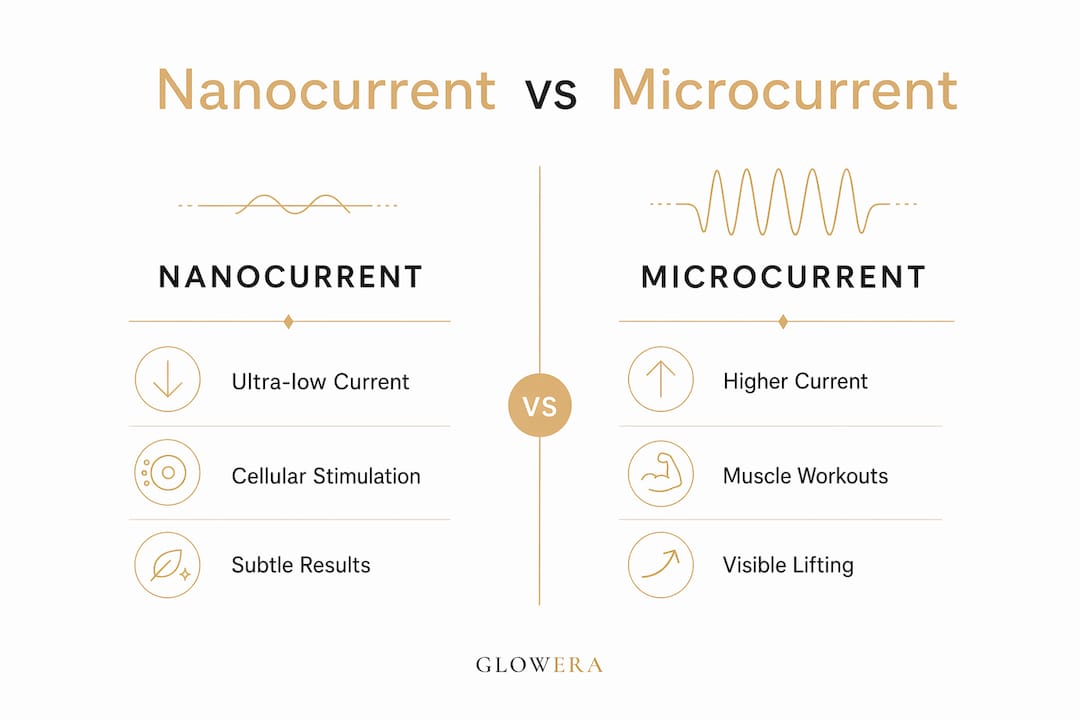
- Mechanism: Microcurrent uses currents in the microampere range to exercise facial muscles, causing them to contract and relax. Nanocurrent, at the nanoampere scale, works below that threshold entirely, targeting cellular signalling rather than muscle activity.
- Immediate results: Microcurrent provides visible lifting and sculpting effects that can last up to 72 hours. Nanocurrent produces no immediate dramatic change but builds structural improvements over weeks.
- Duration of effects: Microcurrent results are short-term and require frequent maintenance sessions. Nanocurrent yields gradual, sustained improvements in collagen density and skin quality.
- Depth of action: Nanocurrent’s smaller wavelengths penetrate deeper skin layers to stimulate collagen and elastin production. Microcurrent primarily targets the facial muscles and can stimulate some ATP, but its cellular reach is more limited.
- Safety profile: Both are non-invasive and generally well-tolerated. Microcurrent can occasionally cause mild inflammation; nanocurrent, operating at lower intensity, carries an even gentler profile.
- Combined use: Many professional aestheticians use both in sequence, applying microcurrent for immediate lifting and nanocurrent for longer-term cellular repair. The ZIIP HALO device is specifically designed to deliver both waveforms in a single treatment.
Microcurrent is often described as a gym workout for facial muscles. Nanocurrent, by contrast, acts as a cellular communicator, signalling repair and collagen synthesis at a deeper level. Neither replaces the other; they address different aspects of skin ageing and work well together. You can explore microcurrent device options to understand how the two technologies complement each other in practice.
What skin experts and dermatologists say about nanocurrent therapy
Professional opinion on nanocurrent therapy is broadly positive, though measured. Aestheticians who work with both technologies consistently describe nanocurrent as a cellular-level communicator, distinct from microcurrent’s muscle-toning role. The consensus is that combining both delivers the most comprehensive anti-ageing outcome.
Where experts urge caution is on the matter of clinical evidence. Peer-reviewed research specifically validating nanocurrent’s unique facial rejuvenation benefits remains limited. Most robust clinical studies focus on microcurrent, with nanocurrent’s benefits considered theoretically well-grounded but not yet supported by the same volume of controlled trials. This does not mean the technology is ineffective; it means the evidence base is still developing.
Dermatologists who have observed nanocurrent treatments note that results are real but gradual. Patients who commit to consistent use over six to eight weeks tend to report visible improvements in skin firmness and texture. Combining nanocurrent with a collagen-boosting skincare product can support and extend the cellular repair process between device sessions.
The practical expert advice: set realistic expectations, use the device consistently, and treat nanocurrent as a long-term skin health strategy rather than a pre-event treatment.
Is nanocurrent therapy safe? Side effects and precautions
Nanocurrent therapy is generally considered safe for most skin types. Its non-invasive nature and extremely low current intensity mean the risk profile is minimal compared with more aggressive facial treatments.
That said, a few precautions apply:
- Mild skin irritation or redness can occur, particularly on sensitive skin or if the device is used without adequate conductive gel.
- Conductive gel is non-negotiable. Water-based gels, such as aloe vera gel or a hyaluronic acid serum, optimise electrical conductivity and protect the skin. Oil-based products block the current entirely and reduce device efficacy.
- Medical implants: Anyone with a pacemaker, metal implants, or other electronic medical devices should consult a doctor before using nanocurrent technology.
- Active skin conditions: Avoid using nanocurrent devices over open wounds, active acne lesions, or inflamed skin without professional guidance.
- Device hygiene: Clean the metal contacts after every session to prevent residue build-up, which can degrade electrical transfer and affect performance over time.
- Pregnancy: As a precaution, nanocurrent devices are generally not recommended during pregnancy without medical clearance.
For home users, following the manufacturer’s protocol and using the correct gel are the two most important safety steps. Professional treatments in a clinic setting carry the same considerations, with the added benefit of practitioner oversight.
ZIIP Nanocurrent devices available in the UK market
ZIIP Beauty is the most prominent brand in the nanocurrent device space, having pioneered the combination of nanocurrent and microcurrent technology in a single at-home device. The flagship product available to UK consumers is the ZIIP HALO.
- Dual technology: The ZIIP HALO delivers both ZIIP Nanocurrent™ and microcurrent waveforms, allowing users to benefit from immediate muscle toning and longer-term cellular repair in one device.
- App-connected protocols: The device pairs with a smartphone app via Bluetooth, delivering downloadable treatment “recipes” targeting specific concerns including radiance, lifting, calming, and acne. Session durations typically range from 4 to 20 minutes depending on the protocol selected.
- UK pricing: The ZIIP HALO retails at approximately £400–£450 in the UK market.
- Ease of use: The app-guided approach removes the need to adjust settings manually, making it accessible for home users without professional training.
- Where to buy: The device is available through ZIIP’s own UK website and selected premium beauty retailers. Glowera’s advanced beauty technology range includes comparable science-driven facial devices for those exploring the broader category.
ZIIP’s position as a pioneer in this niche stems from over a decade of research and development behind its nanocurrent waveform technology. For anyone serious about at-home skin rejuvenation, it remains the most sophisticated option currently available in the UK.
Pro Tip: Always apply a generous, even layer of water-based conductive gel before each ZIIP session. Thin or patchy application reduces current delivery and diminishes results.
Where did nanocurrent therapy come from?
Nanocurrent therapy has its roots in bioelectrical medicine, a field that has explored the role of electrical signals in cellular function since the mid-twentieth century. Researchers established decades ago that the body uses bioelectric currents to coordinate cell growth, tissue repair, and wound healing. Microcurrent therapy emerged from this research as a clinical tool, initially used in physiotherapy and wound care before migrating into aesthetic medicine.
Nanocurrent technology represents a refinement of that foundation. By reducing current intensity to the nanoampere range, practitioners found they could target cellular communication more precisely, without the muscle activation that characterises microcurrent. ZIIP Beauty brought this technology to the consumer market, developing the first combined microcurrent and nanocurrent device for home use after years of clinical application in professional facial treatments. The nanotechnology principles underlying these devices have since become a growing area of interest across the broader skincare technology sector.
What does the science say about nanocurrent therapy?
The scientific basis for nanocurrent therapy draws on well-established bioelectrical research. Studies on microcurrent have demonstrated its ability to stimulate ATP production, accelerate tissue repair, and improve collagen synthesis, providing a credible theoretical framework for nanocurrent’s proposed mechanisms. Nanocurrent operates on the same bioelectrical principles but at a lower intensity, targeting cellular signalling rather than muscular response.
The honest position, as noted by researchers and clinicians, is that dedicated clinical trials for nanocurrent facial therapy are limited. The technology’s theoretical justification is sound, and anecdotal and observational evidence from practitioners is encouraging, but the volume of controlled, peer-reviewed studies specific to nanocurrent facial rejuvenation has not yet matched that of microcurrent. This is an active area of development, and the evidence base is expected to grow as the technology becomes more widely adopted in clinical settings.
Key takeaways
Nanocurrent therapy works by delivering ultra-low electrical currents that stimulate cellular ATP production, collagen synthesis, and tissue repair, producing gradual but sustained improvements in skin firmness and tone.
| Point | Details |
|---|---|
| Cellular mechanism | Nanocurrent mimics the body’s bioelectrical signals to stimulate ATP, collagen, elastin, and hyaluronic acid production. |
| Results timeline | Effects are cumulative; consistent use over several weeks is required before noticeable improvements appear. |
| Nanocurrent vs microcurrent | Microcurrent tones facial muscles for immediate lifting; nanocurrent targets cellular repair for longer-term structural improvement. |
| Safety profile | Generally safe for most skin types; water-based conductive gel is essential, and those with medical implants should seek medical advice first. |
| Leading UK device | The ZIIP HALO combines both waveforms, retails at approximately £400–£450, and uses app-guided protocols for home use. |