
FDA clearance is the regulatory confirmation that a beauty device meets established safety and performance standards before it can be legally marketed in the United States. For consumers and skincare professionals choosing between the growing number of at-home devices, understanding why beauty devices need FDA clearance is the difference between informed purchasing and costly mistakes. Devices from brands like NuFACE, FOREO, and CurrentBody carry this designation precisely because it signals verified safety, not just marketing polish. The clearance process sits at the heart of responsible beauty technology, and knowing how it works protects both your skin and your investment.
Why beauty devices need FDA clearance before reaching consumers
FDA clearance is not optional for most beauty devices. The United States Food and Drug Administration classifies many at-home skincare tools as medical devices because they interact with the body in ways that carry measurable risk. A device that emits light energy, delivers electrical microcurrent, or generates radiofrequency must demonstrate it is safe before it reaches your bathroom shelf.
The regulatory basis for this requirement is the 510(k) premarket notification pathway. Under this route, a manufacturer must show that its device is substantially equivalent to a legally marketed predicate device already on the market. Substantial equivalence means the new device has the same intended use and the same or equally safe technological characteristics. This comparison, rather than independent clinical trials, forms the foundation of the clearance decision.
The practical consequence is significant. Without clearance, a brand cannot legally market a device with medical or therapeutic claims in the US market. Selling an uncleared device that makes such claims exposes the manufacturer to FDA enforcement action, including product seizure and injunctions. For consumers, an uncleared device carries no verified safety benchmark whatsoever.
How does the 510(k) clearance process work?
The 510(k) process is faster and less expensive than full Premarket Approval. The total cost for 510(k) clearance ranges from $50,000 to $500,000. By contrast, Premarket Approval can cost between $5 million and $75 million or more. That cost gap explains why virtually every beauty device brand pursues clearance rather than approval.
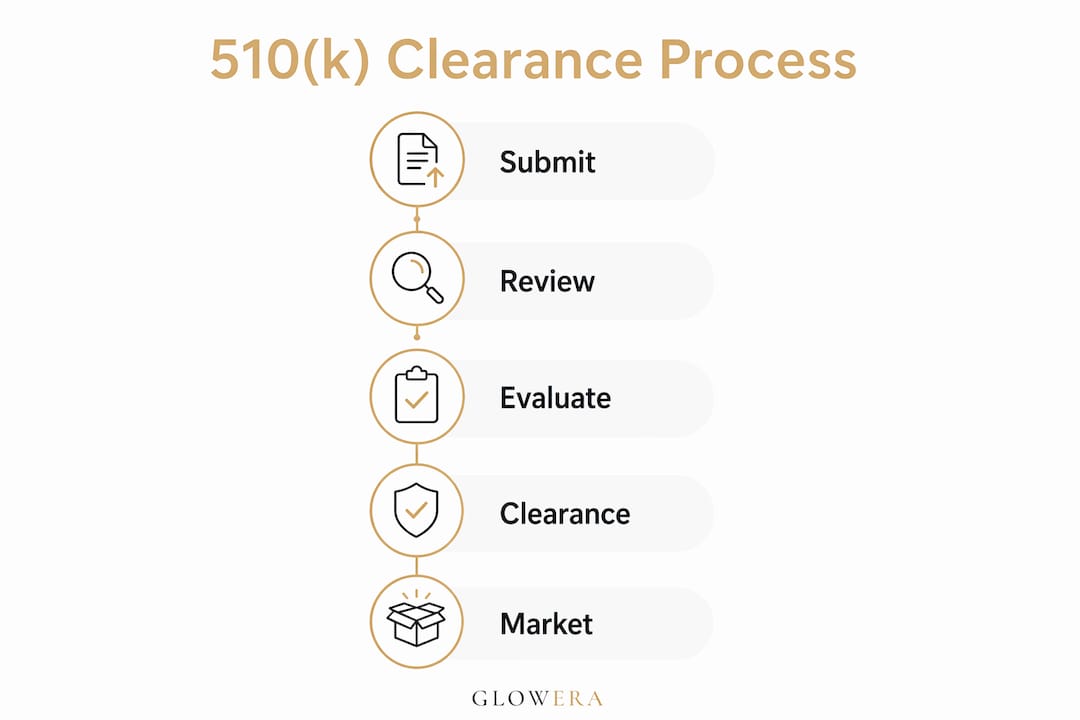
The timeline is equally compelling. LED light therapy devices have received 510(k) clearance in as few as 59 days, with other examples cleared in 89 and 90 days. The median clearance time sits at approximately 130 days, though devices with clear predicate matches often move faster. This speed matters because it allows brands to bring verified, safe devices to market without the multi-year delays associated with full approval.
A critical distinction separates clearance from approval. FDA approval, required for high-risk Class III devices such as implantable cardiac monitors, demands independent clinical evidence of safety and effectiveness. Clearance, by contrast, relies on substantial equivalence to a predicate device rather than new clinical trials. This does not make cleared devices unsafe. It means they have met a regulatory benchmark appropriate to their risk level.
Pro Tip: When researching a device, search the FDA’s 510(k) database directly using the device name or manufacturer. A genuine clearance number (formatted as K followed by six digits) confirms the device has passed regulatory review.
Here is a direct comparison of the two main pathways:
| Feature | 510(k) Clearance | Premarket Approval (PMA) |
|---|---|---|
| Typical cost | $50,000–$500,000 | $5 million–$75 million+ |
| Typical timeline | 59–130 days | 1–3 years |
| Clinical trials required | Rarely | Always |
| Risk level | Class I and II devices | Class III devices |
| Common beauty device examples | LED masks, microcurrent tools | Not typical for beauty devices |
Does FDA clearance protect consumers from false claims?
FDA clearance does more than verify safety. It also governs what a brand can and cannot say about its device. A cleared device may only be marketed for the specific intended use stated in its 510(k) submission. Claims that go beyond that use, such as promising to treat acne, reduce tumours, or reverse a diagnosed skin condition, require separate regulatory review.
The language a brand uses on packaging and in advertising is tightly regulated. Incorrect use of “FDA approved” for a cleared device is prohibited and can trigger regulatory warnings. The two terms are not interchangeable. “FDA cleared” means the device passed the 510(k) review. “FDA approved” means it passed the far more rigorous PMA process. Using the wrong term is a misbranding offence under US law.
“The distinction between wellness products and medical devices hinges entirely on intended use and claims. A device that promises to ‘improve skin tone’ sits in a different regulatory category from one that claims to ‘treat acne vulgaris.’” — Regulatory guidance, Provision FDA
This distinction matters for skincare professionals in particular. A device used in a clinical or professional setting that makes therapeutic claims must carry appropriate clearance for those claims. Recommending an uncleared device for a medical skin condition creates professional liability.
Pro Tip: Check the exact wording on a device’s packaging. If it says “FDA cleared” with a K-number, that is verifiable. If it says “FDA approved” for a beauty device, treat that as a red flag and verify independently.
The FDA policy on low-risk wellness products does exempt certain general wellness devices from active enforcement, provided they make no medical claims. A facial massager sold purely for relaxation, with no claim to treat a condition, may fall outside active FDA oversight. The moment that same device claims to reduce inflammation or treat rosacea, it enters medical device territory and requires clearance.
How does the FDA classification system apply to beauty devices?
The FDA organises medical devices into three classes based on risk level. Understanding which class a device falls into tells you exactly what regulatory scrutiny it has faced.
-
Class I devices carry the lowest risk and are subject to general controls only. Most are exempt from 510(k) requirements. Simple manual facial rollers and basic cleansing brushes without electrical components typically fall here.
-
Class II devices carry moderate risk and require 510(k) clearance before marketing. This is where most beauty devices sit, including LED light therapy masks, microcurrent facial tools, and radiofrequency skin tightening devices. These devices interact with tissue in ways that require verified safety benchmarks.
-
Class III devices carry the highest risk and require full Premarket Approval with clinical trial evidence. Implantable devices and life-sustaining equipment fall here. Beauty devices rarely reach this classification.
The table below illustrates how common beauty device types map to FDA classes:
| Device type | FDA class | Clearance required |
|---|---|---|
| Manual jade roller | Class I | No |
| LED light therapy mask | Class II | Yes, 510(k) |
| Microcurrent facial device | Class II | Yes, 510(k) |
| Radiofrequency skin tightening | Class II | Yes, 510(k) |
| Implantable skin device | Class III | Yes, PMA |
The 510(k) pathway does not require clinical trials for most Class II beauty devices. Instead, manufacturers submit engineering data, performance testing, and biocompatibility evidence. This approach balances regulatory rigour with commercial practicality, allowing verified devices to reach consumers without unnecessary delays.
What should you look for when choosing an FDA-cleared beauty device?
Selecting a beauty device based on FDA clearance status is one of the most reliable ways to protect yourself from ineffective or unsafe products. The market contains many devices that imply regulatory approval without actually holding it.
When evaluating any device, check these points:
- Verify the 510(k) number. Every cleared device has a unique K-number. Search it on the FDA’s public 510(k) database to confirm clearance is genuine and current. Glowera’s guide on verifying device authenticity walks through this process step by step.
- Read the intended use statement. Clearance covers a specific use. A device cleared for general skin warming is not cleared for acne treatment, even if marketing implies otherwise.
- Distinguish cleared devices from wellness products. A device sold without any therapeutic claims may not hold clearance. That is not automatically a problem, but you should know what you are buying.
- Check post-market compliance. Manufacturers of FDA-cleared devices must maintain Quality System Regulation compliance after clearance. Reputable brands publish this information or make it available on request.
- Assess the brand’s transparency. Brands like NuFACE and CurrentBody publish their clearance documentation openly. Brands that are vague about regulatory status warrant closer scrutiny.
Pro Tip: For LED therapy devices specifically, look for clearance under the General & Plastic Surgery device classification. Devices cleared under this category, such as those in Glowera’s LED therapy range, have met the specific safety benchmarks relevant to light-based skin treatment.
Skincare professionals recommending devices to clients carry an additional responsibility. A device used in a professional context that makes therapeutic claims should hold clearance for those specific claims. Regulatory literacy is not just a consumer skill. It is a professional one.
Key takeaways
FDA clearance is the minimum verified safety standard a beauty device must meet before it can be legally marketed with therapeutic claims in the United States.
| Point | Details |
|---|---|
| Clearance vs approval | FDA clearance uses the 510(k) pathway; approval requires full clinical trials and applies to high-risk Class III devices only. |
| Most beauty devices are Class II | LED masks, microcurrent tools, and radiofrequency devices require 510(k) clearance before marketing. |
| Cost and speed advantage | The 510(k) route costs $50,000–$500,000 and typically clears in 59–130 days, far faster than PMA. |
| Marketing language matters | Using “FDA approved” for a cleared device is a misbranding offence; always verify the exact terminology a brand uses. |
| Wellness vs medical device | A device making no therapeutic claims may avoid active FDA oversight, but any medical claim triggers clearance requirements. |
My honest view on FDA clearance in the beauty industry
The beauty device market has a transparency problem. Brands routinely use regulatory language in ways that sound authoritative but mean very little. I have seen devices labelled “FDA registered” prominently on packaging, which simply means the manufacturing facility is on an FDA list. It says nothing about the device’s safety or efficacy. Consumers read “FDA registered” and reasonably assume it means something similar to clearance. It does not.
The international perspective on 510(k) clearance adds another layer of complexity. Some global regulators view clearance as less rigorous than pathways requiring independent clinical evidence. That is a fair critique in some contexts. But for the category of devices we are discussing, Class II beauty tools with moderate risk profiles, the 510(k) standard is appropriate and meaningful. It is not a rubber stamp.
What I find genuinely reassuring about the clearance process is the post-market obligation. Cleared manufacturers must maintain Quality System Regulation compliance and report adverse events. That ongoing accountability is often overlooked in consumer discussions, but it matters. A device that clears the 510(k) process and then causes harm creates a documented regulatory trail. That trail protects consumers in ways that no unregulated wellness product can.
The practical advice I give to anyone serious about at-home skincare technology is this: treat FDA clearance as a floor, not a ceiling. It confirms the device is safe for its stated use. It does not guarantee it will deliver dramatic results. Pair clearance verification with clinical evidence for the specific technology, whether that is LED wavelength research or microcurrent stimulation studies, and you have a genuinely informed basis for your purchasing decision.
— Adam
FDA-cleared beauty devices available through Glowera
Glowera curates a selection of beauty technology devices that meet verified regulatory standards, so you can shop with confidence rather than guesswork.
The range includes FDA-cleared LED therapy masks, microcurrent facial devices, and a dedicated collection of K-beauty tech tools from brands including NuFACE, FOREO, Dr. Dennis GROSS, ZIIP, and CurrentBody. Every device in the Glowera catalogue is sourced from authorised distributors, with regulatory documentation available for the brands that publish it. For skincare professionals and consumers in the UAE who want professional-grade results at home, Glowera’s curated selection removes the uncertainty from the process.
FAQ
What is the difference between FDA cleared and FDA approved?
FDA cleared means a device passed the 510(k) premarket notification process by demonstrating substantial equivalence to a legally marketed device. FDA approved means a device passed the far more rigorous Premarket Approval process, which requires independent clinical trial evidence and applies to high-risk Class III devices.
Do all beauty devices need FDA clearance?
Not all beauty devices require clearance. Class I devices with minimal risk, such as manual rollers, are generally exempt. However, most electrically powered beauty devices, including LED masks and microcurrent tools, are Class II and require 510(k) clearance before they can be marketed with any therapeutic claims.
How long does FDA 510(k) clearance take for a beauty device?
The timeline varies by device complexity. LED light therapy devices have been cleared in as few as 59 days, and the median clearance time across all 510(k) submissions is approximately 130 days. Devices with a clear predicate match typically move through the process faster.
Can a beauty device be sold without FDA clearance?
A device making no medical or therapeutic claims and classified as a general wellness product may avoid active FDA enforcement. However, the moment a device claims to diagnose, treat, or prevent a skin condition, it requires clearance. Selling an uncleared device with such claims exposes the manufacturer to FDA enforcement action.
How can I verify that a beauty device is genuinely FDA cleared?
Search the FDA’s public 510(k) database using the device name, manufacturer, or K-number printed on the packaging. A genuine clearance entry will show the device name, intended use, and clearance date. Glowera’s guide on authenticating beauty devices provides a step-by-step walkthrough of this verification process.