Gua sha is a traditional scraping massage technique that promotes lymphatic drainage and muscle relaxation, while microcurrent therapy is a low-level electrical stimulation method that tones facial muscles and supports cellular activity. These two approaches represent the core gua sha versus microcurrent difference: one works through physical pressure and movement, the other through bioelectrical stimulation. Both have earned genuine followings in the skincare world, and devices from brands like NuFACE, FOREO, and ZIIP have brought microcurrent firmly into the home beauty routine. Understanding what each method actually does to your skin is the clearest way to decide which belongs in your routine.
What is gua sha and how does it benefit the skin?
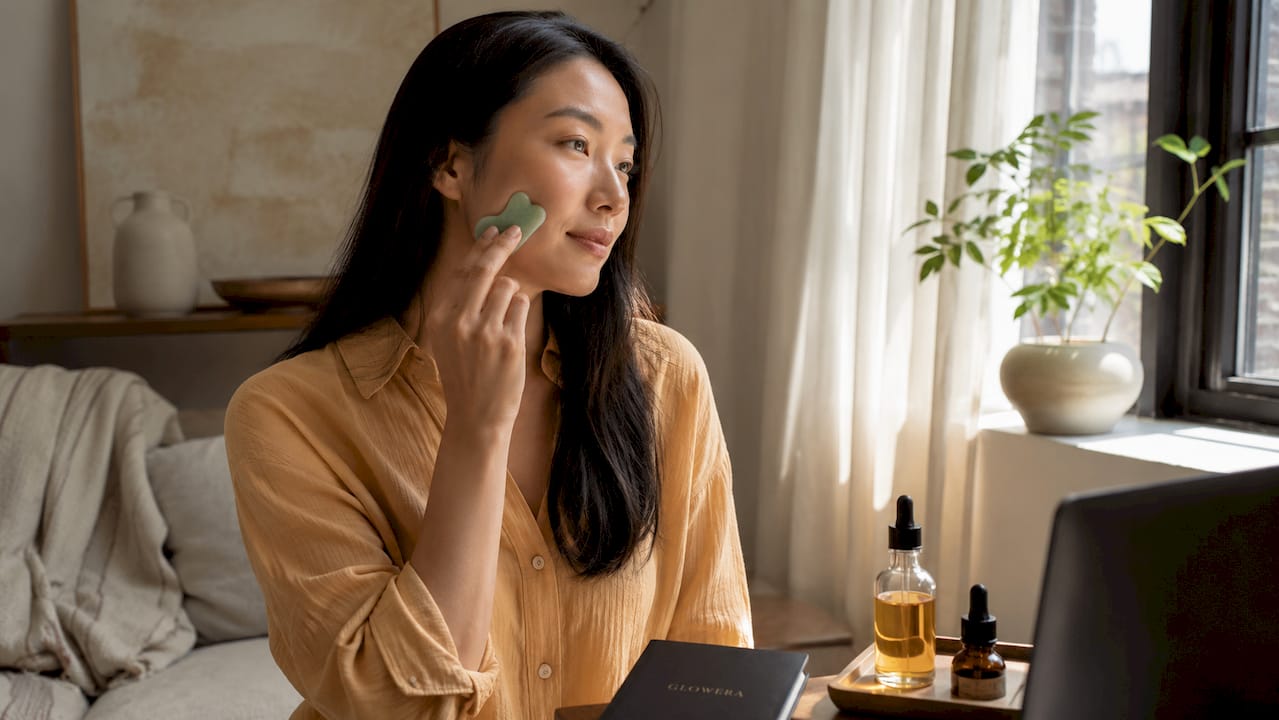
Gua sha is defined as a manual technique in which a smooth, flat tool, typically made from jade, rose quartz, or stainless steel, is pressed firmly against the skin and drawn upward and outward in repeated strokes. The technique originates from Traditional Chinese Medicine and has been adapted widely for facial use. The physical motion creates controlled pressure across the fascia, muscles, and superficial tissue layers beneath the skin.
The physiological effects are measurable. Professional gua sha raises localised nitric oxide by approximately 40% within 90 seconds, which dilates blood vessels and improves local circulation. That increase in nitric oxide is what gives the skin its immediate post-treatment flush and fresher appearance. Consistent practice of one to two sessions weekly over 8–12 weeks has also been shown to improve tissue hydration resilience, with a 23% increase in hyaluronan recorded in the fascia.
Gua sha also promotes lymphatic drainage, improved circulation, and muscle relaxation, which leads to a temporary reduction in puffiness and softer expression lines. The temporary nature of these effects is worth understanding clearly: the fluid movement and muscle release achieved in one session do not persist for days without repeated practice. The visible contouring effect you see immediately after a session is largely the result of lymphatic fluid being redirected away from the face.
The technique also triggers a process called microtrauma. Temporary ‘sha’ marks on the skin represent controlled microtrauma that stimulates the superficial microvasculature and initiates extracellular matrix remodelling. This is not damage in the harmful sense. It is a biological signal that prompts the skin to repair and regenerate.
Key gua sha benefits at a glance:
- Reduced morning puffiness, particularly around the jaw and under the eyes
- Improved local circulation and a brighter skin tone
- Temporary facial contouring through lymphatic fluid movement
- Muscle relaxation that softens tension-related lines
- Improved tissue hydration with consistent weekly practice
Pro Tip: Always apply a facial oil or water-based serum before using a gua sha tool. Dry skin creates friction that can cause irritation or broken capillaries. The tool should glide, not drag.
At-home gua sha offers accessible benefits but requires correct technique to avoid irritation. Professional treatments provide more targeted and consistent results, particularly for those new to the practice.
What is microcurrent therapy and how does it work?
Microcurrent therapy is defined as the delivery of low-level electrical impulses that mimic the body’s own voltage to stimulate cellular activity and re-educate facial muscles. The current is measured in microamperes, which is far below the threshold of sensation in most people. Devices like the NuFACE Trinity and ZIIP Halo are among the most clinically referenced tools in this category.
The biological mechanism centres on ATP production. When microcurrent reaches the muscle and skin cells, it encourages the mitochondria to produce more adenosine triphosphate, the molecule that powers cellular repair and protein synthesis. More ATP means faster collagen support, improved elastin production, and better absorption of topical skincare products applied during treatment.
Core microcurrent therapy benefits:
- Facial muscle re-education and toning over time
- Increased ATP production supporting collagen and elastin
- Enhanced absorption of serums applied during treatment
- Firmer facial contours with consistent use
- Longer-lasting results compared to manual massage techniques
One critical technical point separates microcurrent from every other facial tool: microcurrent requires a water-based conductive medium. Oil-based products act as electrical insulators and block the current from reaching the tissue. This is not a minor detail. Using the wrong product underneath a microcurrent device effectively renders the treatment inactive.
Treatment duration matters too. Most at-home microcurrent protocols recommend sessions of 5–20 minutes, three to five times per week during an initial loading phase, then reducing to maintenance sessions. Microcurrent results tend to last longer than those from gua sha, with muscle toning effects creating firmer facial contours over time rather than session by session.
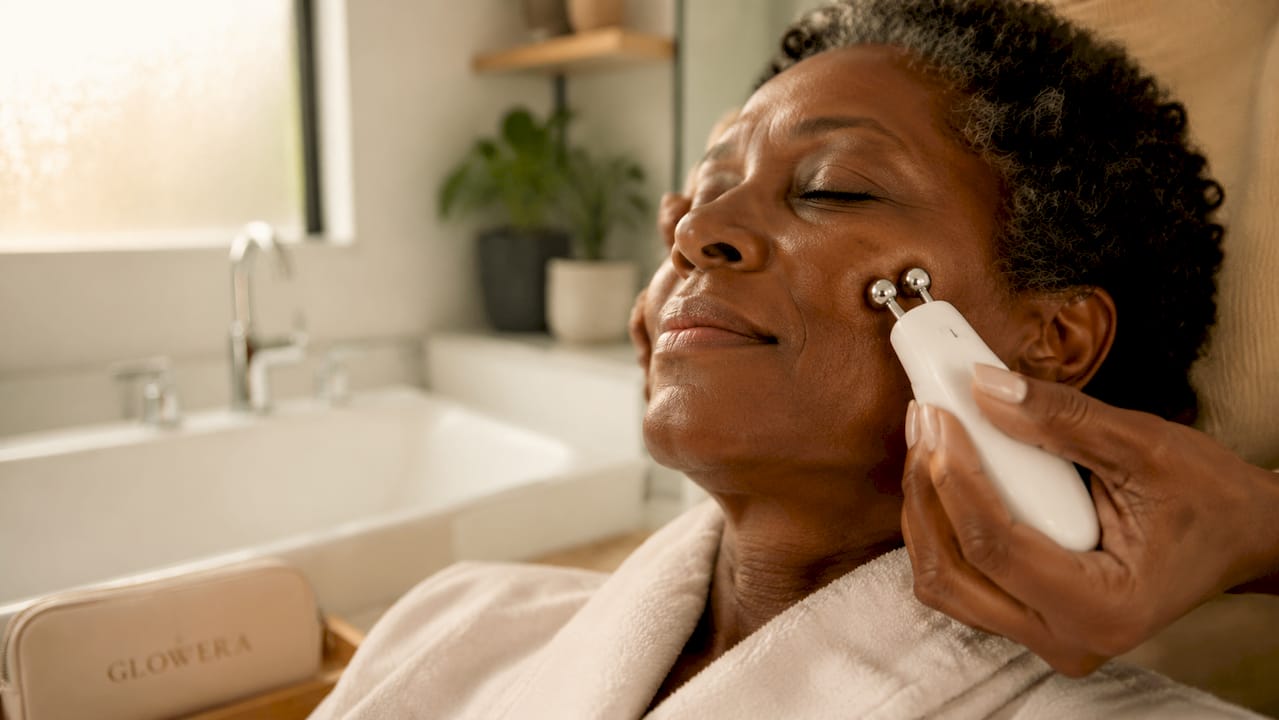
Pro Tip: Use a dedicated microcurrent conductive gel, such as the NuFACE Gel Primer or a hyaluronic acid serum, during every session. Never substitute with a facial oil. The electrical current cannot penetrate an oil barrier.
Safety considerations are straightforward for most people. Microcurrent is not recommended for those who are pregnant, have a pacemaker, or have active skin infections. For everyone else, it is considered a low-risk treatment when used as directed. For a deeper look at microcurrent skincare benefits, Glowera’s educational guides cover the science in accessible detail.
Key differences between gua sha and microcurrent therapies
The gua sha versus microcurrent difference comes down to mechanism, target tissue, and the durability of results. Gua sha acts on the lymphatic system, superficial fascia, and skin surface through physical pressure. Microcurrent acts on the muscle layer and cellular structures through electrical stimulation. These are fundamentally different biological pathways.
| Variable | Gua sha | Microcurrent |
|---|---|---|
| Mechanism | Manual scraping and pressure | Low-level electrical stimulation |
| Primary target | Lymphatic system, fascia, circulation | Facial muscles, cellular ATP production |
| Immediate effect | Reduced puffiness, improved glow | Mild lifting, firmer muscle tone |
| Result durability | Hours to one day | Days to weeks with consistent use |
| Session time | 5–15 minutes | 5–20 minutes |
| Key contraindications | Active acne, broken skin, rosacea flares | Pacemakers, pregnancy, active infection |
| Tool examples | Jade or rose quartz stone, stainless steel | NuFACE Trinity, ZIIP Halo, FOREO BEAR |
| Conductive medium needed | Facial oil or serum | Water-based gel only |
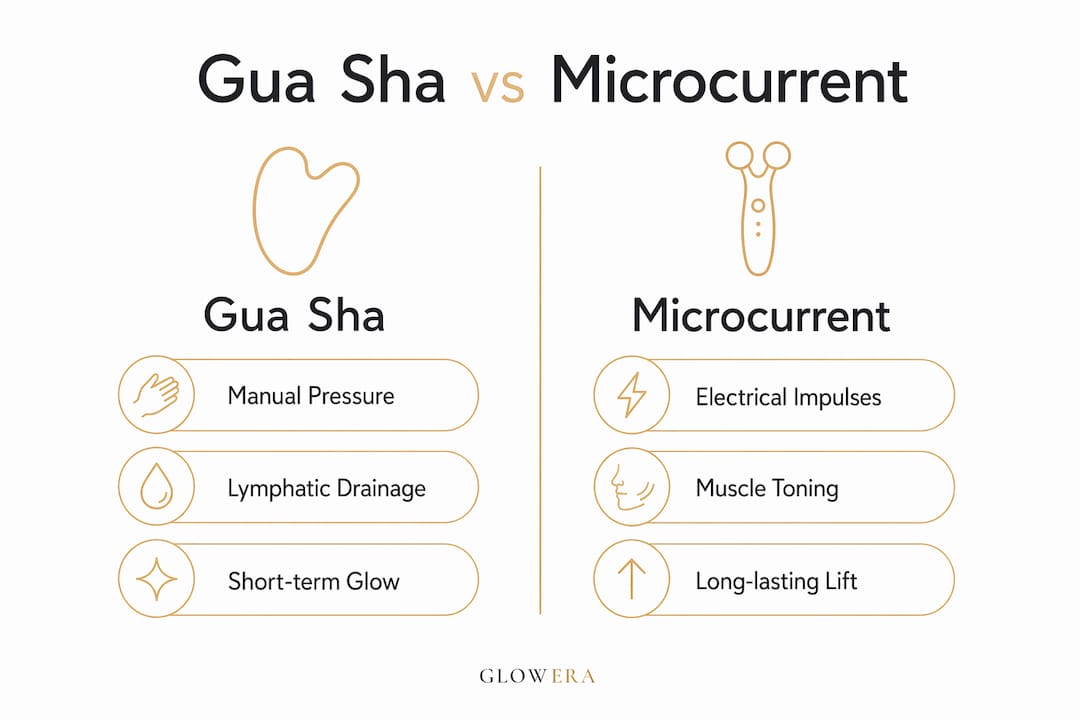
The contrast in result durability is the most practically significant difference. Gua sha delivers visible results immediately but requires daily or near-daily practice to maintain them. Microcurrent builds cumulative muscle tone that persists between sessions, making it more efficient for those targeting structural changes in the face over time.
Contraindications also differ in important ways. Gua sha should be avoided over active breakouts, open wounds, or inflamed rosacea because the physical pressure can worsen these conditions. Microcurrent carries no such restriction for most skin conditions but is contraindicated for anyone with electronic implants or during pregnancy. Understanding these limitations helps you choose safely, not just effectively.
Can gua sha and microcurrent be combined?
Combining both therapies is not only possible but increasingly recommended by skincare professionals. The two methods target different tissue layers and produce complementary effects. Used together in the correct sequence, they address lymphatic congestion, muscle tone, and cellular health in a single routine.
Hybrid facial devices combining gua sha-inspired massage shapes with microcurrent functionality are increasingly popular. These tools deliver both lymphatic drainage and muscle toning in one step, which simplifies the routine considerably. The Medicube Booster Pro is one example of a device that integrates massage and electrical stimulation in a single handset.
The recommended sequence for using both separately is:
- Cleanse thoroughly. Remove all makeup and residue so neither tool encounters a barrier.
- Apply a facial oil. Use this only for the gua sha phase. Work upward and outward across the neck, jaw, cheeks, and forehead for 5–10 minutes.
- Remove the oil completely. This step is non-negotiable before microcurrent. Any oil residue will block the electrical current.
- Apply a water-based conductive gel. A hyaluronic acid serum or dedicated microcurrent primer works well here.
- Use the microcurrent device. Follow the device’s protocol for each zone of the face, typically 3–5 passes per area.
- Finish with your regular serum and moisturiser. The skin’s absorption capacity is heightened after microcurrent, so this is the ideal moment for active ingredients.
Pro Tip: Never apply microcurrent directly after gua sha without removing the oil first. Even a thin residue is enough to insulate the skin and reduce the electrical current’s effectiveness to near zero.
For guidance on choosing the right microcurrent device to pair with a gua sha practice, Glowera’s buying guide covers the key features to look for in home-use devices.
Who should choose gua sha, microcurrent, or both?
The right choice depends on your primary skin concern, your available time, and your budget. Neither therapy is universally superior. Each serves a specific purpose, and the best results come from matching the tool to the goal.
Choose gua sha if you:
- Experience regular facial puffiness, particularly in the morning
- Want a low-cost, low-tech option that requires no charging or gel
- Are focused on relaxation and lymphatic health rather than structural toning
- Prefer a traditional, tactile skincare ritual
- Have a limited budget, as quality gua sha tools cost far less than microcurrent devices
Choose microcurrent if you:
- Are targeting visible muscle laxity, jowling, or loss of facial definition
- Want results that persist between sessions rather than fading within hours
- Are comfortable with a slightly longer learning curve and a specific product protocol
- Have the budget for a quality device such as the NuFACE Trinity or FOREO BEAR
- Are interested in signs of skin ageing and want a clinically supported approach to addressing them
Choose both if you:
- Want a complete at-home facial protocol addressing drainage, tone, and cellular health
- Are willing to invest time in a two-step routine or a hybrid device
- Have specific anti-ageing goals that benefit from both lymphatic and muscular support
Realistic expectations matter here. Neither gua sha nor microcurrent replaces clinical procedures such as radiofrequency or injectables for significant structural change. Both deliver genuine, measurable benefits within their scope. Consulting a dermatologist or aesthetician before starting either therapy is sensible if you have active skin conditions or medical concerns. For those comparing device categories, Glowera’s guide on microcurrent versus radiofrequency offers a useful parallel comparison.
Key takeaways
Gua sha and microcurrent are complementary therapies that target different tissue layers: gua sha addresses lymphatic drainage and circulation, while microcurrent builds cumulative muscle tone through electrical stimulation.
| Point | Details |
|---|---|
| Different mechanisms | Gua sha uses physical pressure; microcurrent uses low-level electrical current on muscle tissue. |
| Result durability | Gua sha effects last hours; microcurrent toning persists days to weeks with consistent use. |
| Conductive medium is critical | Microcurrent requires a water-based gel. Oil blocks the current and makes the device ineffective. |
| Combining both is effective | Use gua sha first with oil, then remove it fully before applying microcurrent with a water-based gel. |
| Match tool to goal | Choose gua sha for puffiness and relaxation; choose microcurrent for structural toning and anti-ageing. |
What I have learned from using both therapies
The most common mistake I see is treating gua sha as a passive ritual rather than a technique. Pressure, angle, and direction all matter. Dragging a stone across dry skin with the wrong angle does nothing useful and can break capillaries. When applied correctly with adequate lubrication and upward strokes, the lymphatic drainage effect is genuinely visible within minutes.
Microcurrent surprised me with how much the product choice underneath the device changes the outcome. I tested the same device with a hyaluronic acid serum versus a facial oil on different sessions. The sessions with oil produced almost no sensation and no visible result. The sessions with the water-based serum produced a clear, immediate firmness around the jaw and cheekbones. That single variable makes an enormous difference.
The marketing around both therapies tends to overstate permanence. Gua sha will not permanently sculpt your face. Microcurrent will not replace a surgical lift. What both do reliably is improve the quality and tone of the skin you have, provided you use them consistently and correctly. I find the combination most useful for maintaining results between professional treatments rather than replacing them entirely. If you are new to either therapy, start with gua sha to understand your skin’s response to manual stimulation before adding electrical current into the mix.
— Adam
Premium facial tools for every skincare goal at Glowera
Glowera stocks a curated range of microcurrent devices from trusted brands including NuFACE, FOREO, and ZIIP, alongside K-beauty tools that integrate massage and electrical stimulation in one device. Every product on the platform is authentic and selected for its clinical credibility and ease of use at home.
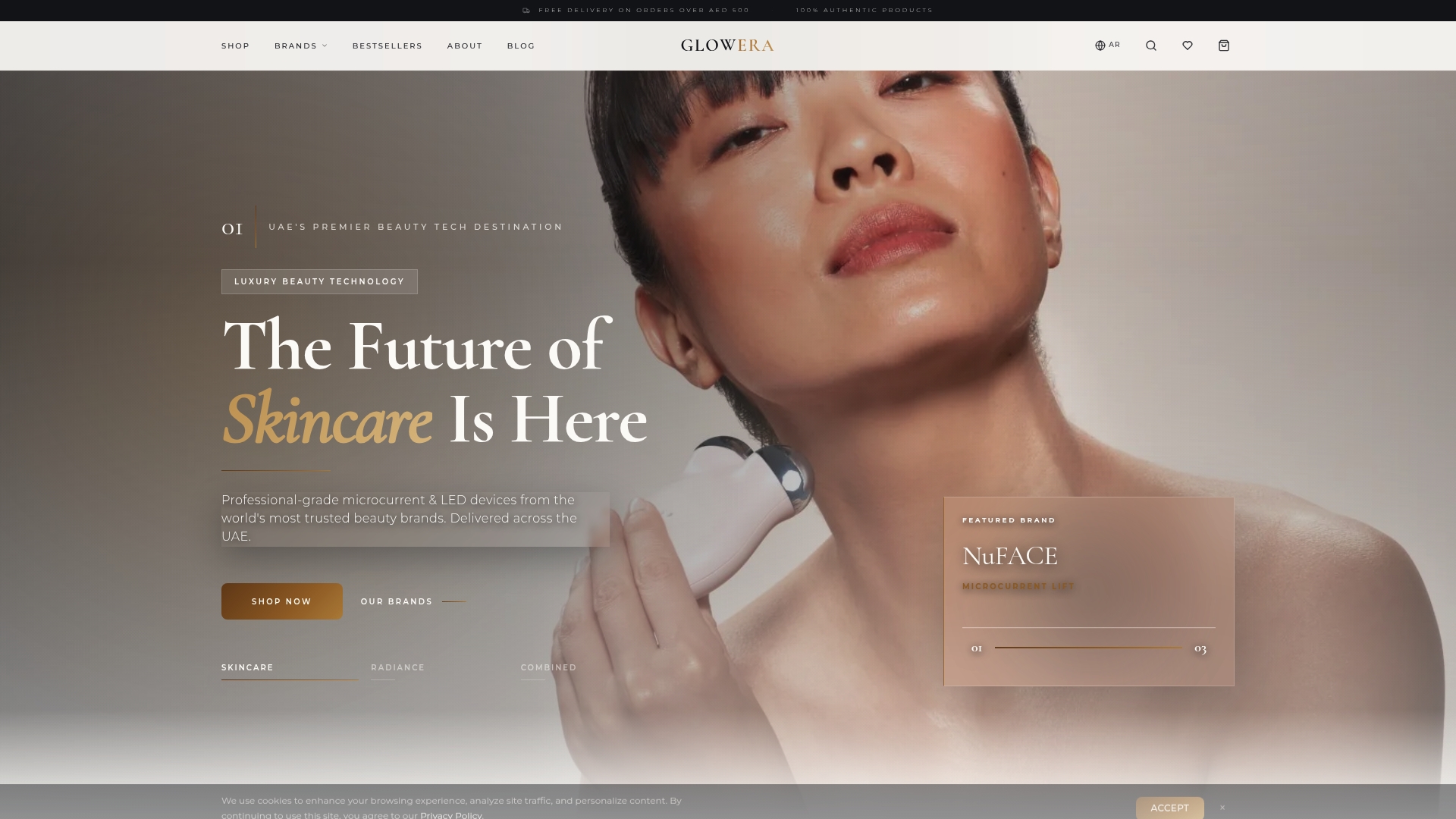
For those drawn to the intersection of traditional technique and modern technology, the K-beauty tech collection at Glowera includes devices like the Medicube Booster Pro Heart Edition, which combines massage stimulation with microcurrent in a single handset. Whether you are building a gua sha practice, starting with microcurrent, or looking to combine both, Glowera’s range covers every stage of that skincare goal with devices backed by real science.
FAQ
What is the main difference between gua sha and microcurrent?
Gua sha uses physical scraping pressure to stimulate lymphatic drainage and circulation, while microcurrent delivers low-level electrical impulses to tone facial muscles and increase cellular ATP production. The core difference is manual pressure versus bioelectrical stimulation.
How long do gua sha results last compared to microcurrent?
Gua sha results, such as reduced puffiness and improved glow, typically last a few hours. Microcurrent toning effects persist for days to weeks with consistent use, making it the longer-lasting option for structural facial improvements.
Can I use gua sha and microcurrent in the same routine?
Yes, and the sequence matters. Use gua sha first with a facial oil, then remove the oil completely before applying a water-based conductive gel for microcurrent. Oil left on the skin will block the electrical current.
Do I need a special product for microcurrent to work?
Microcurrent requires a water-based conductive medium such as a hyaluronic acid serum or a dedicated gel primer. Oil-based products insulate the skin and prevent the current from reaching the muscle tissue, making the device ineffective.
Is gua sha or microcurrent better for anti-ageing?
Microcurrent is better supported by clinical evidence for structural anti-ageing effects such as muscle toning and firmer contours. Gua sha complements this by improving circulation and reducing puffiness, but its anti-ageing effects are more superficial and temporary.