Microprocessors are defined as the embedded control units that manage every critical function inside a modern beauty device, from LED output timing to microcurrent waveform stability. The role of microprocessors in beauty devices extends far beyond simple on/off switching. They regulate thermal sensors, execute safety shutdowns, and increasingly run local AI models that analyse skin in real time. Devices like microcurrent facial toners, IPL systems, and smart LED masks depend on processor-level precision to deliver consistent, safe results. Without a well-specified microprocessor and validated firmware, even the most elegantly designed device cannot perform reliably.
How do microprocessors enhance precision and safety in beauty devices?
Microprocessors act as the core control units managing LED output, microcurrent waveform stability, and thermal monitoring in beauty devices. That single capability separates a clinically effective device from one that merely looks the part. Precision matters most in microcurrent facial toning, where the processor must sustain stimulation at microamp levels with minimal drift across a full treatment session.
Safety is the other half of this equation. A well-designed processor continuously monitors output and responds to anomalies within milliseconds. The following safety functions are managed directly at the processor level in professional-grade devices:
- Skin-contact detection: The device confirms electrode contact before activating current, preventing accidental discharge.
- Overcurrent shutdown: The processor cuts power immediately if output exceeds the programmed threshold.
- Thermal regulation: Temperature sensors feed data back to the processor, which reduces power or halts operation if the device surface overheats.
- Waveform stability monitoring: The processor checks that the delivered waveform matches the programmed pattern throughout the session.
- Impedance sensing: Some IPL and radiofrequency devices measure skin resistance and adjust energy delivery accordingly.
These functions do not operate independently. The processor coordinates all of them simultaneously, which is why PCBA reliability and validated firmware matter more than industrial design when evaluating device quality.
Pro Tip: When assessing a beauty device, ask the manufacturer whether firmware has been independently validated and whether current tolerances are published. A device that cannot answer both questions is a device to avoid.
What types of microprocessors are used in modern beauty devices?
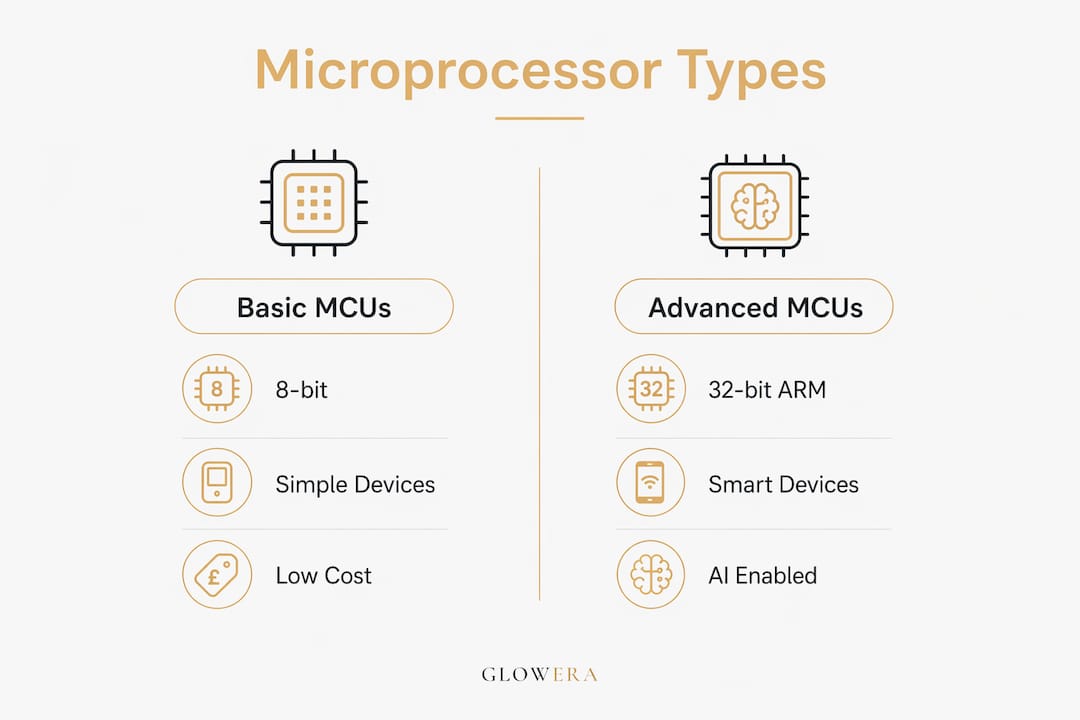
Microprocessor categories range from 8-bit MCUs for simple pulse control to 32-bit ARM Cortex-M series for moderate complexity, and application processors like the RK3568 for AI-driven tasks. Processor choice directly shapes what a device can and cannot do. It also determines cost, which is why manufacturers select the lowest-specification processor that still meets the device’s functional requirements.
The table below maps processor types to typical device complexity and feature sets.
| Processor type | Typical device | Key capabilities |
|---|---|---|
| 8-bit MCU | Basic facial massagers, simple LED masks | Fixed pulse patterns, on/off control |
| 32-bit ARM Cortex-M | Microcurrent toners, IPL handsets | Waveform control, thermal feedback, safety shutdowns |
| Application processor (e.g. RK3568) | AI skincare mirrors, smart beauty hubs | Real-time skin analysis, touchscreen UI, edge AI |
| Motor-dedicated MCU | High-speed hair dryers | 110,000 RPM motor control at 28 kHz, noise elimination |
The RK3568, for example, runs up to 2.0 GHz with 1 TOPS AI computing power for local processing in smart mirrors and skincare devices. That level of compute allows the device to run a neural network model on-board without sending data to a cloud server. For hair styling devices, motor-dedicated microprocessors control 110,000 RPM motors at 28 kHz frequencies, eliminating audible noise while integrating op-amps, comparators, and DACs to reduce external component count. Fewer external components mean a smaller PCB, faster assembly, and a more reliable finished product.
Understanding how pulse frequencies work in beauty tech helps clarify why processor selection is not a cost-cutting exercise. The wrong processor produces the wrong waveform, and the wrong waveform produces the wrong result.
How do microprocessors enable AI and smart features in beauty devices?
Advanced application processors now allow beauty devices to perform real-time skin analysis locally, without any cloud connection. This is a meaningful shift. Edge processing with on-board NPUs keeps biometric skin data private while enabling complex skin audits on the device itself. Consumers increasingly demand this level of privacy, and the processor architecture is what makes it possible.
The practical benefits of AI integration at the processor level include:
- Real-time skin analysis: The device captures an image or sensor reading, processes it through a local model, and returns a recommendation within seconds.
- Personalised treatment adjustment: The processor modifies intensity, frequency, or duration based on the skin analysis output, not a fixed programme.
- Touchscreen interaction: Application processors manage high-resolution displays and gesture recognition, making the interface responsive and intuitive.
- Smart home integration: Devices with Wi-Fi or Bluetooth modules use the processor to manage connectivity without compromising local data processing.
- Data sovereignty: Because the NPU handles analysis on-board, no biometric data leaves the device unless the user explicitly chooses to share it.
Algorithms in skincare personalisation are only as reliable as the processor running them. A device with a capable NPU and well-trained model can identify hydration levels, detect uneven pigmentation, and recommend a treatment protocol in a single session. That capability was confined to clinical settings five years ago. It now fits in a handheld device, and the microprocessor is the reason.
Pro Tip: Look for devices that specify on-board AI processing rather than cloud-dependent analysis. On-board processing means faster results, no subscription dependency, and full control of your biometric data.
What challenges shape microprocessor design and firmware in beauty devices?
Stable current generation is the hardest problem in microcurrent device design. Constant current in microcurrent wands requires highly stable firmware and a precise PCB layout to avoid safety risks and inconsistent treatment. A firmware error that allows even a small current spike can cause discomfort or skin irritation. This is why firmware validation is not optional; it is the foundation of device safety.
The firmware-first approach addresses a common manufacturing temptation: specifying a lower-cost processor and assuming the hardware will compensate. Firmware-first design enables cost-effective microcontrollers to deliver professional-grade precision, making advanced beauty tech accessible without unnecessary cost. Well-written firmware can extract performance from a mid-range processor that a poorly written programme would waste on a high-end chip.
Component integration is the other major design challenge. Integrating op-amps, comparators, and DACs into MCUs reduces external component count by 4–6 passive parts and 2–3 ICs, producing smaller PCBs and faster surface-mount assembly cycles. Smaller boards fit into slimmer device housings, which matters for handheld skincare tools where ergonomics affect compliance. A device that feels comfortable in the hand gets used consistently, and consistent use drives results.
Common firmware pitfalls include uncalibrated ADC readings, poorly timed interrupt routines, and inadequate error-handling for sensor failures. Each of these can produce erratic output, which the user experiences as an inconsistent treatment or, in the worst case, a safety incident. Choosing a device from a manufacturer with a documented firmware validation process is the most reliable way to avoid these risks. The features to look for in a microcurrent device include processor-level current control and published tolerance specifications.
Pro Tip: Firmware updates after purchase are a positive sign. They indicate the manufacturer actively maintains the device’s performance and responds to real-world feedback. A device that never receives updates is a device that has been abandoned.
Key takeaways
Microprocessors are the definitive performance determinant in beauty devices, with firmware quality and processor specification together deciding whether a device is safe, effective, and worth the investment.
| Point | Details |
|---|---|
| Processor type determines capability | 8-bit MCUs handle basic tasks; 32-bit ARM Cortex-M and application processors enable AI and safety features. |
| Firmware quality is non-negotiable | Validated firmware maintains current tolerances and prevents safety incidents in microcurrent and IPL devices. |
| Edge AI protects biometric privacy | On-board NPUs process skin data locally, eliminating cloud dependency and data sovereignty risks. |
| Component integration improves reliability | Integrating op-amps and comparators into MCUs reduces PCB size and increases manufacturing consistency. |
| Firmware-first design lowers cost | Optimised firmware allows mid-range processors to deliver professional-grade performance without premium hardware costs. |
Why the firmware question matters more than the spec sheet
I have spent years reviewing beauty technology, and the pattern I keep returning to is this: the devices that disappoint are rarely the ones with the weakest processors. They are the ones with the weakest firmware. A manufacturer can source a capable ARM Cortex-M chip, pair it with a well-designed PCB, and still ship a device that delivers erratic microcurrent because nobody validated the interrupt timing or calibrated the ADC properly.
The rise of edge AI in beauty devices is genuinely exciting, and I do not say that lightly. The idea that a handheld device can analyse your skin locally, adjust its treatment protocol in real time, and never send your biometric data to a server is a meaningful step forward. The sovereign beauty movement, where enthusiasts use programmable microcontrollers like the ESP32 to build and control their own devices entirely offline, shows how seriously some people take data ownership. That instinct is correct, and mainstream manufacturers are beginning to respond to it.
What I find underappreciated is how much firmware optimisation has democratised access to professional-grade devices. The gap between a clinical device and a well-engineered home device has narrowed considerably, not because hardware costs have dropped dramatically, but because firmware has improved. That is good news for anyone who wants effective skincare without a clinic appointment. The wearable skincare tech innovations emerging in 2026 reflect this trend clearly. The processors are getting smarter, but the firmware is what makes them trustworthy.
— Adam
Advanced beauty tech powered by microprocessors, available at Glowera
Glowera curates a selection of professional-grade beauty devices where processor quality and firmware validation are part of the product standard, not an afterthought.
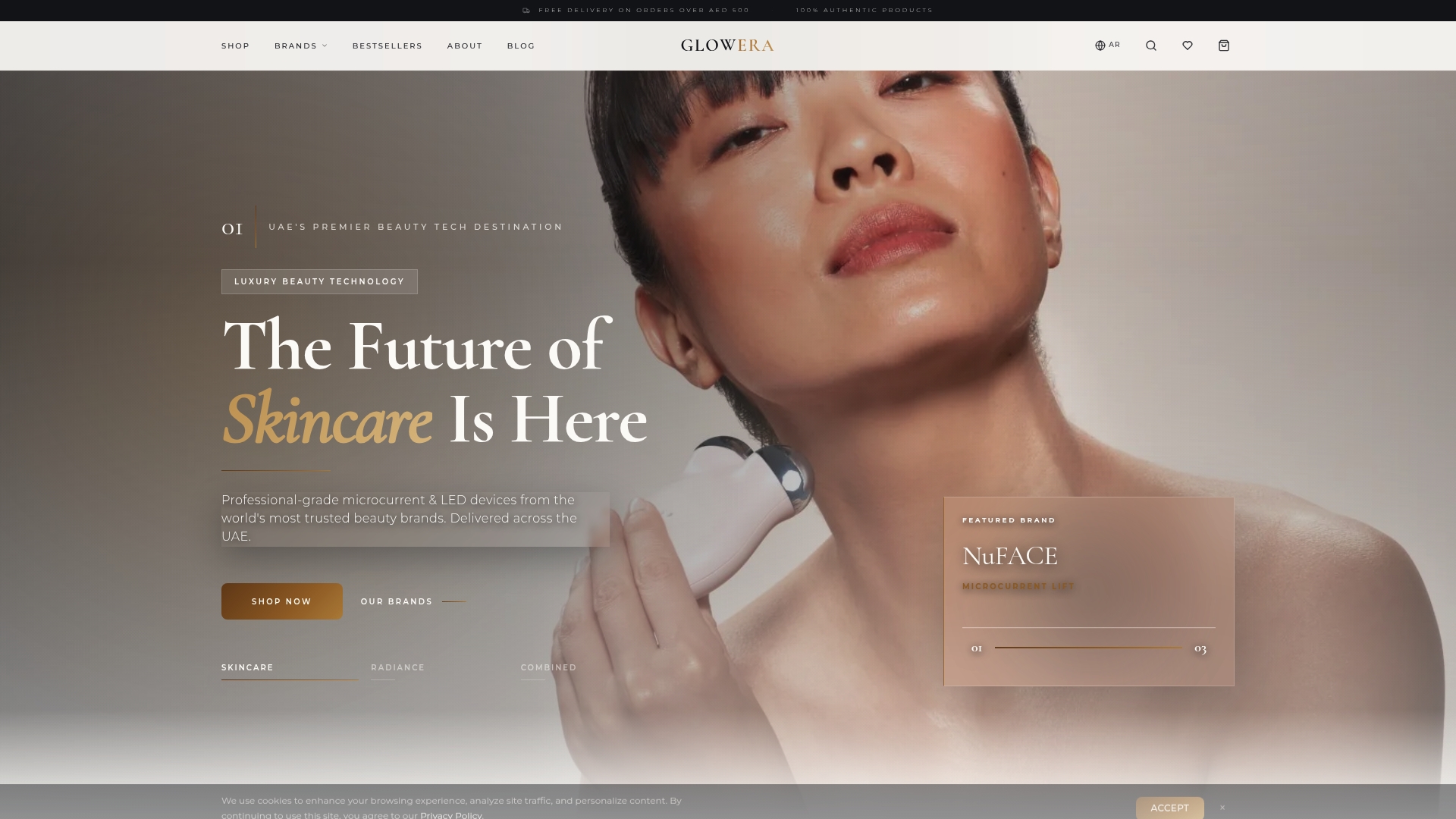
The microcurrent devices at Glowera include options from NuFACE, ZIIP, and Medicube, each relying on processor-level current control for consistent facial toning results. The LED therapy range features microprocessor-managed light delivery with built-in safety controls, including the CurrentBody Skin LED Light Therapy Panel. For those interested in K-beauty technology, the K-beauty tech collection brings together Korean devices that combine advanced microprocessor architecture with clinically validated treatment protocols. Every device ships with authenticity assurance and full customer support across the UAE.
FAQ
What does a microprocessor do in a beauty device?
A microprocessor manages all core functions including current regulation, LED output timing, thermal monitoring, and safety shutdowns. It acts as the control unit that determines whether a device performs consistently and safely.
Why does firmware matter more than processor speed?
Firmware quality determines how accurately the processor executes its instructions. Poorly validated firmware produces inconsistent output even on capable hardware, which affects both treatment results and user safety.
What is edge AI in a beauty device?
Edge AI refers to artificial intelligence processing that runs entirely on the device’s own processor, without sending data to a cloud server. It enables real-time skin analysis while keeping biometric data private.
How do I know if a beauty device has a reliable microprocessor?
Look for published current tolerance specifications, documented firmware validation, and a manufacturer that issues firmware updates post-purchase. These are the clearest indicators of processor and firmware quality.
What is the difference between an MCU and an application processor in beauty tech?
An MCU (microcontroller unit) handles specific, defined tasks like pulse generation or motor control. An application processor, such as the RK3568, runs a full operating system and supports AI models, touchscreens, and connectivity, making it suited to smart beauty hubs and AI skincare mirrors.