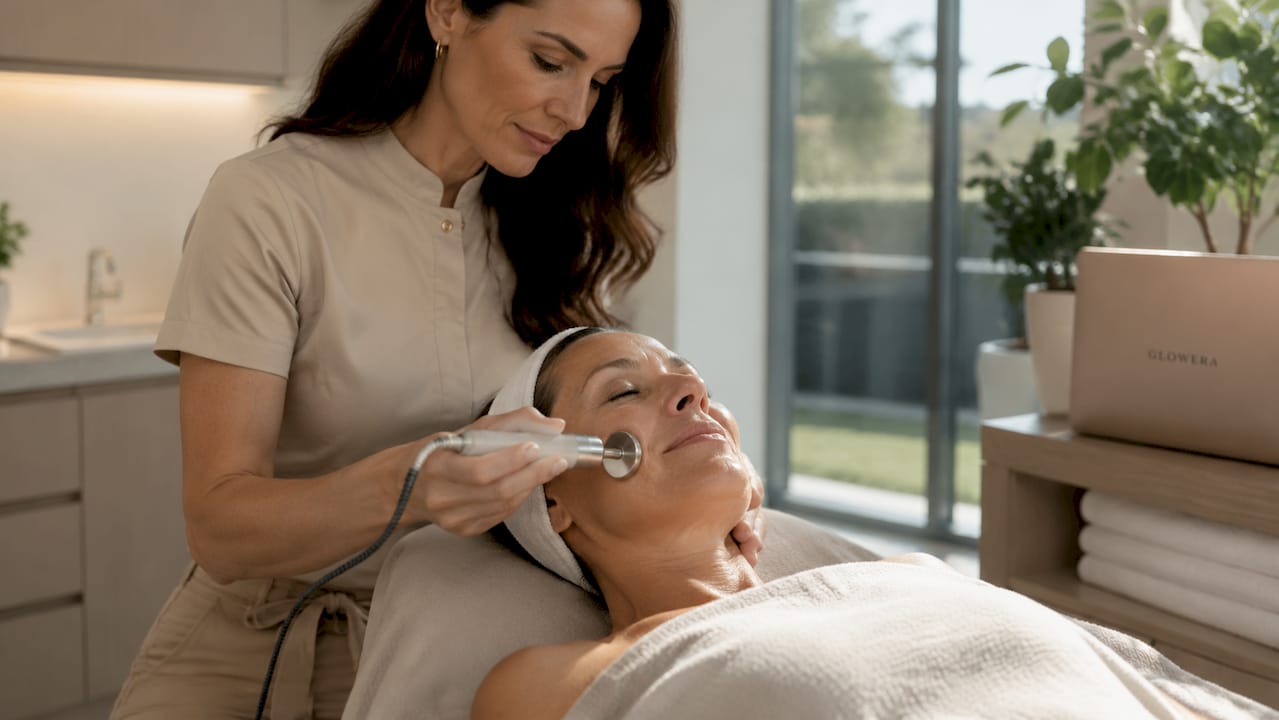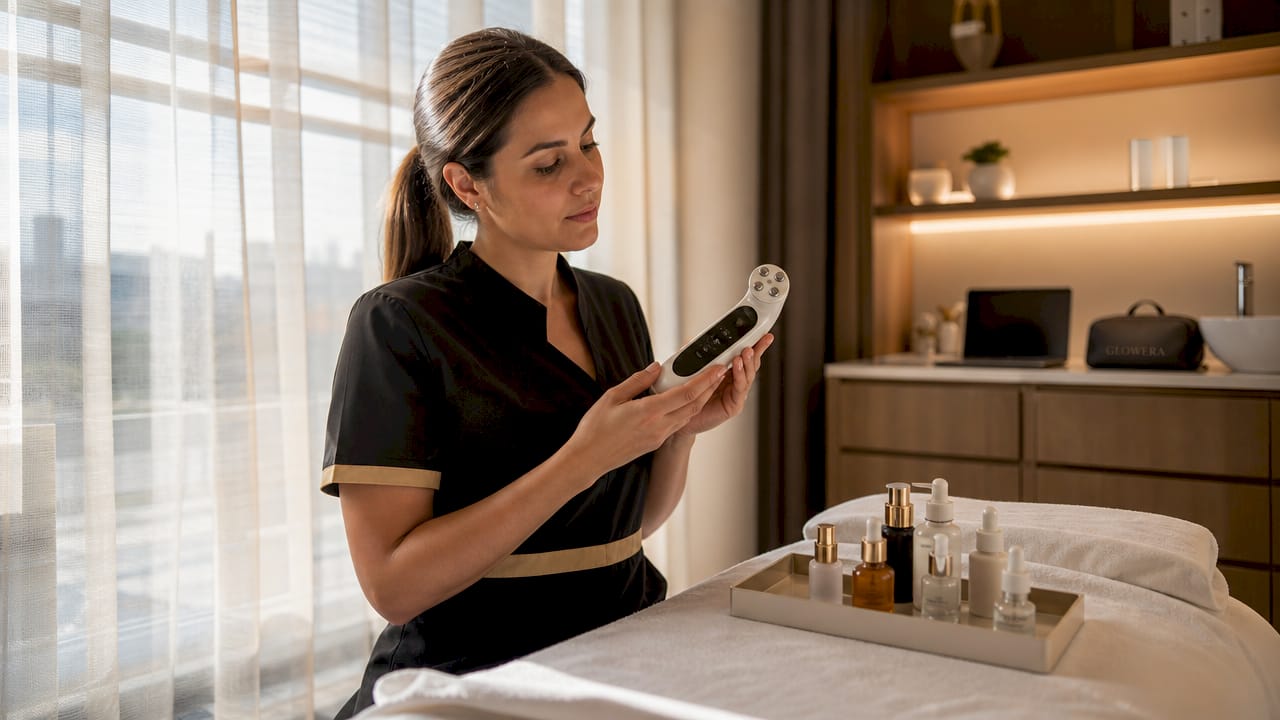
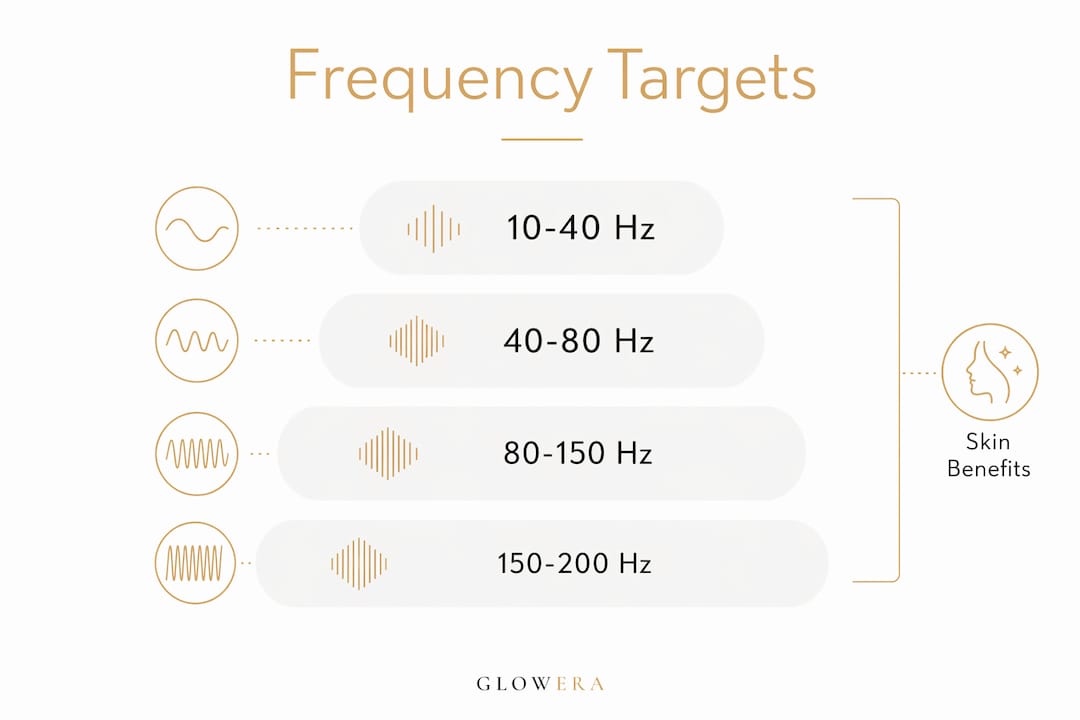
Pulse frequency is defined as the rate at which a device delivers bursts of energy per second, measured in hertz (Hz), and it is the primary reason why beauty tech uses pulse frequencies to produce targeted biological effects rather than generalised warmth or light. Devices operating across the 10–40 Hz, 70–150 Hz, and 200+ Hz ranges each trigger distinct cellular responses, from neuromodulation to collagen synthesis. Regulatory bodies and clinical researchers recognise frequency control as a core variable in device efficacy, not a secondary specification. Understanding which frequency does what is the difference between a device that genuinely changes your skin and one that simply feels pleasant.
Why beauty tech uses pulse frequencies: the biological case
Specific pulse frequency bands correlate directly with targeted biological outcomes, and this is the foundational reason why frequency control matters in skincare technology. The body does not respond to energy uniformly. Different tissues, cells, and neural pathways have distinct resonance windows, meaning they respond most efficiently to energy delivered at particular rates.
The three main frequency ranges each serve a different purpose:
- 10–40 Hz (neuromodulation range): This band influences nerve signalling, pain relief, and neural oscillations. Research identifies 40 Hz stimulation as scientifically significant for supporting cognitive networks and reducing age-related neural decline. Microcurrent devices operating in this range work by mimicking the body’s own bioelectrical signals.
- 70–150 Hz (collagen and anti-inflammatory range): Frequencies in this band promote collagen production and reduce inflammation. Radiofrequency and photobiomodulation devices targeting skin firmness and texture typically operate here. This is the range most relevant to anti-ageing applications.
- 200+ Hz (deep tissue and recovery range): Higher frequencies penetrate more deeply, activating muscle tissue and supporting cellular recovery. Devices in this range are used for body contouring and post-exercise recovery support.
The table below summarises these relationships clearly.
| Frequency range | Primary biological target | Common device type |
|---|---|---|
| 10–40 Hz | Neuromodulation, pain relief, neural health | Microcurrent, PEMF mats |
| 70–150 Hz | Collagen stimulation, anti-inflammation | LED therapy, radiofrequency |
| 200+ Hz | Deep tissue activation, recovery | Body contouring, PEMF pads |
40 Hz visual flickering has also been shown to synchronise neural activity and promote gamma oscillations linked to cognitive and sensory function. That finding extends the relevance of pulse frequency well beyond surface skincare, into neurological wellness applications now entering the beauty tech space.
How does pulsed energy differ from continuous energy in beauty treatments?
Pulsed energy and continuous energy are not interchangeable delivery modes. Pulsed light reduces thermal buildup and improves comfort compared to continuous light, while also enhancing cellular absorption and targeting tissue adaptation mechanisms. That distinction matters practically, not just theoretically.

Continuous energy delivers a constant, uninterrupted stream of light, electrical current, or electromagnetic fields. The tissue absorbs what it can, but adaptation sets in quickly. Cells effectively become desensitised to a constant signal, reducing the treatment’s biological impact over time. Pulsed delivery interrupts this pattern. The on/off rhythm prevents adaptation, keeps cellular receptors responsive, and allows deeper penetration between pulses.
The key advantages of pulsed delivery include:
- Reduced thermal load: Pauses between pulses allow tissue to dissipate heat, making treatments safer and more comfortable at higher energy levels.
- Improved cellular absorption: Cells respond more efficiently to rhythmic stimulation than to constant input, particularly in photobiomodulation (low-level light therapy, or LLLT).
- Neural timing compatibility: The nervous system operates on rhythmic electrical signals. Pulsed delivery at matched frequencies aligns with these natural rhythms, improving neuromodulation outcomes.
- Bypassing tissue adaptation: Continuous signals trigger habituation. Pulsing prevents this, sustaining the biological response throughout the treatment session.
Continuous mode does retain advantages in specific scenarios. For surface-level warming treatments or when even heat distribution is the goal, a steady output is appropriate. The choice between modes should match the treatment objective, not default to one approach.
Pro Tip: If your device offers both pulsed and continuous modes, use pulsed for anti-ageing and neuromodulation goals, and continuous for gentle warming or relaxation-focused sessions. Matching the mode to the goal is more important than always choosing the highest setting.
You can read more about how professional-grade facial devices compare pulsed and continuous delivery in home-use contexts.
Why is frequency selection critical for skincare and anti-ageing outcomes?
Frequency selection is the most underestimated variable in beauty tech. PEMF therapy’s effectiveness depends primarily on frequency, with condition-specific protocols consistently outperforming generic treatments. The analogy used in clinical literature is tuning a radio: the signal only comes through clearly when you are on the right frequency.
Biological resonance windows explain this precisely. Each cellular process, whether collagen synthesis, ion channel activation, or neural signalling, responds within a specific frequency range. Deliver energy outside that window and the biological target simply does not respond as intended. The treatment may still feel effective, but the underlying cellular mechanism is not engaged.
“Frequency windows interact differently with cellular ion channels and signalling pathways. Selecting the wrong frequency does not just reduce efficacy — it means the intended biological target is not activated at all.” — Clinical perspective on PEMF frequency protocols
The risks of poor frequency matching are real and worth understanding:
- Reduced efficacy: A device set to the wrong frequency for your goal will produce minimal biological change, regardless of session length.
- Wasted investment: Spending on a device that operates at a fixed frequency unsuited to your skin concern delivers little return.
- Missed treatment windows: Collagen stimulation requires sustained exposure within the 70–150 Hz range. Devices that only offer a single mid-range setting cannot address neuromodulation or deep tissue goals simultaneously.
Devices with adjustable frequency settings are the practical solution. Condition-specific frequency matching outperforms broad-spectrum approaches because it activates the precise cellular mechanisms relevant to the treatment goal. A device offering multiple frequency settings across the 10–200 Hz range gives you the flexibility to address different skin concerns in a single tool. This is why Glowera prioritises devices with transparent frequency specifications and adjustable controls in its curated selection.
For a detailed comparison of device types and their frequency applications, the microcurrent vs radiofrequency guide on Glowera’s blog is a practical starting point.
How to choose beauty tech devices with effective pulse frequency controls
Choosing a device based on frequency specifications requires knowing what to look for. Devices with adjustable pulse frequency settings across the 10–200 Hz range are more effective than those selected for highest frequency capacity alone. More is not always better. Appropriate tuning is what drives results.
When evaluating a device, check for the following:
- Published frequency range: The specification sheet should state the Hz range clearly. If it does not, the manufacturer is not prioritising frequency control.
- Multiple frequency modes: A device offering at least three distinct frequency settings covers neuromodulation, collagen stimulation, and deeper tissue goals.
- Combination of frequency with wavelength and irradiance: For LED therapy devices, pulse frequency works alongside wavelength (measured in nanometres) and irradiance (energy output per area). All three variables affect outcomes. A device optimised for only one of these is incomplete.
- Pulsed and continuous mode options: As discussed, mode selection matters. Devices offering both give you treatment flexibility.
The table below outlines the ideal feature profile for a frequency-capable beauty tech device.
| Feature | What to look for | Why it matters |
|---|---|---|
| Frequency range | 10–200 Hz minimum | Covers neuromodulation, collagen, and deep tissue goals |
| Frequency modes | 3 or more distinct settings | Allows condition-specific matching |
| Delivery mode | Pulsed and continuous options | Matches mode to treatment objective |
| Wavelength (LED devices) | Stated in nanometres | Frequency and wavelength together determine depth and target |
| Irradiance | Stated in mW/cm² | Determines energy dose delivered per session |
Radiofrequency microneedling treatments at clinic level demonstrate what frequency precision can achieve for collagen remodelling. Home devices cannot replicate clinical energy levels, but devices with proper frequency controls close the gap meaningfully.
Pro Tip: Before purchasing, search the device name alongside “Hz” or “pulse frequency” to find the technical specification. If the brand does not publish this information, treat it as a signal that frequency control is not a design priority.
The wearable skincare tech innovations guide covers how 2026 devices are integrating frequency controls into compact, daily-use formats worth considering.
Key takeaways
Pulse frequency is the defining variable in beauty tech efficacy: devices tuned to the correct Hz range for a specific skin concern produce measurably better outcomes than fixed-frequency or high-frequency-only alternatives.
| Point | Details |
|---|---|
| Frequency determines biological target | Each Hz range activates a distinct cellular process: neuromodulation, collagen synthesis, or deep tissue recovery. |
| Pulsed beats continuous for most goals | Pulsed delivery reduces thermal load, prevents tissue adaptation, and improves cellular absorption. |
| Condition matching is non-negotiable | Using the wrong frequency for your skin concern means the intended biological mechanism is not activated. |
| Adjustable settings are the priority | Devices spanning 10–200 Hz with multiple modes offer the flexibility needed for varied skincare goals. |
| Frequency works alongside wavelength | For LED devices, pulse frequency, wavelength, and irradiance must all be considered together for full efficacy. |
Frequency science in beauty tech: what I actually think
The science behind pulse frequencies is genuinely compelling, and I say that as someone who has spent years reviewing beauty tech claims with a healthy degree of scepticism. The frequency-specific biological effects are not marketing language. The research on 40 Hz neural stimulation, collagen-range photobiomodulation, and PEMF protocols is peer-reviewed and growing. That said, I think the industry has a tendency to present frequency as a magic dial, and that framing does consumers a disservice.
The honest position is this: pulse frequency controls are precision tools, not guarantees. A device with excellent frequency specifications still requires consistent use, appropriate session length, and realistic expectations. I have seen people invest in technically superior devices and abandon them within a month because the results were not instant. The science works, but it works on biological timescales, not overnight.
The myth I find most persistent is that higher frequency is always better. It is not. A device running at 300 Hz for a collagen goal is operating outside the effective window for that target. Frequency precision beats frequency magnitude every time. The best devices I have encountered are those that make frequency selection transparent and accessible, not buried in a manual.
The direction the field is heading, towards personalised frequency protocols matched to individual skin biology, is the right one. We are not fully there yet, but the devices available now from quality-focused retailers are meaningfully closer than anything available five years ago.
— Adam
Glowera’s range for pulse frequency skincare
Glowera curates beauty tech devices specifically selected for their frequency credentials, not just their aesthetics. The K-beauty tech devices range includes LED therapy panels, microcurrent tools, and radiofrequency devices, each chosen for transparent specifications and adjustable frequency controls aligned with the science covered here.
Whether you are targeting collagen stimulation with an LED therapy device or exploring microcurrent for neuromodulation benefits, Glowera’s selection spans the full frequency spectrum relevant to home skincare. Every device listed includes detailed specifications so you can verify frequency range before purchasing. For those ready to move from curiosity to considered investment, the microcurrent devices range is a strong starting point.
FAQ
What is pulse frequency in beauty tech devices?
Pulse frequency is the rate at which a device delivers bursts of energy per second, measured in hertz (Hz). Different Hz ranges trigger distinct biological responses, from neuromodulation at 10–40 Hz to collagen stimulation at 70–150 Hz.
Is pulsed light better than continuous light for skin treatments?
Pulsed light is more effective for most anti-ageing and neuromodulation goals because it reduces thermal buildup, prevents tissue adaptation, and improves cellular absorption compared to continuous delivery.
Does a higher frequency always produce better skincare results?
No. Condition-specific frequency matching outperforms high-frequency approaches because each biological target responds within a defined Hz window. Operating outside that window reduces efficacy regardless of the frequency level.
What frequency range should I look for in a home beauty device?
A device spanning 10–200 Hz with at least three distinct frequency settings covers neuromodulation, collagen stimulation, and deep tissue goals. Devices with only a single fixed frequency cannot address multiple skin concerns effectively.
How does pulse frequency relate to LED light therapy?
In LED therapy, pulse frequency works alongside wavelength and irradiance to determine treatment depth and cellular target. Photobiomodulation research confirms that pulsed delivery at matched frequencies improves outcomes compared to continuous light at the same wavelength.