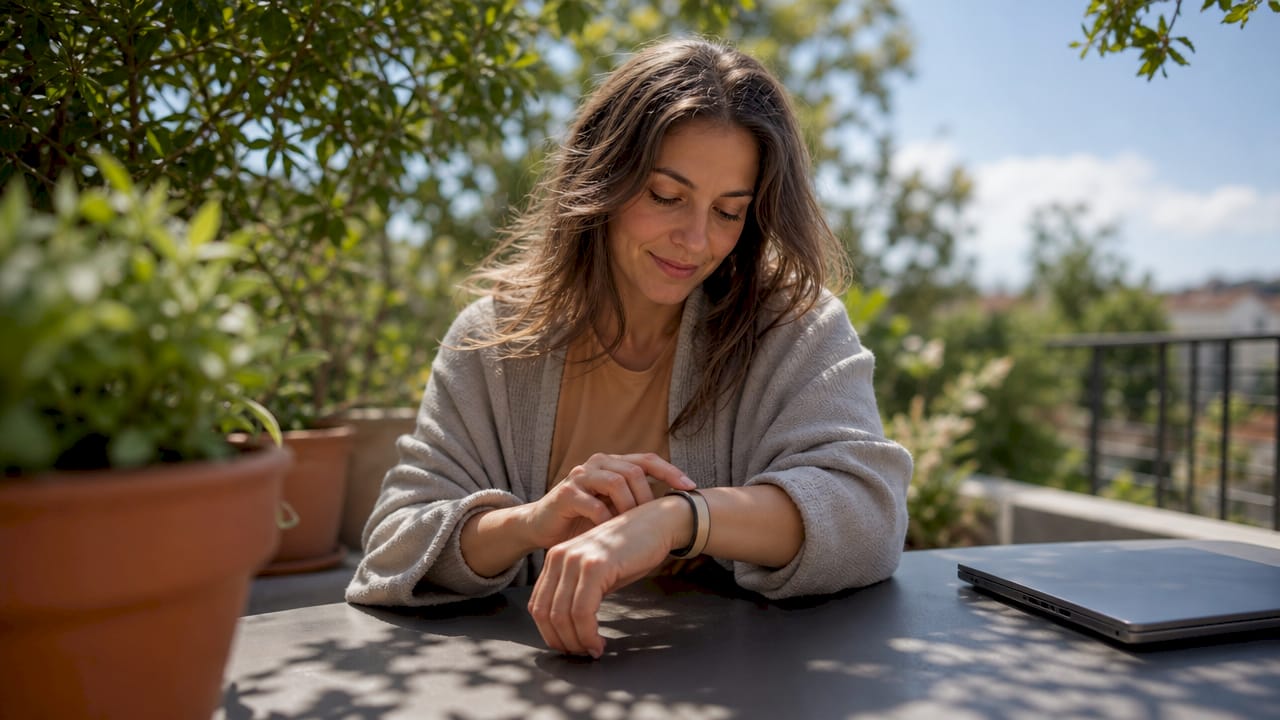
A real-time skin feedback device is a wearable or portable technology that measures skin condition metrics instantly and reports them continuously, giving you objective data on your skin health without a clinic visit. The industry term for the most advanced form of this technology is “electronic skin” or “e-skin,” and understanding the distinction between e-skin wearables and handheld spot-check devices matters before you buy. Sensors, AI algorithms, and Bluetooth connectivity work together to capture parameters such as hydration, transepidermal water loss, and epidermal biomarkers. Glowera curates a range of scientifically backed beauty tech devices that sit at this intersection of skin analysis technology and personalised care, making professional-grade monitoring accessible at home.
How do real-time skin feedback devices work?
Real-time skin monitoring relies on a layered system of sensors, wireless communication, and data processing. The sensor captures a physical or chemical signal from the skin surface. That signal travels via Bluetooth Low Energy to a paired app or handheld tester, where an algorithm converts raw data into a readable skin health score.
Sensor types and what they detect
Different sensing technologies target different skin signals:
- Capacitive sensors measure changes in electrical capacitance caused by water content in the skin. Textile-integrated capacitive sensors, for example, detect hydration differences as small as 3–5 picofarads, which correlates well with clinical Corneometer readings.
- Biochemical sensors analyse compounds in sweat or interstitial fluid. Flexible e-skin devices provide biochemical sensing at the skin surface that rigid devices simply cannot replicate because they cannot conform to the skin’s contours.
- Vapour flux sensors use a micro-chamber to condense skin vapours. A compact 2 cm by 1.5 cm wearable patch can measure water vapour, volatile organic compounds, and CO2 flux simultaneously, giving a multi-dimensional picture of barrier function.
- Electrochemical patches detect specific biomarkers. A molecularly imprinted polymer sensor measures epidermal serine levels to track skin barrier integrity and treatment response in real time.
The role of AI in skin analysis technology
Raw sensor data alone is not enough. AI algorithms consolidate multiple readings into unified skin quality scores, enabling standardised longitudinal tracking that removes the subjectivity of visual grading. This shift from subjective assessment to objective, data-driven precision is what makes personalised skincare genuinely repeatable. For a deeper look at how these algorithms shape your routine, Glowera’s guide on AI skincare personalisation explains the mechanics clearly.
Pro Tip: Pair your device’s app with a skincare journal. Logging product changes alongside sensor readings lets you see which ingredients genuinely shift your hydration score over time.
What skin health parameters can these devices measure?
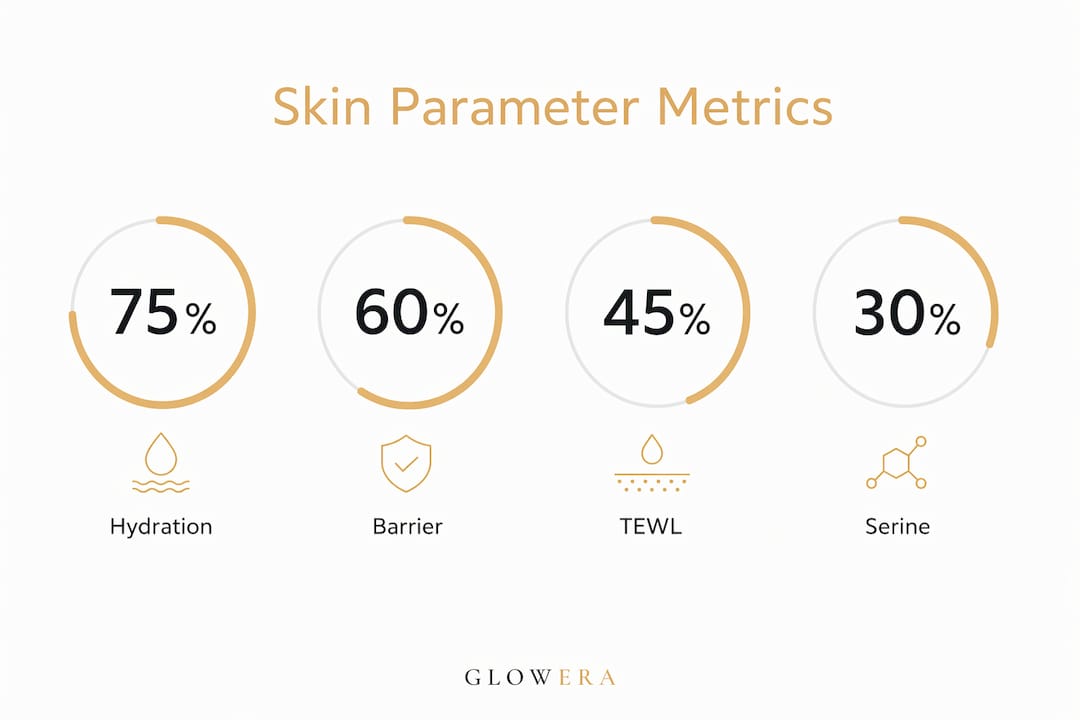
The range of measurable parameters has expanded considerably as sensor technology has matured. The table below summarises the key metrics, the sensing method used, and the skin condition each one informs.
| Parameter | Sensing method | Skin condition monitored |
|---|---|---|
| Hydration level | Capacitive / impedance sensor | Dry skin, atopic dermatitis |
| Transepidermal water loss | Vapour flux micro-chamber | Barrier function, wound healing |
| Epidermal serine | Electrochemical patch | Skin barrier integrity, eczema treatment |
| Volatile organic compounds | Gas sensor in micro-chamber | Inflammation, wound status |
| CO2 flux | Micro-chamber gas analysis | Metabolic activity, barrier health |
| Muscle fatigue (adjacent tissue) | Self-healing e-skin with BLE | Broader wearable health monitoring |
Hydration and transepidermal water loss are the most clinically established parameters. A breathable skin analyser validated for continuous 28-day monitoring weighs just 13 grams and achieves superior environmental noise isolation, making it practical for real-world wear rather than laboratory conditions only.
Epidermal serine is a newer but significant biomarker. Serine is an amino acid found in the skin’s natural moisturising factor, and reduced levels signal a compromised barrier. Tracking serine in real time allows people managing atopic dermatitis to see whether a treatment is working days before visible improvement appears. Volatile organic compounds and CO2 flux add another layer, reflecting inflammatory activity and metabolic changes beneath the surface.
What are the benefits and limitations of skin feedback devices?
Key benefits
Real-time skin monitoring offers advantages that periodic clinic visits cannot match:
- Continuous, objective data. A device worn for several days captures how your skin responds to weather, diet, sleep, and product changes. A single clinic reading captures only one moment.
- Reduced measurement variability. E-textile capacitive sensors show significantly lower variability than standard Corneometers, which are sensitive to environmental factors such as room humidity and temperature.
- Early detection. Tracking serine or transepidermal water loss continuously means a barrier disruption appears in the data before it becomes visible redness or flaking.
- Personalised skincare. Objective readings let you match products to your actual skin state rather than relying on skin type labels. Personalised skin care based on measured data can deliver better results than a generic routine.
- Home convenience. Devices sized like a smartwatch or a small plaster remove the need for repeated dermatology appointments for routine monitoring.
Limitations to understand
No technology is without constraints, and managing expectations is part of using these devices well.
- Consistent placement is non-negotiable. E-textile sensors require standardised arm positioning during measurement. Inconsistent placement introduces the very variability the device is designed to eliminate.
- Scope is diagnostic aid, not diagnosis. A skin feedback device flags changes and trends. It does not replace a dermatologist’s assessment of a lesion or a clinical diagnosis of a skin condition.
- Cost and data literacy. Advanced continuous monitoring patches carry a higher price point than basic handheld testers. Reading and acting on the data requires a degree of health literacy that not every person has immediately.
- Battery and wearability. Devices designed for multi-day wear must balance sensor performance with comfort and battery life, and current designs still involve trade-offs.
Pro Tip: Before purchasing, check whether the device offers a companion app with clear trend graphs. Raw numbers without context are difficult to act on, especially for first-time users.
How can you incorporate a skin feedback device into your routine?
Adding a real-time skin feedback device to your skincare routine works best when you follow a structured approach. The distinction between spot-check devices and continuous monitors is the first decision to make, because each suits a different lifestyle and goal.
-
Choose the right device type. A handheld tester gives you a single-point reading in seconds, useful for checking hydration before and after applying a serum. A wearable patch worn for days gives you trend data across changing conditions. Match the format to how you actually want to use the information.
-
Set up and place the device correctly. Follow the manufacturer’s placement guide precisely. For capacitive sensors, this means consistent positioning on the same skin site, at the same time of day, after the same rest period. Variability in placement produces variability in results.
-
Integrate readings with your products. Use your baseline hydration score to select products. If your barrier function reading is low, prioritise ceramide-rich moisturisers and reduce active ingredients such as retinoids temporarily. Check your app-connected device benefits to understand how app integration can automate these recommendations.
-
Monitor progress over weeks, not days. Skin barrier function changes slowly. A meaningful trend requires at least two to four weeks of consistent data. Resist the urge to change your entire routine after a single low reading.
-
Protect your data. Skin health data is personal health data. Use devices from brands that publish clear privacy policies, enable two-factor authentication on companion apps, and avoid sharing raw biometric data with third-party advertisers.
For a broader view of what these devices can do alongside other wearable technologies, Glowera’s overview of wearable skincare tech covers the latest developments worth knowing about.
Key takeaways
Real-time skin feedback devices deliver objective, continuous skin health data that no visual assessment or periodic clinic visit can replicate.
| Point | Details |
|---|---|
| Core function | These devices measure hydration, barrier function, and biomarkers instantly using sensors and AI. |
| Two device types | Handheld testers give spot readings; wearable patches deliver continuous multi-day monitoring. |
| Clinical accuracy | E-textile capacitive sensors show lower variability than standard Corneometers when placed consistently. |
| Practical limits | Consistent placement and data literacy are required for reliable, actionable results. |
| Diagnostic scope | Devices support skin monitoring as an aid; they do not replace professional dermatological advice. |
Where skin feedback technology is heading: my honest view
I have followed the development of wearable skin analysis technology for several years, and the pace of progress in 2025 and 2026 has been genuinely striking. Sensors that once required laboratory benches now fit inside a plaster-sized patch weighing 13 grams. That is not incremental improvement. That is a category shift.
What I find most significant is the move from single-parameter devices to multimodal ones. Measuring hydration alone tells you one thing. Measuring hydration, CO2 flux, and volatile organic compounds simultaneously tells you something far more useful about what is actually happening at the barrier level. The self-healing electronic skin that recovers 80% function within 10 seconds after damage is a good example of how durability is catching up with sensing capability.
My caution is this: the data is only as useful as the person interpreting it. I have seen people become anxious about minor fluctuations in hydration scores that are entirely within normal daily variation. A device should inform your routine, not govern it. Treat the readings as one input among several, alongside how your skin looks, feels, and responds to products. The technology is advancing rapidly. The wisdom to use it well develops more slowly, and that gap is worth acknowledging.
— Adam
Advanced skincare devices at Glowera
Glowera brings together a carefully selected range of beauty tech devices for people who want more than guesswork in their skincare routine.
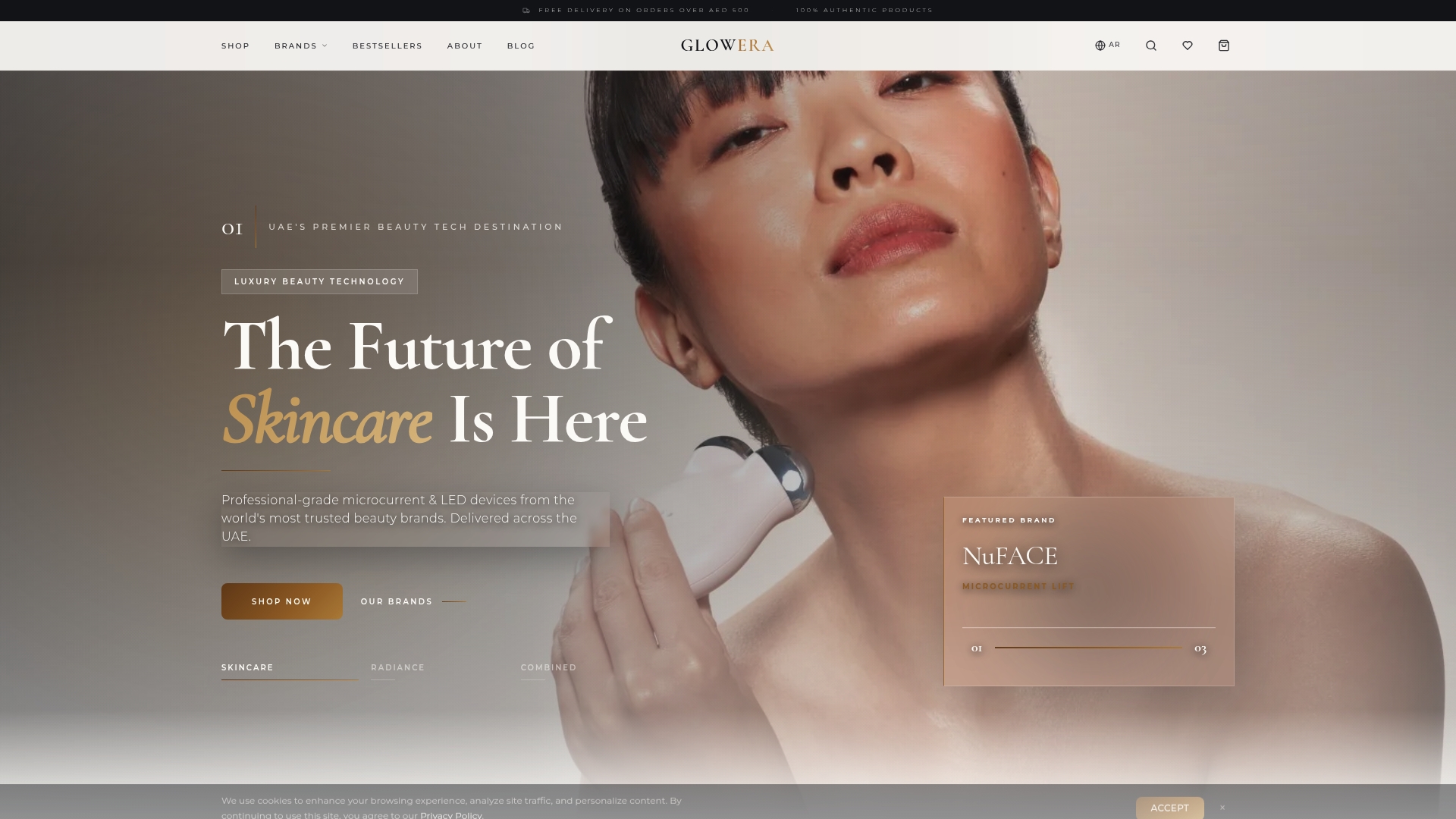
The K-beauty tech collection at Glowera includes devices that combine real-time skin feedback principles with professional-grade treatment technology, from galvanic boosters to electrochemical skin tools. For those interested in complementary treatments, the LED light therapy range pairs well with barrier monitoring devices, allowing you to track how red and blue light sessions affect your skin’s hydration and recovery over time. Every device on the platform comes with detailed specifications, educational guides, and verified customer support, so you can make an informed choice rather than a hopeful one.
FAQ
What is a real-time skin feedback device?
A real-time skin feedback device is a wearable or portable tool that measures skin health parameters such as hydration, transepidermal water loss, and epidermal biomarkers instantly, transmitting data via Bluetooth to a companion app for continuous monitoring.
How accurate are wearable skin sensors compared to clinical tools?
Textile-integrated capacitive sensors correlate well with clinical Corneometer readings and show lower measurement variability, provided the device is placed consistently on the same skin site each time.
Can these devices diagnose skin conditions?
No. Real-time skin monitoring devices are diagnostic aids that track changes in skin parameters over time. A qualified dermatologist is required for clinical diagnosis and treatment decisions.
What is the difference between a spot-check device and a continuous monitor?
A spot-check device, such as a handheld tester, gives a single reading at one point in time. A continuous monitor, such as a wearable patch, collects data over days, revealing how skin responds to environmental changes, products, and lifestyle factors.
Are skin health devices suitable for managing atopic dermatitis?
Wearable electrochemical patches that measure epidermal serine and capacitive sensors that track hydration have both been validated for monitoring atopic dermatitis, helping people track treatment progress between clinical appointments.